
How to Play QQ (Pocket Queens) in Texas Hold'em - Complete Strategy Guide
May 3, 2026
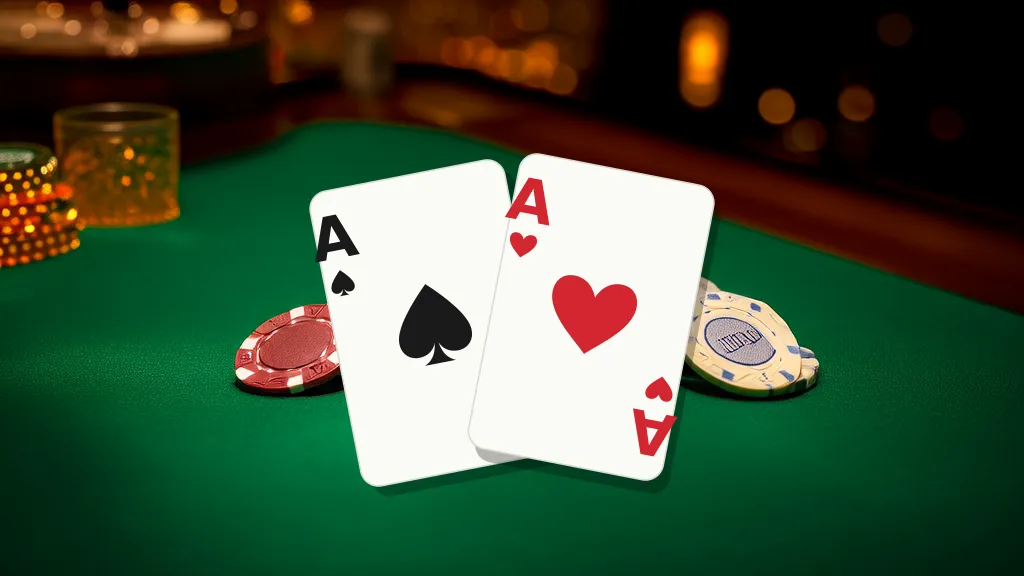
Master Pocket Queens in every position. Learn how to handle overcards, 4-bet dynamics, postflop play on Ace and King-high boards, and when to commit your stack with the third-best starting hand.
- how to play QQ
- QQ strategy
- GTO
- poker strategy
Pocket Queens is one of the most discussed hands in No-Limit Texas Hold’em—and for good reason. It is the third‑best starting hand in the deck, yet it lives in a strategic gray zone that Pocket Aces and Pocket Kings rarely visit. With QQ, you are almost always ahead when the money goes in preflop against a sensible opponent’s continuing range—but you are not an unstoppable freight train. Two cards sit above you on the rank chart (Ace and King), and those two ranks reshape a staggering share of flops, turn decisions, and stack‑off thresholds. QQ is the classic “crossroads hand”: too strong to treat like a medium pair, too vulnerable to treat like the nuts, and too central to your value strategy to play passively without a plan.
This guide is built for players who already understand basics like position, stack depth, and simple pot odds, but want a complete framework for Pocket Queens: equity realities, the overcard problem, preflop escalation choices (especially the 4‑bet versus call debate), postflop play on dangerous and safe textures, stack‑to‑pot ratio (SPR) commitment logic, and adjustments across 6‑max and 9‑max, online and live, cash and tournaments.
Introduction: QQ at the Crossroads
If you polled experienced players about the most “annoying” premium hand, a large minority would name Pocket Queens. That emotional response is a clue: QQ forces trade‑offs that AA and KK rarely force.
With AA, your default is often aggressive simplification—value bet, stack off, let equity and bankroll variance sort it out. With KK, you still worry about an Ace, but you are a bigger favorite against the most common continuing hands (for example, many Ace‑x hands are crushed). With QQ, you are still a commanding favorite against the bulk of an opponent’s 3‑bet or 4‑bet range, yet you remain threadbare against the top of that range, and you are “only” a modest favorite in the iconic flip against AK.
The crossroads metaphor is precise. On one road, you play QQ like a “always stack off” hand because you refuse to be exploited by aggressive players who mash buttons with AK and worse pairs. On the other road, you over‑fold in high‑pressure spots because you mentally treat every Ace like a death sentence. Neither extreme is optimal. The truth is position‑dependent, opponent‑dependent, and range‑dependent.
This article’s goal is to give you a decision architecture:
- Classify the spot (single raised pot versus 3‑bet pot versus 4‑bet pot; in position versus out of position; deep versus shallow).
- Estimate how QQ sits in your continuing range (premium value, merge value, or bluff catcher).
- Use SPR and future streets to decide whether “committing” is actually wise, or whether you are lighting money on fire against a polarized nuts range.
If you only remember one sentence: QQ is a hand that prints money when your line maps correctly to ranges—but punishes you hard when you auto‑stack off without range awareness.
The emotional tax of “premium but not the nuts”
Because QQ sits just below the absolute pinnacle of the distribution, many players attach outcome‑dependent pride to the hand. Winning feels expected; losing feels like theft. That asymmetry distorts study: people remember the Ace on the flop more vividly than the times they stacked a stubborn JJ or picked off an ill‑timed AK bluff. Serious improvement with QQ begins by decoupling expected value from emotional regression to memorable coolers.
From a bankroll perspective, QQ increases short‑term variance relative to AA because you play bigger pots against a wider variety of continuing hands—including AK holdings that can crack you on runouts or win races preflop. That is not a flaw in your strategy; it is the shape of the equity distribution. Your job is not to eliminate variance; it is to ensure your continuations and folds are range‑coherent so that your QQ lines remain defensible against scrutiny (and against solvers, if you use them).
Finally, recognize the difference between population play and idealized equilibrium. In soft games, exploitative deviants often print: you can call wider versus spew, and fold earlier versus nits. In tougher lineups, QQ becomes a frequency hand—the difference between a thin call and a disciplined fold may come down to a few combos and a few blocker interactions. This guide gives you both a population‑first baseline and the conceptual tools to tighten or widen intelligently.
How to read this guide at the table (practically)
You will not run through 8,000 words between clock ticks. Treat the sections as indexed intuition:
- If you are preflop, jump mentally to the 4‑bet versus call fork and ask IP/OOP, depth, and 3‑bet width.
- If you are postflop, first classify the flop bucket (A‑high, K‑high, low) and SPR, then decide whether you are value‑heavy, bluff catching, or release.
- If you are tilted after a cooler, read only the overcard frequency section until your brain accepts that QQ is supposed to face uncomfortable boards often.
This “routing heuristic” turns a long article into a lightweight decision procedure without encouraging autopilot.
One last framing device: Pocket Queens is a high‑frequency premium—you will play it constantly across thousands of hours. Tiny improvements in bucket classification (preflop escalation and postflop texture) compound into large win‑rate swings precisely because repetition multiplies small edges.
Hand Strength Analysis: Where QQ Really Stands
Preflop equity snapshots (useful mental anchors)
Exact equities vary slightly by suits and runouts, but these preflop “all‑in versus one opponent” benchmarks are excellent anchors:
- QQ versus a random hand: roughly 80% equity. QQ is a monster against two uncoordinated unknown cards, which matters in limped multiway pots or bizarre live spots.
- QQ versus AA: about 18–19% equity. You are drawing to two outs (roughly) unless you backdoor a chop or cooler scenario.
- QQ versus KK: about 18–19% equity. Same category as AA: you are dominated at an uncomfortable depth.
- QQ versus AK suited: commonly cited around 54–56% for QQ. This is the famous “race,” but it is not a coin flip—QQ is a favorite.
- QQ versus AK offsuit: often around 56–58% for QQ. Removing suitedness from AK reduces its playability slightly in an all‑in context (and changes postflop dynamics when stacks remain).
- QQ versus JJ: about 81–82% equity. This is classic overpair domination: you are in the driver’s seat preflop.
- QQ versus TT: similar domination logic to JJ—strong, though TT makes more straight possibilities on certain boards (usually secondary to overpair issues).
- QQ versus a wide continuing range (say, a loose player’s 3‑bet range): QQ typically performs extremely well because that range includes many worse pairs, suited Broadway hands, and suited connectors that are crushed.
Why “third best” is a curse word in practice
Being third best sounds amazing—and it is—but it changes composition:
- The two hands above you (AA/KK) are not rare in a strong player’s value‑heavy 4‑bet range.
- AK is pervasive in aggressive games, and AK is exactly the hand type that realizes equity well postflop with overcards, backdoor draws, and high card strength.
So QQ’s “premium” label is true in mileage against the field, but dangerous in a vacuum against an unknown opponent who only continues with nutted shapes.
Blockers: QQ blocks QQ, not the nightmare hands
Holding QQ removes two Queens from the deck. That means:
- You block combinations of QQ (good for removing some ties and some “also has an overpair” worlds).
- You do not block AA (no A in your hand).
- You do not block KK (no K in your hand).
- You do not block AK (no A or K).
This blocker profile is strategically meaningful. In theory discussions, people talk about “card removal.” QQ’s removal effects do not reduce the frequency of top pair hands with an Ace or King the way AQ or KQ might. When an Ace flops, your opponent can still have “lots of Ax” in many player pools; when you held AQs instead, some Ax combos vanish from their range.
Range interaction: QQ as a staple 3‑bet and 4‑bet candidate
In modern preflop construction:
- QQ is almost always a 3‑bet for value against opens, except in the most exotic slowplay scenarios at very specific depths and against certain opponents.
- QQ is frequently a 4‑bet for value against 3‑bets, but it is also a hallmark 4‑bet call candidate when stacks are deep and you want to keep worse hands in or avoid turning your range face up.
That dual pathway (4‑bet jam versus 4‑bet small versus cold‑call a 3‑bet) is what makes QQ a study hand rather than a checklist hand.
Combinatorics in plain English (why AA/KK/AK show up “so often” in wars)
You do not need to become a combination accountant to play QQ well, but a 10‑minute combinatorics habit pays rent every month. A pocket pair has six combos (assuming no blockers). Offsuit unpaired hands like AKo have 12 combos. Suited hands like AKs have 4 combos. That means aggressive games—where 3‑bets and 4‑bets cluster around strong unpaired Broadway and premium pairs—will mechanically produce more AK presence than many players intuit, because AK adds 16 combos in total while any specific pocket pair adds only 6.
When you hold QQ, you remove one combo of QQ from the deck for your opponents (the QQ combo that includes your two exact cards—you obviously hold your own hand). You also reduce partial removal for Qx hands in some contexts, but the big picture remains: you are not removing Aces or Kings. Therefore all AA (6) and KK (6) combos remain possible for a villain absent other information, and AK (16) remains abundant relative to any single pair type.
This matters when someone says, “He can’t have it that often.” Sometimes he can—not because poker is rigged, but because the range architecture includes many AK combinations by construction.
Versus a linear value range versus a polarized range
Against a linear continuation range (strong hands, many Broadway value hands, fewer pure bluffs), QQ is often strong enough to stack off preflop but may need to downshift postflop on bad textures. Against a polarized range (nuts or air), QQ becomes a classic bluff catcher on certain runouts: you are not trying to “beat the whole range,” you are trying to beat the bluff portion often enough relative to price.
This distinction is especially acute in 4‑bet pots where some opponents play very value‑heavy small 4‑bets with AA/KK and use different hands as bluffs. Against those players, QQ can be strong preflop but face miserable postflop geometry when you are out of position and the pot has ballooned.
Versus “middle pairs” (99–JJ) and the cooler geometry
QQ’s equity versus JJ and TT is excellent, but watch stack depth and implied odds. When deep, lower sets become a real threat. When shallow, you often welcome getting JJ all‑in preflop against much of the field—just do not confuse “good preflop” with “unfoldable postflop on all boards.” On low, coordinated flops, you may still proceed with caution even when you are an overpair, because set mining equity realized by opponents can clash hard with your one‑pair stackoff enthusiasm.
The Overcard Problem: Roughly 43% of Flops Feature an Ace or King
If you hold QQ and see a flop, one of the most important facts to internalize is this: a large minority of flops will contain an Ace or a King. Depending on how you compute it (including versus excluding redundancy when both appear), many trainers cite about 42–43% of flops having at least one A or K while you hold QQ. Even if you treat the number as 41–44% depending on assumptions, the takeaway is identical: you will not enjoy an unspoiled overpair nearly as often as you might intuit.
Why this matters psychologically
Players remember QQ “always getting snapped off by an Ace.” Memory bias plus high-impact losses makes QQ feel cursed. Mathematically, you are simply playing a hand whose strength is conditional on rank. That is normal—but it becomes expensive if you refuse to update on flop texture.
Back-of-the-envelope flop frequency (why ~43% is not a meme)
Start from a fresh deck and ignore card removal for a moment: there are 52 cards, 4 ranks of interest for “overcard to QQ” if we treat both A and K as overcards. With QQ in your hand, 50 unknown cards remain, including four Aces and four Kings (eight cards that create overcard pressure on a single flop card).
The probability a specific flop card is an Ace or King is 8/50. The probability none of three flop cards is an Ace or King is roughly (42/50) × (41/49) × (40/48) ≈ 0.586, using 42 “safe” ranks (cards that are not A or K among the 50 unknown cards).
So the probability at least one Ace or King appears is about 1 − 0.586 ≈ 0.414, i.e. ~41% before we fuss over subtle card‑removal details in multiway pots or burned cards. Training materials often round this to ~42–43% to emphasize the practical point: you should expect overcard stress on a large chunk of flops.
This arithmetic also clarifies a planning error: if your preflop plan assumes “I will comfortably play QQ as an overpair on most flops,” that assumption is false in a frequency sense. Your plan must include underpair play, folding thresholds, and turn and river discipline.
Tactical implication: don’t build pots you hate to defend
If you know a large share of flops will be psychologically and strategically awkward, ask before inflating whether you are inflating against a range that makes those flops disproportionately costly. That question lands exactly on the 4‑bet versus call fork: sometimes calling keeps the pot manageable OOP; sometimes 4‑betting denies equity and secures Initiative against a wide range.
Strategy by flop category
Ace‑high textures by synergy (what changes your plan)
Not all A‑high flops are equal. Contrast A♠7♦2♣ with A♦9♥8♥. The former is relatively static for many ranges; the latter introduces straight and flush density that can pressure QQ even when villain does not have an Ace. On dynamic A‑high boards, your check frequency often rises OOP, and your call versus raise threshold narrows when facing aggression—because the nuts/non‑Ax strong hands cluster more plausibly.
Also distinguish Ace + two low flops from Ace + Broadway flops. On A‑K‑low flops, you are underpair to two high cards—usually worse for QQ than A‑9‑4 rainbow because villain’s continuation range more naturally includes AxKx intersections and Broadway floats.
Flops with an Ace and no King (A‑high boards, rainbow or two‑tone)
This is the most uncomfortable common case for newer players. You have an underpair to the board.
Default principle: treat QQ primarily as a showdown value hand with severe ceiling limitations, not as a “big stack off” hand against heavy aggression from competent opponents.
Versus small continuation bets: Calling can be fine in position when stacks are deep and your opponent’s range still contains many bluffs and weaker pairs—but you must have a plan for turns. If the villain barrels Ace‑turning cards, overcards to your hand, or simply continues firing on scary runouts, your hand’s resiliency drops fast.
Versus large bets or raises: Often a sign you are up against Ax, sets, or strong combo draws depending on texture. Folding QQ to a tight player’s big pressure on A‑high boards is not shameful; it is sometimes correct.
Check‑raising considerations (as defender OOP): Occasionally you can check‑raise as a semi‑bluff or protection line on dynamic boards, but this is player‑dependent. Against calling stations, you turn a hand with real showdown value into a spew. Against hyper‑aggressive opponents, you sometimes induce mistakes.
Flops with a King and no Ace (K‑high boards)
K‑high boards are subtly different. You still do not have an overpair to the top card, but the “top pair” hands are Kx rather than Ax. Depending on your opponent’s range, KQ, KJ, KT and even weaker suited Kings may dominate portions of your decision tree.
Key nuance: KK still beats you, but KK is only one combination left if you hold QQ. AA is still possible if it was in the preflop range.
Against habitual c‑bettors: You will call more lighter on K‑high boards than against nits, especially K‑high disconnected boards where Villain’s range misses often.
Against straightforward players: If they triple‑barrels big on K‑high boards, your QQ is frequently a bluff catcher at best—call down only with a believable bluff frequency, not by default.
Flops with both an Ace and a King
These are messy. Your hand is an underpair to two broadways on board. Proceed cautiously unless you have strong reads or an opponent type that over‑bluffs.
Flops with no Ace and no King (favorable for your overpair)
This is where QQ earns its reputation as a money printer. As an overpair, you can:
- Bet for protection and value against draws and worse pairs.
- Call to control the pot when deep against opponents whose raises are too polarized (sometimes trapping is counterproductive; sometimes it saves stacks).
- Occasionally check‑raise on wet boards to deny equity and stack worse hands faster.
Still watch for sets and “sneaky two pair” on connected boards with low cards—QQ is not immunity.
Sample hand sketches (narrative, not prescriptions)
Sketch A (favorable): You 3‑bet QQ from the BTN versus a loose CO open; BB folds; CO calls. Flop 9♣5♦2♠ rainbow, pot is bloated but SPR remains medium. This is a textbook overpair spot: small‑to‑medium sizings often perform well to keep TT–JJ, suited connectors, and stubborn floats involved. As turns bring overcards, re‑evaluate honestly—but do not “freeze” just because one Broadway arrives if villain’s barreling range remains bluff‑capable.
Sketch B (A‑high discomfort): You 4‑bet preflop from OOP (a geometry that happens in real sessions even when you prefer avoiding it). Flop A♠8♦3♣. Villain checks; you check. Turn 2♣; villain fires ⅔ pot. Now your QQ is a bluff catcher against a polarized or merged range depending on opponent. Against some players this is a mandatory fold; against others it is a call; almost never is it an easy raise without reads.
Sketch C (K‑high judgement): Flop K♥7♣4♠ in a 3‑bet pot. Your preflop narrative matters: against an AK‑heavy 3‑bettor, K‑high boards intersect their top‑pair combos often. Against a pocket‑pair‑heavy caller, they may have QQ/JJ portions that now face ugly decisions too. Poker is reciprocal pressure—your line should reflect what portion of their range you still beat after they continue.
SPR (Stack-to-Pot Ratio) and Commitment
SPR is pot geometry: how many times the pot fits into the effective stack. It tells you whether a hand can comfortably play for stacks without awkward guessing.
Defining SPR with a concrete cash example
Suppose the effective stacks are $400 (100 BB in a $2/$5 game) and the preflop pot is $60 after a raise, a 3‑bet, and a call. SPR is roughly 400 / 60 ≈ 6.7. That is medium‑high: you are not automatically stacking off with one bet and one raise on many boards, but you can still get stacks in across multiple streets if both players cooperate.
Compare that to a 4‑bet pot where the pot is $240 at the flop and effective stacks behind are $310. SPR is 310 / 240 ≈ 1.3—very low. Now most favorable flops for an overpair push you toward earlier commitment, but A‑high boards can still be nasty if the villain’s range is uncapped and value‑dense.
Low SPR (example: 1–3)
When SPR is low, stackoff decisions come quickly. With an overpair on many boards:
- QQ often wants to get money in against ranges that still contain worse pairs and strong draws.
- The pain arrives when you are already low SPR on A‑high boards—then “commitment” can be a trap if the villain’s range is Ax‑heavy.
Concrete heuristic: At SPR ≤ 2, if you bet‑call off on a dry low board versus a competent villain, you are often implying you can also stack off on several A‑heavy/K‑heavy textures—so decide whether that implication is true for your read before you blast flops.
Medium SPR (example: 4–8)
This is the deliberation zone. You can bet‑call, bet‑fold, or check‑call depending on villain and board. QQ thrives here when you retain maneuverability.
Example pattern: Flop c‑betting 33–45% pot IP with an overpair and reassessing on turns that change flush/straight availability is often stronger than mindlessly firing 75% on every clean turn—because you keep worse hands in and avoid over‑polarizing yourself when stacks are still deep.
High SPR (example: 9+)
Deep stacks magnify Domination penalties. QQ is still strong, but one bad street can cost enormous implied odds mistakes if you “can’t fold” for emotional reasons.
Guideline: the higher the SPR, the more you should care about range polarization on scary cards and the more you should weigh QQ’s vulnerabilities rather than autopilot “I’m never folding an overpair.”
“Commitment” is not a moral obligation
Players sometimes say “I’m committed” after they choose a line that makes folding mathematically painful. But commitment is often self‑inflicted: a sequence of large bets can convert a medium‑strength hand into a stackoff even when the opponent’s range has shifted toward nuts.
With QQ, ask: If I put in this next raise, what worse hands actually pay me? If the answer is “almost none,” your “commitment” may just be burning money against a range that has you crushed.
6‑Max versus 9‑Max
6‑Max
Six‑handed games feature:
- Wider opens
- More 3‑bets
- More frequent aggressive dynamics
QQ becomes a workhorse value 3‑bet and a frequent 4‑bet candidate. The mistake to avoid is assuming every 4‑bet is AK—strong players blend AA/KK and sometimes traps.
9‑Max
Full ring tends toward:
- Tighter UTG/MP opens
- More multiway pots
- Lower frequency of insane preflop wars (though that depends on the table)
QQ still loves raising and re‑raising, but multiway complexity rises. An overpair is strong heads‑up; it is weaker when four players see a flop and someone invariably has a set or a weird two pair.
Multiway adjustment: tighten continuation aggression somewhat, value bet thinner cautiously, and don’t autopilot huge stacks in bloated family pots without reads.
Position opens matter more in 9‑max
In full ring, UTG and UTG+1 opens are tighter in theory and often tighter in practice. If you 3‑bet QQ versus a rock’s UTG open, you should expect more premium concentration conditional on a 4‑bet response. Conversely, versus a late‑position steal, your 3‑bet/4‑bet dynamics widen.
In 6‑max, CO/BTN aggression is so common that QQ becomes a default value backbone: you are happy to put in money against steals, iso‑raises, and button flats that widen ranges.
Snowball dynamics: how a “harmless” limper changes everything
Whether 6‑max or full ring, one limper can convert a heads‑up pot into a multiway pot unless you size isolations appropriately. QQ prefers heads‑up equity realization, so your isolation sizes should be chosen with effective stacks and caller elasticity in mind.
Online versus Live
Online
- Higher volume → more precise frequencies matter.
- HUDs and population tendencies can justify more mechanical lines in some pools.
- Faster play can tempt autopilot—especially with QQ, autopilot loses EV.
Live
- Reads, physical tells, and personality matter more—but population often under‑bluff on scary runouts while overvaluing top pair.
- Preflop sizes can be larger and messier; pay attention to stack depth rather than memorizing online charts blindly.
- Exploitative folds and calls away from GTO can be huge—with QQ, live players sometimes show up with weird AJ‑type hands you would not weight online in a 4‑bet pot.
Core idea: Online favors cleaner range models; live favors calibrated exploitation of human tendencies, with QQ sitting squarely in the “print if you adjust” category.
Rake and straddle structures (hidden QQ tax)
In some live games, double straddles, mandatory antes, or high time rake change the effective stakes. QQ remains strong, but thin edges shrink when the house takes a larger bite. Practically, that can push you toward slightly tighter preflop confrontation against nits at the highest raked games—because the price of cooler spots hurts more.
Online, bbs matters: in some pools, NL50 plays closer to NL200 in complexity while NL200 plays reg‑wars heavy. Do not confuse stake with skill; QQ lines that print in one pool may be marginal in another.
Bankroll and mental game in high-variance premium spots
QQ will frequently play big pots. If your bankroll rules are tight, emotionally enforce bet sizing discipline rather than punting because “it’s premium.” Premium reduces losing frequency; it does not eliminate downswings.
Preflop by Position: The 4‑Bet versus Call Debate
If there is one preflop topic that defines QQ strategy, it is this: when you face aggression (especially a 3‑bet), should you 4‑bet or call? There is no universal button. Position and opponent type dominate.
Why both options exist
4‑betting QQ:
- Pushes premium equity now
- Denies equity to hands you beat
- Builds pots when you are often ahead
- Simplifies decisions (sometimes)
Calling a 3‑bet with QQ:
- Keeps dominated hands and bluffs in the pot
- Avoids inflating the pot OOP against nut‑heavy ranges
- Preserves a stronger overall 4‑bet range construction (depending on your system)
In position (typical heuristics)
Against many opponents, 4‑betting QQ is attractive because you can realize position postflop even if you do not end the hand preflop. Some players also 4‑bet small to induce junky action.
Against a strong, balanced reg who 5‑bet jams with correct frequencies, you need a solver‑informed plan: sometimes QQ is a call of a jam, sometimes a fold depending on stack sizes, rake, and the opponent’s composition (this is where training tools and database review matter).
Out of position
OOP, calling gains merit because inflating to a gigantic pot without initiative can be miserable on Axx/Kxx textures. Yet passive lines can also invite being outdrawn or squished in multiway pots.
Practical approach:
- Versus wide 3‑bettors: lean 4‑bet for value and protection.
- Versus snug 3‑bettors: call more often at deeper stacks to avoid building a massive pot against AA/KK clusters.
The “never fold QQ preflop” myth
In low‑stakes live games, “never fold QQ preflop” is repeated like folklore. Against random humans shoving 200 BB with trash, sure. Against a competent player’s correct 5‑bet jam range at 100 BB, there are some models where QQ becomes a close call or even a fold depending on assumptions—rare, but the point is: do not confuse machismo with EV.
Open sizing and QQ
QQ wants to enter the pot with aggression in nearly all normal configurations:
- Open raise when folded to you.
- Iso‑raise versus limpers (discussed later).
- 3‑bet versus opens at high frequency.
The nuance is not “limp QQ” (almost never). The nuance is how high you turn the volume knob when facing aggression.
Seat‑by‑seat heuristics (population‑first, not scripture)
Under the gun / early position: QQ is an automatic open for a raise in essentially all sane cash structures. The rare slowplay—occasionally flatting an extremely specific opponent who punishes 3‑bets with insane spew—is not something to build a default around.
Middle position: Treat QQ as a value machine. If facing an early open, 3‑betting is usually superior to cold calling, because cold calling invites squeezes and multiway pots.
Cutoff and button: QQ is among your best value 3‑bets against wide opens. The 4‑bet/call calculus here often leans slightly more toward aggression because ranges are wide and steal/resteal wars are common.
Small blind: Out of position for the entire hand, the SB is where calling a 3‑bet with QQ becomes more attractive relative to IP, especially deep: you reduce the chance of bloating a pot you must defend without last‑say advantage.
Big blind: Defending against steals with QQ is trivially solved by 3‑betting for value against most opens; flatting can exist versus a min‑raise structure or specific tendencies, but it is the exception.
When solvers split frequencies (what humans should take away)
If you watch solver outputs, QQ often appears as mix: sometimes 4‑bet, sometimes call. Humans do not need to roll dice at the table, but you should internalize the lesson: both lines are plausible because they optimize different parts of a range—denial versus deception versus keeping dominated hands.
A practical human compromise:
- Lean toward 4‑bet when you believe worse pairs and AK will continue incorrectly.
- Lean toward call when you believe a 4‑bet folds out dominated equity you want to keep, or when OOP depth makes giant pots unmanageable.
Facing Limpers
Limped pots tempt you to “play fancy.” With QQ, fancy is usually inferior to simple isolation:
- Raise large enough to discourage multiway sprawl when the table is passive‑sticky.
- Expect to see more weak Ax, suited junk, and small pairs call you.
QQ’s advantage is equity, but multiway pots reduce that edge. Your biggest lever is sizing and table selection.
Against a limp‑rraise line (limper then suddenly raises), treat it as a red flag in many live pools—some players only do this with monsters. Versus that archetype, QQ may still continue, but do not treat it as automatic 300 BB stack off without history.
Sizing isolations: a practical ladder
Against one limper, many solid live regs use 4 BB + 1 BB per limper as a rough baseline in $1/$2, scaled upward in straddled games. With QQ, err slightly toward the larger side when the table is sticky and when stacks are deep enough that you still want heads‑up play. The goal is not to be cute; the goal is equity realization.
When limpers magically become callers of any size
Some games feature players who will not fold preflop no matter what because they crave postflop action. In those pools, QQ still wants money in preflop, but your postflop plan must include pot control on scary textures more often because ranges are wide and stubborn.
Facing Actions: 3‑Bets, 4‑Bets, and Multiway Pressure
Facing a 3‑bet (you opened, villain 3‑bets)
This is the masterclass spot.
4‑bet for value when:
- Opponent 3‑bets wide
- You are in position and want to charge AK
- You have a read that worse hands call or jam
Call when:
- Depth is deep and villain is nutted
- You want to control pot size OOP
- Villain folds too much to 4‑bets (then calling keeps dominated pairs in)
4‑bet/fold with QQ is usually a training‑wheels mistake at low stacks—because you turn a premium into a bluff catcher against a 5‑bet—but at certain depths vs certain players, some lines exist that use QQ as a frequency mix. If you are not studying solvers, default away from lighting QQ on fire preflop.
Facing a 4‑bet (you 3‑bet, villain 4‑bets)
Decision tree:
- Jam (5‑bet shove) is common at <=100 BB effective in many populations when QQ is too strong to call against a shove-only line.
- Call can be correct when stacks are deep and you want to play postflop (or when villain’s 4‑bet range includes junk you crush).
Facing a 5‑bet jam
This is where education pays. At 100 BB, against many players’ first ranges, QQ is a call. Against a credible nittier pool, you might tighten.
If you study solvers, you will notice frequency splits matter more than dogma.
Worked micro‑scenario: BTN open, BB 3‑bet, you are the BTN
Imagine you open 2.5 BB on the button, the BB 3‑bets to 10 BB, stacks are 100 BB effective. This is a bread‑and‑butter node. QQ is strong enough to continue always; the fork is calling 10 versus 4‑betting (often to around 22–26 BB depending on structure).
- If the BB is a wide reg, a 4‑bet frequently gets action from AK, JJ, TT, and sometimes worse—good for QQ.
- If the BB is a tight reg whose 3‑bet range narrowly focuses on premiums, a 4‑bet may isolate you against the top too often, and calling can keep their dominated 3‑bet bluff combos in (if they exist).
This is the same hand, same cards, but two different strategy responses based on range estimation.
Multiway 3‑bet pots
If you open, one player calls, and the button squeezes, QQ is usually a 4‑bet or call depending on position and sizes—but be aware that cold callers shrink the likelihood villain is full of air.
Postflop Play: Textures, Sets, and Monotone Boards
A‑high boards (detailed)
Start with opponent classification:
- Over‑folder on turns → you can float more flops.
- Triple‑barrel honesty → ditch earlier.
- Passive caller → smaller pot control can drag you into bad rivers; sometimes raising earlier is actually safer to define the hand.
Sizing tells: in live poker, sudden polarity in bet sizing often maps to “either Ax or nothing,” but good players balance. Do not live entirely on tells—combine with population.
K‑high boards (detailed)
KQ and AK combinations matter a lot on K‑high boards. If you have a read that villain’s 3‑bet range is AK‑heavy, then top pair on K‑high boards interacts painfully with your underpair to the Ace but… wait—you have QQ. On Kxx with an Ace not on board, your QQ is still an underpair to King only. That’s why K‑high boards are easier to navigate than A‑high boards, but not “easy.”
Favorable low, disconnected flops (example: 9♠5♦2♣)
Here QQ is an overpair. Value bet for two or three streets depending on SPR and villain calling habits. On wet turns, choose between protection and pot control—there is no one answer.
When you flop a set (QQQ)
If you somehow flop top set with a pocket pair, your play is not “special QQ logic,” it is nutted hand logic: build the pot, don’t slowplay yourself into oblivion unless you have a specific trapping reason on a stone dry board.
Monotone boards (three of the same suit)
Three flush cards on the flop is dangerous for one‑pair hands. With QQ and no spade on a spade‑monotone flop:
- You may still bet for protection, but decrease bet sizing or check more often OOP depending on opponent’s folding frequency and raise tendencies.
- When facing aggression, fold tolerance should rise compared to rainbow boards.
Monotone two‑card flush draws are less immediately terrifying but still influence persistence of draws on turns.
Turn and river planning with QQ (overpair)
On favorable boards, the turn is where many players lose EV by either betting too large (folding out worse) or checking too often (giving free equity). A balanced heuristic:
- Bet turns that are bad for villain’s continuing range when your sizing still gets called by worse pairs and stubborn floats.
- Check turns when the runout favors villain’s perceived barreling cards and you want to induce bluffs or control the size of the disaster (highly opponent‑dependent).
On rivers, QQ is not a default hero call hand. Against under‑bluffed populations, large polar bets are often value‑heavy. Against maniacs, you expand your catching range—QQ is strong enough to pick off silliness if the price and frequency support it.
Paired boards and Q‑high boards (special cases)
When the board pairs a low card, your overpair can gain relative strength against some draws that brick—but you can also be up against full houses if villain took a tricky line with a pocket pair. QQ does not magically solve those spots; line and sizing do.
When the board is Q‑high, you technically have top set potential only if you hold a Queen—here you actually hold an overpair with a Queen blocker to Qx combos. That blocker nuance occasionally helps on turn/river bluffcatch spots where villain represents thin value.
EV Calculations: A Practical Mental Toolkit
You do not need to be a mathematician, but you should speak the language of EV.
All‑in equity versus a range
If you estimate Villain’s shove range is {JJ+, AK}, QQ performs decently against that cluster—although AA/KK are painful chunks.
If you widen to {TT+, AQ+, AK}, QQ heats up dramatically because domination edges appear.
Pot odds in a 3‑bet pot
Suppose the pot is 20 BB and Villain jams 40 BB more for you to call 40 BB into a final pot of 100 BB if you call—your pot odds are 40%. Compare that to your equity estimate versus their shoving range.
Implied odds (deep stacks)
Sometimes calling with QQ (instead of 4‑betting) preserves ability to stack worse on favorable runouts. The EV difference is hard to eyeball—this is where solvers shine.
The “QQ vs AK” lesson in EV terms
If you treat every preflop war as “QQ must stack off because pride,” you ignore that repeated small EV errors compound. Conversely, if you over‑fold QQ versus shoves, you get blown off equity by aggressive players.
A numeric toy model: calling a shove (why small edges matter)
Suppose effective stacks make a preflop jam sequence end with you needing to call 100 BB to win a total pot of 201 BB after your call—including antes/blinds structure simplified. Your pot odds are about 100 / 201 ≈ 49.8%. If your equity versus the villain’s shove range is 52%, calling prints—barely, but importantly—because repeatability makes thin edges valuable.
If your equity is 46% in the same structure, calling burns money. QQ’s equity versus {JJ+, AK} is not “mystery meat”; it is computable. Your job at the table is to estimate whether the villain is closer to JJ+, AK or to TT+, AQs+, AK or to “lol random.” Those range shifts swing close decisions massively—this is why hand history review is non‑optional if you want elite results.
Expected value of 4‑betting versus calling (conceptual)
Exact EV requires building a game tree, but the intuition is simple:
- 4‑betting charges worse hands now and may win the pot immediately.
- Calling sometimes wins bigger when villain overplays dominated pairs postflop, but sometimes loses trickier pots OOP without initiative.
Neither dominates globally; context dominates.
Common Mistakes
- Auto‑stacking off on every A‑high board against balanced pressure.
- Over‑folding QQ preflop versus wide 3‑bettors due to trauma.
- Turning QQ into a bluff too often by insane check‑raises on dry boards versus stations.
- Ignoring SPR and “pot committing” without meaning to, then claiming you were priced in.
- Poor 4‑bet sizing that lets AK realize equity cheaply or invites awkward flop geometry.
- Calling multiway 3‑bets OOP without a plan, then leaking on bad turn cards.
- Failing to update when an opponent’s line is historically nutted (live population tells).
- Treating every 4‑bet pot as “I must stack off with QQ” even when villain’s line is uncapped and story‑consistent with AA/KK.
- Overvaluing blocker talk and underweighting SPR (blockers matter; stack geometry matters more in many nodes).
- Calling flop “because pot odds” on A‑high boards when the real mistake was not planning the turn—pot odds without a turn strategy is just procrastination.
Advanced Tips
- Range merge awareness: QQ often sits in a merge zone—strong enough to value bet, not always strong enough to raise for stacks on scare cards.
- Blockers matter postflop too: Holding QQ removes some combinations from villain’s Qx combos, which can influence bluffcatching thresholds on Q‑high boards (rarer, but real).
- Use multiple 4‑bet sizes if your site/game allows—some opponents respond differently to 22 BB versus 26 BB.
- Practice node decisions: A‑high flop OOP in a 3‑bet pot is a solver classic—study it until it becomes pattern recognition.
- Don’t tell stories: “I had QQ” is not an argument. Translate every spot to ranges and frequencies.
Exploitative hierarchy (what to learn first)
- Population folding frequencies to barrels on A‑high runouts.
- 3‑bet/4‑bet tendencies by position (HUD online, memory live).
- Jam ranges at common effective depths in your stake.
Once those are calibrated, QQ decisions become surprisingly orderly—the drama was mostly missing information.
A closing note on “solver culture”
Solvers are extraordinarily useful for understanding why QQ splits between actions, but they are not a substitute for opponent modeling at low and mid stakes. Many live pools and micro‑stakes online pools deviate enough from equilibrium that your best response is exploitative. The correct compromise is:
- Use solvers to kill obvious structural mistakes (for example, auto‑jamming every 4‑bet pot without regard to board progression).
- Use population reads to choose the highest‑EV line when equilibrium is tight and real humans are imbalanced.
QQ is a perfect hand for that dual approach because it appears in high‑leverage nodes where small exploit edges swamp tiny GTO mistakes.
Cash Game versus Tournament Play
Cash
Deeper stacks, lower pressure from payout structure, and you can rebuy. QQ is played more “purely” for chip EV, though rake and meta still matter.
MTTs
ICM and bubble effects can push QQ toward:
- More cautious stack‑off thresholds near pay jumps (sometimes, not always)
- Different open/3‑bet incentives when antes bloat pots
Still, QQ remains a premium. The biggest tournament leak is not folding QQ preflop in sane spots—it is misplaying postflop under ICM pressure or failing to recognize when a short stack’s shove range is tighter than you assume.
Short‑stack situations
When effective stacks are small, QQ becomes more binary: preflop commitments arise often, and postflop nuance disappears.
ICM intuition (without drowning in formulas)
Near a money bubble or a pay jump, some players tighten substantially—others panic. QQ is still strong, but your risk premium changes: losing 30 BB hurts more when survival is valuable.
This does not mean “always fold QQ.” It means your threshold moves based on payout structure, opponent covering stacks, and pay jumps. In practice, study ICM trainer spots separately from cash, because cash habits can silently sabotage tournament EV.
Satellites and “lock-up” spots
In satellite‑adjacent situations where a min‑cash is the goal, QQ can face bizarre incentives relative to chip EV. These spots are rare in cash; they are common in MTT life cycles. Treat them as a different game with a different utility function.
FAQ
Is QQ really the third‑best hand?
Yes in standard hand rankings. The strategic headache is not raw rank—it is how often flops interact with A/K high cards and how often opponents’ value ranges include AK and premium pairs.Should I ever fold QQ preflop?
Rarely at low stakes versus wild shovers—but possible versus credible extreme nut ranges or bizarre ICM nodes.QQ vs AK—is it a flip?
No. QQ is usually a modest favorite preflop all‑in (commonly cited around 54–57% depending on suitedness).Why do people say “43% of flops have an overcard”?
Because many flops contain at least one Ace or King; QQ does not block those ranks, so your overpair dream is statistically inconsistent with intuition.4‑bet or call a 3‑bet?
Depends on position, depth, opponent width, and whether you want a lower variance, deeper postflop line. There is no single universally correct click.Can I flat QQ early position versus a raise?
Usually inferior to 3‑betting in modern games unless you have a special trapping plan—often you invite multiway chaos.How do I play QQ in a 4‑bet pot OOP?
Carefully: classify villain’s tendency (AK‑heavy versus nuts‑heavy), use SPR logic, and avoid “one size fits all.”Is slowplaying QQ ever correct?
Occasionally at very specific depths versus maniacs who punish strength—but default is aggression preflop.Monotone board: check or bet QQ?
Context‑dependent: more checking OOP versus aggression; more probing IP versus passive lines—always consider flush density and villain’s raise frequency.Why does QQ “feel” worse than JJ sometimes?
Because expectation is higher with QQ, losses sting more—variance interacts with identity. Track results over samples, not vibes.Do blockers make QQ better than JJ against AA?
Not in a meaningful way that should dominate your decisions; the structural overcard issue remains the headline.How important is live read poker with QQ?
Important at the margins—especially on scare runouts where population under‑bluffs or overvalues one pair.Should QQ “always 4‑bet” against fish?
Often yes, because fish call with worse too often—but if a specific fish only raises postflop with the nuts, still update. Population heuristics are starting points, not cult rules.Is QQ better in single raised pots or 3‑bet pots?
Strategically simpler in many single raised pots when you have an overpair; more complex in 3‑bet/4‑bet pots because ranges tighten and SPR drops.What is the biggest study priority to improve QQ play?
3‑bet pot OOP nodes on A‑high flops—if you clean those up, your win rate with QQ typically jumps because frequencies and emotions collide there.
Summary
Pocket Queens is a premium pair with a premium problem: two overcards stalk you on a huge share of flops, and the most common “war hands” include AK, where you are only a modest favorite. In 3‑bet and 4‑bet pots, QQ often lives at the bottom of your value stacking range—good enough to continue often, not good enough to obliterate nuance.
Play QQ with aggressive default preflop plans, but treat postflop as range chess on A‑high and K‑high boards. Use SPR to understand true commitment, adjust between 6‑max and 9‑max, and calibrate for online versus live populations. Most importantly, resolve the 4‑bet versus call debate with position and opponent knowledge rather than slogans.
If you build that framework, QQ stops being “the haunted hand” and becomes what it mathematically is for most players: one of your strongest long‑term money assets, provided you avoid both mindless stacking and timid over‑folding.
Final checklist before you click
- Did you assign a range to the villain’s action, not a single hand?
- Did you compute or estimate SPR and what it implies for stackoff?
- Did you account for the A/K flop frequency when choosing preflop escalation?
- Is your line consistent with how this opponent behaves on double barrels?
If four answers are thin, slow down. QQ rewards clarity.
Appendix: Reference spot checklist (quick use)
- Preflop facing 3‑bet: Ask: Wide or tight 3‑bettor? IP or OOP? Depth? Then choose 4‑bet/call.
- Flop A‑high: Ask: Would this opponent triple‑barrel bluff enough? If no, lean fold earlier to big pressure.
- Flop K‑high: Ask: How much Kx is in range? How much AK is in range given preflop action?
- Favorable flop: Ask: SPR and worse hands—build pot responsibly.
- Monotone: Ask: How does my one‑pair behave versus raises?
Study plan: how to actually improve QQ in two weeks
If you want a concrete training arc:
Days 1–3: Export 30 hands where you played QQ in 3‑bet pots. Tag each flop as A‑high, K‑high, low, and record SPR. Notice whether your mistakes cluster in one bucket.
Days 4–7: Pick five common profiles (nit, LAG, station, maniac, solid reg) and write one paragraph for each: “On A‑high boards in a 4‑bet pot, I default to…” If you cannot write it, you do not have a strategy yet.
Days 8–14: Run three solver nodes (or review precomputed sims) for BTN vs BB, SB cold 4‑bet pots, and CO vs BTN 3‑bet pots at 100 BB. The goal is not memorization; it is calibration: see how sensitive QQ is to sizing and range assumptions.
If you do only one exercise from this list, do the hand history tagging exercise—most QQ leaks are repetitive patterns wearing different suits.
This guide is for educational purposes. Poker involves incomplete information; always comply with local laws and site terms.