
How to Play Q9o (Queen-Nine Offsuit) in Texas Hold'em - Complete Strategy Guide
May 3, 2026
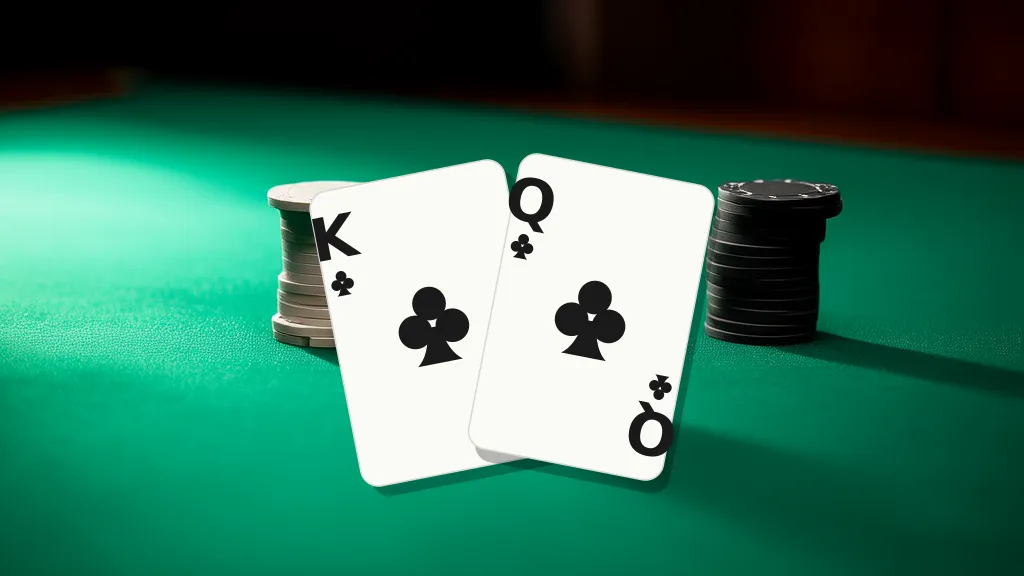
Master Queen-Nine Offsuit (Q9o) strategy. Learn position requirements, domination awareness, BB defense play, and postflop lines for this marginal queen-high hand.
- how to play Q9O
- Q9O strategy
- GTO
- poker strategy
Introduction
Queen-Nine offsuit is a marginal queen: you still have a broadway anchor, but the nine-kicker creates a deep canyon between you and QT+, AQ, KQ. The structural problem is the card gap: compared to QT, Q9 makes fewer connected straight grids and loses equity in same-rank battles when both players hit top pair.
Against a random hand, Q9o typically sits around ~55% to ~58% equity preflop—all-in—still positive, but playability and domination dominate real-game EV more than that number. Most winning players treat Q9o as primarily a BTN/BB hand, with CO showing up only in loose 6-max or ante structures. EP and MP are usually automatic folds in competent online pools at 100bb.
Common misconceptions:
- “It’s a queen—I defend always.” Missing that Qx rag hands differ massively in realization; Q9o loses harder postflop than charts suggest when villains value bet thinner correctly.
- “I can open it like JTs.” JTs has stronger connectivity and is often suited in the analogy players reach for—apples to oranges.
If you take one idea from this introduction: Q9o needs position + incentive to steal or defend profitably; it is not a core value hand.
The Connectivity Gap (Q to 9)
Straights like T-J-Q-K still exist, but you block fewer helpful combos than QT and you collide with QT, QJ constantly on Q-high boards. On 9-high flops, K9, A9, T9, 98 classes haunt you. The hand is in between worlds—never clean.
Hand Strength Analysis
Versus One Random Hand
Monte Carlo clusters put Q9o around ~56% to ~58% vs a random holding—enough to be ahead, not enough to feel safe.
Versus Strong Broadway and Pairs
Approximate preflop all-in reference points for Q9o:
| Versus | Q9o equity (approx) |
|---|---|
| AA | ~11% |
| KK | ~14% |
| ~15% | |
| JJ | ~33% |
| TT | ~43% |
| AQo | ~32% |
| KQo | ~45% |
| QJo | ~42% |
These numbers reinforce the same story: do not stack off preflop without massive overlay (bounty, huge dead money, misread shove ranges).
Versus Dominated Queen Classes
AQ, KQ, QJ, QT dominate your top pair situations catastrophically. Even Q8s—not a “monster”—can create better redraw structures on many runouts.
Versus Lower Suited Hands
Versus 87s-type holdings preflop, Q9o might still be ~55% to 58%, but playability swings postflop toward the suited hand when stacks are deep and flops are multiway.
The Domination Dynamic
Q9o lives in domination shadows:
Flop
Q-T-4: you have second pair with a kicker war if someone has QT; if you somehow have top pair onQ-5-2, AQ and KQ remain omnipresent in defend ranges.Flop
9-7-2: top pair weak kicker is vulnerable to overcards and better 9x.
The strategic compression rule:
One pair with Q9o is frequently a bluff-catcher or a thin value hand—not a stack-off default.
SPR and Commitment Thresholds
Q9o rarely merits automatic stack-off on one pair.
- SPR < ~2.5 in a 3-bet pot where ranges are demonstrably wide (think BTN vs BB aggression festivals): cautious commitment with top pair can occur—still audit raises.
- SPR ~4–7: Plan for two streets maximum with top pair versus competent foes; rivers are often checks or thin calls, not bombs.
- SPR > ~8: Favor pot control; fold to heavy aggression from passive players.
6-Max vs 9-Max Adjustments
6-max: BTN steals rise; Q9o can defend BB vs wide opens at trimmed frequency. CO opens become possible in soft games with antes.
9-max: EP strength rises; Q9o folds more; BB defense still exists versus wide late-position opens, but avoid cold call chains without a plan.
Online vs Live Adjustments
Online: tighter default folding to 3-bets; charts emphasize BB defend mixes. Don’t over-flat from SB.
Live: bigger pot sizes and multiway flops—Q9o realizes worse; prefer isolation if you enter, or simply fold pre.
Preflop Strategy by Position (UTG, MP, CO, BTN, SB, BB)
UTG / MP
Fold in essentially all competent 100bb structures.
CO
Mix fold as baseline; open small only in soft pools, with ante, or when blinds are deeply passive.
BTN
Primary open seat: 2bb–2.3bb steals depending on site culture. Fold to tight 3-bets without reads.
SB
Avoid flats; 3-bet only if your strategy labels it—most students fold Q9o from SB versus BTN opens.
BB
Defend versus CO/BTN at low frequency guided by charts; fold versus UTG most of the time.
Facing Limper(s)
Iso only when limpers are weak-sticky and you have position; size 3bb + per limp online baseline, larger live. Limping behind is rarely correct—you forfeit folds and invite domination.
Facing Different Preflop Actions
As Open-Raiser
C-bet dry high boards at lower frequency than strong aces; your range is weaker.
Facing 3-Bet
Fold by default at 100bb; only 4-bluff in highly specific models.
Facing 4-Bet
Fold.
Squeeze Spots
Cold 4-bets with Q9o are not student material.
Postflop Strategy
Favorable Flops
Q-6-2rainbow top pair: small bet for value from worse Qx that shouldn’t exist much—but stations exist; two streets often better than three.9-4-2rainbow with second pair: check back IP sometimes; thin stab once OOP only versus overfolders.
Dangerous Flops
K-Q-Jtwo-tone,T-9-8, monotone boards: slow down; pair is not a license.
Turn and River
Prefer honesty: when overcards peel and passive villain awakens, release one pair.
Board Examples
Q-8-3rainbow: similar to QTo but worse kickers versus QT; go thinner on value.A-9-5: you have middle pair—mostly give up without reads.7-6-5two-tone: straight/flush density—no attachment.
EV Calculations: Concrete Math in Common Spots
Spot 1: BB Defend Pot Odds
BTN opens 2.5bb, 1bb posted; you need ~raw pot odds to continue, but realization matters: even positive chip-EV flat can underperform if you over-continue postflop—discipline pays.
Spot 2: Steal Success Rate
If folds to BTN steal exceed ~38–42% combined blinds in a toy model, marginal opens like Q9o approach profitable—track population rather than guessing.
Spot 3: Top Pair vs Value Raise (Turn)
Pot 24bb, villain raises your 14bb bet to 38bb. You need substantial equity to continue; versus sets/t better, Q9 might hold ~18–25%—often a fold.
Spot 4: Implied Odds Illusion
Deep stacks do not resurrect Q9o if villains never fold top pair—implied odds require actually getting paid when you hit thin.
Common Mistakes
- Opening Q9o from EP/MP in tough games.
- Calling 3-bets because “it’s sooted”—it’s not.
- Stacking off with one pair on K-Q boards.
- Ignoring AQ/KQ on Q-high textures.
- Autocontinuation multiway with middle pair.
- SB complete habits that bleed EV.
- Overvaluing backdoor straights on wet boards.
- Hero calling rivers with third pair versus honest populations.
- Failing to drop the hand when SPR demands honesty.
- Treating CO like BTN regarding opening frequency.
Advanced Tips
Sizing Theory
Small c-bets (25–33% pot) can work IP on dry textures when villains over-fold; increase size when floaty.
Solver Insights
Solvers defend Q9o from BB sparingly versus wide opens; rarely 3-bet. Use as a frequency map, not permission to call all.
Exploitative Reads
- BB vs BTN when BTN folds to 3-bets too much: slightly more 3-bet bluffs—Q9o can appear at micro frequency only for advanced players.
- Stations: value thinner on dry Q-low, not on wet broadway.
Cash Game vs Tournament Adjustments
Deep Stack Cash
Tighten opens; BB flats require postflop sobriety.
Short Stack
Q9o is not a default reshove value unless ranges are wildly wide.
ICM / Bubble
Fold more marginal defends when survival dominates chip EV.
PKO
Bounties can widen jams facing wide shoves—still avoid dominated call-offs.
FAQ (Frequently Asked Questions)
Is Q9o playable UTG?
No in standard online 100bb.CO open frequency?
Low; pool-dependent.BB defend vs BTN?
Sometimes; use solver/chart baselines.Better than Q8o?
Yes—higher card helps showdown and straights slightly.Worse than QTo?
Yes—connectivity and kicker matter.Can I 3-bet bluff?
Rare; player-type dependent.Multiway plan?
Tighten; give up often.Live adjustments?
Bigger iso, more caution postflop.Monotone boards?
Proceed carefully without clubs/spades in hand.Cold call button squeeze?
Avoid.Double board pair?
One pair drops fast in showdown value.Ace on turn?
Top pair often becomes bluff-catch, not value.Best skill to learn with Q9o?
Fold timing.Zoom pools?
Simplify—fold pre more.Study method?
Three buckets: Q-high, 9-high, ace-high flops—write defaults.Should I limp LP?
No.Versus minraise?
Treat normally; don’t overplay.Straddle games?
Treat as shorter effective; reduce fancy flats.How to plug leak?
Track hands played from EP.One-line summary?
Steal/defend late only, fold to heat, don’t marry one pair.
Summary: Key Takeaways
- Q9o is ~56%–58% vs random preflop but dominated easily by QT+, AQ, KQ.
- Primary roles: BTN opens, BB defense vs wide ranges; CO only soft/ante contexts.
- Card gap Q–9 reduces playability versus QJo/QTo classes.
- SPR: avoid naked stack-offs on one pair without population reasons.
- 6-max > 9-max for playability; still fold EP.
- Online favors structured fold-to-3-bet; live needs multiway caution.
- Versus limpers: iso selectively; no limp-fest participation.
- Versus aggression: default fold to 4-bets; careful vs 3-bets.
- Postflop: thin value on dry Q-low; escape wet textures.
- Mistakes: EP opens, married kickers, multiway stubbornness.
- MTT/ICM: trim marginal defense; PKO shifts only with clear math.