
How to Play KK (Pocket Kings) in Texas Hold'em - Complete Strategy Guide
May 3, 2026
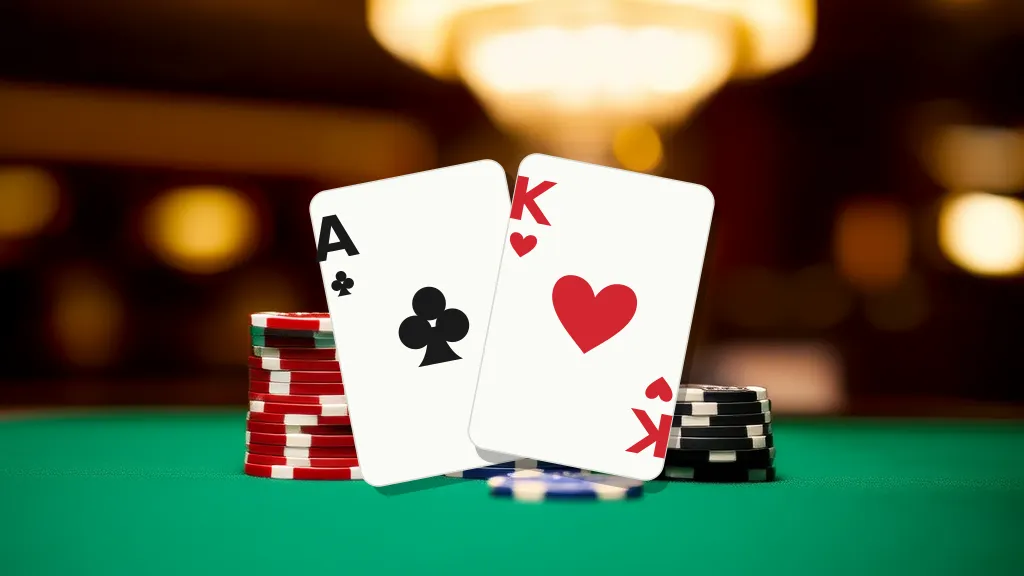
Master Pocket Kings in every position and situation. Learn when to 4-bet, how to handle Ace-high flops, optimal postflop play, and tournament adjustments for the second-best starting hand.
- how to play KK
- KK strategy
- GTO
- poker strategy
Introduction: Why Pocket Kings Is the Number-Two Starting Hand
In No-Limit Texas Hold’em, the starting-hand hierarchy is not a long list of “pretty good” holdings with minor differences at the top. At the summit there is a cliff: pocket aces (AA) sit alone, and pocket kings (KK) are the clear runner-up. KK is the second-strongest hand you can be dealt preflop for a simple structural reason: it is a premium pocket pair that dominates almost every other pocket pair, dominates most ace-x combinations that are not exactly ace-king, and usually crushes the suited broadways and merge-y hands people continue with when pots balloon.
Yet KK is also the hand that produces some of the game’s most expensive emotional errors—because KK’s primary weakness is not “weakness” in the sense of bad cards. Its primary weakness is an information problem dressed up as bad luck: the board can arrive with an ace, and suddenly the second-best starting hand becomes, in many spots, only an overpair to everything except that ace. You still often have the best hand. You still often should continue aggressively. But the ace rewrites the story, compresses your continuing range in villains’ eyes, and triggers a reflex in humans that is almost comically expensive: panic folding overpairs or, conversely, stacking off blindly because “it’s kings.”
This guide is written for players who want a complete framework: modern GTO-flavored baselines, population exploitations, combinatorics (blocking), stack-depth and SPR thinking, and explicit tournament (ICM) boundaries. If you walk away with one thesis, let it be this: KK is a preflop monster and an ace-on-flop management problem. Play the preflop side like the equity giant it is; play the flop side like an engineer updating probabilities under new evidence—not like someone defending a fragile ego.
Variance is not a moral verdict. You will occasionally lose memorable pots with kings; you will occasionally win mundane ones that never make for good stories. Judge your play on whether ranges, SPR, and incentives supported the line, not on whether the board “respected” your hand—aces still arrive about twenty-three percent of the time, and disciplined players prepare for that frequency instead of treating it as betrayal.
The Mathematics Every KK Player Must Internalize
Frequency: How Often an Ace Flops When You Hold Kings
With KK, there are four aces left in the deck of 50 unknown cards (you see two kings). A helpful mental model is the complementary probability: the flop misses all aces if three successive cards are drawn from the 46 non-ace cards among those 50.
A standard calculation:
[ P(\text{no ace on flop}) = \frac{46}{50}\times\frac{45}{49}\times\frac{44}{48} \approx 0.7745 ]
Therefore:
[ P(\text{at least one ace on flop}) \approx 1 - 0.7745 \approx 0.2255 ]
So roughly 22.5% to 23% of flops contain at least one ace when you start with pocket kings. That number is high enough to feel “constant” in session memory—about one flop in four—and low enough that you must not behave as if an ace is inevitable. The mistake spectrum is:
- Over-fear: treating every ace flop like you are drawing dead.
- Under-fear: ignoring that ace-heavy runouts delete many worse hands that would otherwise pay you.
This single frequency explains why KK strategy is less about “how strong kings are” and more about how to continue when the most frightening high card arrives often enough to be routine.
The Cooler: KK Versus AA Preflop (Equity From the Kings’ Perspective)
When the money goes in preflop extremely deep against a range that is truly aces-only, kings are in trouble—but against random aces specifically, the matchup is the canonical cooler. Pocket kings versus pocket aces all-in preflop is commonly simulated at about ~18% to 20% equity for KK depending on exact accounting (some references cluster near ~18% for KK; others nearer ~19%). The user-facing truth is brutal and simple: you are not flipping; you are crushed.
Strategically, this matters in two different ways:
- Deck realism: In many 4-bet and 5-bet pots, AA is absolutely present in strong opponents’ continuing ranges. You are not “safe” because kings are pretty.
- Population realism: Many live and low-stakes online players over-weight the probability you are up against aces every time a pot gets big. That psychological tilt is exploitable for you when they have middling hands, and destructive when you begin folding kings preflop against ranges full of QQ/JJ/AK.
The modern approach is range versus range: KK remains a blistering strong hand versus almost any 3-bet/4-bet continuing policy that includes AK, QQ, JJ, bluffs, and merges. Versus a nit who only continues with KK+ after multiple rescues, your equity collapses—but that opponent basically does not exist as a balanced policy at most stakes.
Blocking Effects: Why KK “Blocks” AK (and What That Actually Buys You)
Card removal is not magic; it is counting. With Kh Kd in your hand:
- You remove one king from each AK combo that would otherwise use that king.
- There are 16 combos of unsuited AK and 4 suited, 20 total from a full deck; holding two specific kings removes combos that contain either of those kings.
In practical play, KK blocks a meaningful chunk of AK—the classic hand people fear when they hold kings and an ace flops. This is strategically double-edged:
- Good news: In some spots, villain is less likely to hold top pair-top kicker Ax when you block part of the AK lattice (though note the ace on board interacts differently than preflop blocking stories).
- Bad news: You also block some natural Kx “second best” hands that would otherwise blunder money in against your overpair on king-high boards.
Advanced players separate true combo reduction from cartoon narratives. Blocking matters most when you are comparing bet versus check frequencies, thin value versus check-back, and whether a bluff could be credible—not when you are looking for an excuse to play KK timidly preflop.
Preflop Baselines: Pocket Kings by All Six Positions
The following is a practical baseline for typical 100bb online cash environments and “standard” live $1/$2 to $2/$5 structures where rake and open sizes vary—adjust sizes to your game, not the other way around. The shape of the strategy is what transfers.
Under the Gun (UTG) and Early Position
KK is an automatic open at essentially all sane depths when action folds to you. The debate is not “open or fold”—the debate is sizing and how you respond to aggression.
- Default: Open for your standard early-position size (often 2.5bb–3bb online; sometimes larger live).
- Versus a 3-bet: 4-bet for value at high frequency; mix policies exist at solver depth, but for human implementation lean heavily toward putting money in with kings.
- Trapping: A cold-call of a 3-bet out of position (or a flat of a squeeze) should be a low-frequency, opponent-specific tool—not a lifestyle. The problem with habitual slow-play is you invite multiway pots, awkward SPR, and you under-realize fold equity against AK/QQ-type hands that might fold to continued aggression.
Key early-position principle: Your position is bad postflop, which is an argument for polarizing the preflop war (4-betting) more often than an attempt to “play tricky” and navigate ace-high flops four-handed.
Middle Position (MP)
Functionally similar to UTG for KK purposes: open, 4-bet against typical 3-bets, and treat cold 4-bets as strong but not aces-only until proven otherwise.
What changes in MP is that ranges widen: the 3-bettor may include more suited broadways, merged pairs, and bluffs. That widening is great for KK. Your EV of re-raising increases because the opponent’s stacking range includes more dominated pairs and more “pretty” hands that are still crushed preflop.
Cutoff (CO)
The CO is where games begin to loosen. KK is still a clean value 4-bet against a button or blinds 3-bet in most formations.
A subtle exploitative idea: against chronic floaters and insane defenders, your open size might influence SPR on ace-high boards. This is secondary—do not shrink opens with kings just to dodge aces; that is superstition disguised as planning.
Button (BTN)
On the button, KK is both a fantastic opener and a fantastic iso-raiser versus limps (live). Versus blinds 3-bets, you frequently want to 4-bet small in modern structures to keep in worse hands while still building a pot—especially if the opponent’s continuing range includes AK and QQ.
Flat-calling a 3-bet in position with KK can be fine as a frequency against opponents who:
- Fold too much to 4-bets (you punish by keeping their junk in), or
- Jam over 4-bets at a wildly imbalanced frequency (solver-adjacent adjustments).
For most players learning the game, default to aggression with kings on the button versus typical 3-bets; complexity can wait until your reads are reliable.
Small Blind (SB)
SB is the worst seat postflop, and KK still wants to 3-bet versus a steal at high frequency. The ancient pain point is getting flatted in the big blind and playing a bloated pot out of position—that is fine with kings. It is not fine to limp SB with KK “to trap,” because you donate EV by letting the BB realize equity free or cheap.
Versus a BB cold 4-bet, KK is usually a 5-bet jam candidate at 100bb in many online sims (exact policies depend on rake, size ladders, and antes). Treat those spots as stack-off adjacent, not “maybe I’m dead.”
Big Blind (BB)
KK arrives when someone opens and you 3-bet for value (or, rarely, trap against a maniac)—usually 3-betting is correct versus most opens.
Versus a 4-bet, kings are typically a call or 5-bet (often all-in at 100bb) depending on positions, sizes, and whether the 4-bet is tiny (inviting chaos) or large (polarized). As a human default: do not fold KK preflop in cash games at 100bb versus a single opponent’s aggression unless you have a specific, extreme read (and even then, folding preflop KK is the kind of claim that should be documented with notes, not vibes).
Facing 3-Bets: Practical Decision Architecture
When you open and face a 3-bet, KK’s incentives are straightforward in theory and messy in practice because humans signal strength with noise.
In Position Versus Out of Position
- In position (IP): You can 4-bet small and retain postflop maneuverability; you can occasionally flat versus someone who spews after flats or who over-folds to 4-bets preflop but continues poorly postflop.
- Out of position (OOP): 4-betting tends to perform well because it denies equity realization to hands that would happily see flops, and it builds pots with an equity giant.
Versus Tight 3-Bettors (Polarized “Nit” Archetypes)
Against opponents who 3-bet 2%–4% over large samples, your Bayes shift matters: QQ+/AK becomes a larger share of their value. Kings are still usually a continue, but flatting or smaller 4-bets may change how often you face a 5-bet jam that is truly AA-heavy. This is a read-dependent fork—not a license to get timid for no reason.
Versus Wide 3-Bettors
Against foes 3-betting 10%+, KK is a printing 4-bet value hand. Your strongest exploitative adjustment is not clever slow-play but forcing mistakes: they will attach themselves to AK, JJs, suited nonsense, and “blocker” hands that cannot stand pressure.
4-Bet and 5-Bet Dynamics: Where KK Lives
Why KK Is a Core 4-Bet Value Hand
Modern preflop trees treat KK as a staple value 4-bet because it performs exceptionally well against continuing ranges containing AK, QQ, JJ, and chosen bluffs. KK also anchors your value so your 4-bet bluffs (when you use them) have credibility.
Response Trees: Facing a 5-Bet Jam at 100bb
In many solver-baseline cash constructions at ~100bb:
- KK is frequently a call or jam versus a 5-bet shove, depending on whether the jammer is capable of light jams, merged jams, or AA-only.
- Population note: at low/mid stakes, 5-bet jams are often strong but not perfectly polarized. Folding kings preflop becomes dramatically more plausible only when the jamming range is demonstrably aces-heavy and there are additional constraints—often tournament ICM (covered later).
Size Ladders and “Indifference”
You do not need to memorize solver frequencies to benefit from the concept: small 4-bets exist partly to let villains continue with dominated hands. Giant 4-bets can price yourself out of action. With KK, you are rarely trying to “end the hand preflop” unless you are exploiting a caller who only pays off jams—you are trying to build a mathematically enormous pot with a mathematically enormous hand.
The Slow-Play Debate: Should You Ever Flat KK Preflop?
The honest answer is: sometimes, at low frequency, against specific opponents and with stack-depth awareness—but slow-playing KK should never be your default because the downsides are structural:
- Multiway expansion: A flat invites more players, which is great for sets but bad for clean overpair play—especially on ace-high boards where everyone’s calling range contains more Ax than you like.
- Lost fold equity: You want worse hands to face uncomfortable continuations. A flat can be fine when a 4-bet would isolate you versus AA-only, but that scenario is rare in practice.
- Reverse implied odds versus coolers: Trapping does not reduce the chance you are coolered; it often increases the cost of the cooler because the pot grows through passive lines.
When flatting is most defensible:
- IP versus an opponent whose response to 4-bets is so pathological (massive over-jam or massive over-fold) that a flat maximizes EV.
- Deep stacks where postflop skill edge is large and villain routinely pays off three streets with worse—but even then, a small 4-bet “mixed” strategy often competes.
Default: raise and re-raise with KK like a sane person; experiment with flats when you have data.
Ace-High Flops With KK: The Core of the Guide
If you only read one section, read this. Ace-high textures are where KK’s theoretical strength (overpair to non-ace boards) collides with psychological and range logic.
Step 1: Classify the Ace Flop Precisely
Not all ace-high flops are the same bucket:
- Dry ace flops:
A-7-2 rainbowversus dynamic ace flops:A-T-9 two-tone. - Ace with low disconnectedness tends to simplify continuation decisions: fewer combo draws, clearer value targets.
- Ace connected can contain sets, two pair, straights, and massive draws even when you still have an overpair to most one-pair hands.
Your overpair is “the same category” in a toy model, but your opponents’ continuing stories are not the same.
Step 2: Ask the Range Question Before the Fear Question
When an ace flops, competent players replace the instinct “oh no” with:
- How does villain continue on this ace board given preflop action?
- Which worse hands still pay, and which better hands are present at meaningful frequency?
In a 4-bet pot where ranges are narrow, an ace can actually make some opponents more straightforward: they may stack off with AK more often than they should, or overvalue QQ/JJ in ways that become incorrect (depending on runout). Conversely, a nit’s entire remaining value may become Ax-heavy quickly.
Step 3: SPR Dictates Courage Versus Caution
With low SPR (committed pots), kings are often automatic continues on many ace-high boards because the pot is too large relative to stacks to “play scared” with a strong overpair-plus blocker story. With high SPR (deep), your decisions become more nuanced: you must weigh implied odds against you when villain has sets and your ability to realize showdown value against passive Ax that checks multiple streets.
A usable heuristic:
- SPR < ~2–3 in a 4-bet pot: leaning stack-off on many ace-high flops absent an extreme nit read.
- SPR > ~6 in a single-raised pot against a competent reg: proceed with street-by-street planning; consider pot control lines versus capped ranges.
These heuristics are not laws; they are anchors.
Step 4: Bet Sizing on Ace-High Boards (When You Bet)
When you choose to bet KK on an ace-high flop, your size should communicate a believable story:
- If your range is polarized toward AK/AQ sets versus folds, large sizes can work—but you may isolate yourself versus AK and better too often if villain is competent.
- If your range is more merged, a medium size can keep in QQ/JJ, gutshots, and suited backdoors on dynamic boards.
The population exploit at low stakes is often simpler: many opponents under-bluff runouts and over-call one-pair hands. That pushes KK toward value betting more often than GTO versus regs might dictate—if your player pool is sticky.
Step 5: Check-Calling Versus Check-Raising (OOP Nuance)
Out of position on A-x-x, KK is sometimes a check-call candidate to stabilize versus opponents who blast off with worse pairs and draws, and to avoid purely isolating versus better when you bet three streets.
But passive check-calling every ace board is how you bleed EV against players who will take free equity with hands you crush—your default remains aggression OOP in many human pools, especially when villain’s flop float range is wide.
Step 6: Turn and River Planning (Where Kings Are Won or Lost)
The ace flop is not the finish line; it is the first clause of a sentence.
- Blank turns often favor continuing to extract from QQ/JJ-type holdings and from stubborn Kx that mistakenly hero toward two pair.
- Additional coordination (second broadway, flush completing, four-straight boards) shifts KK from “strong one-pair” to marginalized one-pair faster than your emotions expect.
Solver-style insight in plain English: on many ace boards, your hand is strong enough to bet for protection and thin value, but not strong enough to auto-stack-off at infinite depth without a read. The art is building the pot when worse persists and applying brakes when the density of nuts explodes.
Step 7: Facing Aggression on Ace Flops
When villain leads or check-raises an ace-high flop, avoid collapsing into one reflex:
- Do not auto-fold kings because “you warned me about aces.”
- Do not auto-stack kings because “they’re kings.”
Instead, estimate polarization:
- Small-sample live tells aside, check-raises in 4-bet pots are often strong—yet still can include AK you beat and draws on wet textures.
- In single-raised pots, check-raises can be wider depending on stake and culture.
Use blockers as tie-breakers, not oracles. Holding KK removes some combos from villain’s range narratives involving certain king-blocked hands, but the ace on board is doing most of the conversational work.
Step 8: Delayed C-Bets, Check-Backs, and “Trapping” the Wrong Player
Some players attempt fancy delayed lines with KK on ace-high boards: check flop “to represent weakness,” then bomb turn. Against inattentive opponents, this often fails because they do not adjust to story—they simply miss bets they would have called, or they catch scary turns for free. Against over-aggressive opponents, a delayed line can induce bluffs that a flop bet would have folded out.
The implementation rule is audience-specific:
- Versus stations: favor straightforward value; complexity is not EV-positive when villain does not fold and does not bluff enough.
- Versus aggro regs: Mix stable calls and occasional traps at deeper SPR where polarization is plausible.
Step 9: Ace-High Turns That Change Everything
Certain turns transform ace flops from “manageable overpair spots” into geometry nightmares:
- Second broadway cards that complete broadway straights or strengthen two-pair classes.
- Flush-completing cards when the flop had two of a suit.
- Paired lower cards that increase boat frequencies for set-miners.
When the turn increases nut density sharply, KK often downgrades from “value machine” to marginal SDV / bluff-catcher, depending on villain’s tendencies. The mistake is re-annotating the hand strength using preflop labels instead of using path-dependent strength.
Step 10: River Decisions—Hero Call Versus Hero Fold Culture
River decisions with KK on ace boards are culturally contaminated: poker television loves hero calls and hero folds equally, depending on storytelling needs. Your job is unromantic: compare villain’s value combinations to bluff combinations at your price, conditioned on line credibility.
If villain triple-barrels ace-high runouts and never shows air, do not call because “pot odds feel close”—update. Conversely, if villain over-bluffs missed draws, KK can become a classic bluff-catcher even when the board looks scary.
Facing Cold 4-Bets and Squeeze Wars: A KK Map
Cold 4-bets (a fourth bet entered by a player who did not make the initial raise) often represent premium-heavy ranges—but “premium-heavy” still usually includes AK and QQ, not only AA. KK’s response is typically continue, with the implementation depending on position:
- In position facing a cold 4-bet, 5-bet jams and small 5-bets compete; at 100bb, folding kings to a single unknown cold 4-bet is usually too tight absent powerful player-specific data.
- Out of position, the pot geometry can force earlier commitment; avoid flat-calling if it produces sprinkle multiway outcomes where someone else enters.
Squeeze pots introduce additional players; KK still wants to isolate and clarify the situation preflop rather than invite four players with speculative holdings.
Preflop Sizing Ladders: Practical Examples (Illustrative, Not Dogma)
Sizing should match your room, but KK benefits from consistent ladders so your postflop SPRs do not randomize your decisions:
Example Online 100bb Ladder
- Open 2.5bb EP, 2.2bb BTN-type steal sizing if your strategy uses it.
- 3-bet 3x–3.2x IP versus opens when standard.
- 4-bet 2.2x–2.5x the 3-bet amount (or chip equivalences) as a common modern shape, adjusting for effective stacks.
Example Live $2/$5 Ladder
Opens often land $20–$35 depending on elasticity; KK wants whatever sizing your strategy uses for strong EP value, not a random “feel” upshift because you are scared of aces. Scared sizing teaches observant opponents that your strong range looks different—bad trade.
Training Drills You Can Do Off-Table
- Flop generator drill: Deal KK, roll flops until you get ace-high; write your flop plan in one sentence, then your turn plan on three different turn categories (blank, brick that completes flush, broadway turns).
- Range writing: For each opponent type (nit, reg, fish), list five hands that continue on
A-9-4rafter you 4-bet small and villain calls. - SPR flashcards: Given pot and stacks, classify SPR bucket in under five seconds until it becomes automatic.
These drills sound tedious; that is why they work.
Postflop Play on Non-Ace Textures: Kings as an Overpair Engine
King-High Boards
When you flop an overpair-plus story (you have KK on Q-7-2), you are in the value-driving business. Bet frequencies should be high in heads-up pots, sizes should deny equity to hands with two live overs and backdoors, and you should be cautious about slow-playing into multiway fields where set-mining ranges realize too cheaply.
On K-x-x flops, you have top set—that is not “overpair strategy,” that is monster strategy. Build pots, deny free cards to draws on wet boards, and don’t “talk yourself into weird slow-plays” that help suited connectors.
Queen-High and Jack-High Dry Boards
These textures are historically excellent for kings until villain’s continuing policy is defined by sets and two pair on runouts. Start with range advantage and nut disadvantage awareness:
- You are often ahead on the flop.
- You become more cautious as turn kills accumulate on T-J-Q type paths.
Low, Wet, and Connected Boards
Boards like 9-T-J two-tone are not “ace problems”; they are straight and combo-draw problems. KK remains strong on many of these flops heads-up, but multiway, kings lose equity fast.
Your plan:
- Bet larger on wet boards when you bet (charge draws).
- Check more at deep SPR when ranges contain dense draws that can raise you.
- Avoid automatic stacks with one pair when the stack-to-pot ratio says you still have meaningful decisions on turns and rivers.
Paired Boards
Paired boards often stabilize some situations because flush/straight densities shift. KK typically remains a strong value hand versus many pocket pairs that now look like “maybe I’m good” bluff-catchers—but paired aces boards (A-A-x) are their own horror film; treat those as ax-centric management problems, not generic overpair spots.
Expected Value: Worked Examples (Toy Models That Teach Real Intuition)
EV reasoning does not require pretending you know villain’s exact range. It requires transparent assumptions.
Toy Model 1: C-Bet on A-7-2r in a 4-Bet Pot (Low SPR)
Assume:
- Pot on flop: 45bb
- Effective stacks: 55bb behind
- Villain’s continuing range when you shove is {AK, some AQ, occasional slow-played AA}
Even pessimistic constructions often leave KK with non-trivial equity against {AK,AQ} subsets, and fold equity might exist versus missed floats if you choose smaller lines (not always available). The point is not the exact number—it is that low SPR removes maneuvering and pushes equities toward commitment.
Toy Model 2: Larger SPR Single-Raised Pot
If the pot is 6bb on the flop and stacks are 200bb, you are not “all-in or fold” with kings on many textures. Your EV comes from multiple streets: sometimes you win medium pots, sometimes you lose big ones to sets, occasionally you fold turn or river correctly—that possibility space is a feature, not a failure mode.
Toy Model 3: The Cost of Auto-Folding Equity
Suppose you adopt a policy: always check-fold KK on any ace flop versus competent opposition. You will dodge some traps—and you will torch EV in pots where villains continue with QQ/JJ, random floats, and draws that you crush. Solver culture exists partly to stop that kind of over-fit fear.
Common Mistakes: The Expensive KK Leaks
Mistake 1: “Ace Flop Auto-Panic”
Treating any ace as “game over” produces over-folding in spots where your hand remains a strong bluff-catcher or even value.
Mistake 2: “Kings Preflop Immortality”
The opposite error: never folding even when constraints (extreme ICM, demonstrated AA-only jam patterns) justify hero folds. This is rare in cash; more relevant in tournaments.
Mistake 3: Under-4-Betting Because of AA Anxiety
If you consistently flat 3-bets OOP with KK to “avoid coolers,” you invite multiway disasters and under-print against AK/QQ.
Mistake 4: Over-Jamming for “Protection” in Bad Spots
Jamming too wide on wet boards at deep stacks can isolate you versus better and fold out worse simultaneously—the worst economic pairing.
Mistake 5: Ignoring Position and Initiative
KK from the blinds in a 3-bet pot OOP is not the same hand as KK in position in a 4-bet pot—same cards, different EV surfaces.
Mistake 6: Misplaying Multiway Pots
Allowing four players to see a flop with kings because you slow-played preflop is how set-miners and suited connectors take your lunch money.
Advanced Tips: Solver-Informed Heuristics Without Pretending You’re a Bot
You do not need to run a solve to adopt useful truths modern tools emphasize:
- Polarization increases with stack depth and aggressiveness: deeper stacks → more nuanced turn/river forks; shallower → more commitment.
- Range asymmetry matters: the player with stronger nutted advantage bets/raises more on boards favoring that advantage—don’t fight geometry with slogans.
- KK remains a potent value candidate in 3-bet/4-bet trees because worse premium hands exist abundantly in human populations.
- Blockers shift bluff-catch thresholds: sometimes KK is a better bluff-catcher than QQ because of removal effects—context-dependent, never universal.
- Don’t “balance” at low stakes when villains never punish you—max exploit until they adjust.
Cash Games Versus Tournaments: Structural Differences
Cash Game KK
At most cash depths, stack-off preflop with KK is ordinary against non-absurd ranges. Postflop, SPR is your compass.
Tournament KK (Chip EV Versus ICM EV)
In tournaments, especially near bubbles or massive pay jumps, KK preflop can become a genuine ICM decision facing extreme tightness or a known AA-only jammer. This does not mean you should become fear-based—it means survival equity has a dollar value detached from chip EV.
Practical guidance:
- Early/mid tournament, shallow to medium depth: play KK like the monster it is.
- Pay-bubble, final table, satellite lock scenarios: consult ICM tools and note-based exemptions; folding kings preflop becomes more thinkable—still extremely rare and never a default.
When to Fold KK (Reality Check: Extremely Rare, Mostly ICM)
Let’s be blunt for cash games at 100bb:
- Preflop folds of KK should be exceptional and evidence-driven.
- Postflop folds happen more often—usually not on the flop automatically, but on runouts where aggression and range narrow to mostly Ax and better or nutted lines that your price cannot justify.
In ICM-heavy spots, folds can become “correct pain.” Document those as format-driven, not as proof that kings are secretly weak.
The Psychology of Pocket Kings: Ace Anxiety in Plain Language
Human brains are not built for poker’s cadence. A rare premium arrives, dopamine spikes, and then an ace lands in the window roughly one time in four—often enough to feel like a personal insult, rarely enough that your rational mind still knows you are usually ahead of a random continuing hand. That mismatch produces ace anxiety: a learned reflex where kings “feel ruined” even when the situation is a standard high-equity decision.
Elite players treat ace anxiety as a signal to engage process, not a signal to engage drama. The process checklist looks boring on purpose:
- Who is the player, and what did preflop action say about their shape?
- What is SPR, and how much money remains relative to the pot?
- Which worse hands pay, and which better hands are mandatory in villain’s value set?
Ace anxiety becomes expensive when it short-circuits that checklist and replaces it with internal narration: “I always lose with kings,” “this card always comes,” “he must have aces.” Sometimes he has aces—but sometimes is not a strategy; frequency is.
Loss Aversion and the “Cooler Story”
KK vs AA is a cultural touchstone because it is visually painful: two premiums, one hopelessly behind. The equity is about four-to-one in favor of aces preflop from the kings’ perspective—bad, but not “nine-out-of-ten” in a naive sense. The emotional distortion is that players overweight the cooler because it is memorable, dramatic, and social-media worthy. They underweight the thousands of hands where kings win pots against AK, QQ, JJ, and worse because those outcomes feel “normal.”
Your strategic countermeasure is to budget emotion like a bankroll: you are not obligated to react to every ace flop as if you witnessed a tragedy. Often you witnessed geometry.
Confidence Without Delusion
The best KK players combine two traits that look contradictory but are not: aggressive preflop confidence and postflop willingness to downgrade one-pair strength when the betting story demands it. Delusion is stacking off because you “deserve” the pot; discipline is stacking off because the price and range model justify it—or folding later streets when they no longer do.
Multiway Pots: Why Kings Prefer Heads-Up Pots
KK’s equity does not disappear multiway, but its playability often worsens because the conditional probability that someone held an ace, a set mine, or a suited speculator increases with each additional player. Multiway pots also change the value of protection bets: larger sizing is frequently required to thin the field, yet larger sizing can also isolate you against the strongest continuing range if the table selects for strong continuations.
Practical multiway advice with kings:
- Avoid preflop lines that swell the field without a plan (limp-trapping from early position is the classic error).
- On dry boards multiway, you can still value bet, but expect tighter continues; your value targets shrink worse hands.
- On wet boards multiway, treat KK as vulnerable by default even without an ace: straights and flushes are far more likely to exist with three or four players seeing a flop.
The “Everyone Called” Tax
When four players take a flop, the “tax” is not just raw equity reduction—it is range intersection: the probability that some player’s continuing range includes Ax rises because there are more tickets in the raffle. It is still not automatic that you are beat, but it is automatic that your line must be more cautious at deep SPR than in a heads-up confrontation.
Stack Depth Playbook: 40bb, 100bb, and 200bb+
Short Stacks (~40bb or Less)
Shorter stacks compress decisions. With kings, preflop jams and calls of jams become more routine because postflop complexity is reduced and many pots quickly approach commitment thresholds. On ace-high flops at short SPR, you frequently find yourself in binary spots: continue aggressively toward stack-off or recognize rare extreme nit exceptions.
Standard Depth (~100bb)
This is the depth most literature targets. KK is a 4-bet staple, and many flop textures are played across two or three streets with explicit turn planning. Ace flops are the primary fork: you still have meaningful stack behind at 100bb, but 4-bet pots can still become low-SPR quickly depending on sizings.
Deep Stacks (200bb+)
Depth rewards nut awareness. KK remains strong, but one-pair hands lose innocence when 250bb can enter the middle on a coordinated path. Your turn and river discipline matters more than flop theatrics. Ace-high flops deep are where under-repping and pot control lines compete with fast-playing lines based on villain tendencies—there is no single slogan that replaces reads and range construction.
Live Poker Versus Online: Honest Adjustments for KK
Live: Larger Opens, Looser Calls, Stranger Stacks
Live games often feature stranger sizing ladders and more calling. That pushes KK toward bigger preflop raises in some rooms—not to “charge draws” preflop (a cliché), but to define SPR and discourage six-way nonsense. Live tells can matter at low frequencies; do not build a kingdom on them, but note extreme deviance (only min-raises AA types, only trembles with bluffs types) when reliable.
Online: Faster Regs, More 3-Bets, Cleaner Population Sample
Online environments often produce more aggressive preflop at equivalent stakes. KK faces more Solver-adjacent 3-bets and 4-bets. The defensive adjustment is usually less preflop fear and more postflop specificity, because ranges are wider and AK/QQ remain abundant in continuing ranges.
Rake and Straddle Realities
When rake is high or straddles inflate pots, commitment thresholds shift slightly—sometimes you become more all-in oriented earlier to reduce street-by-street friction; sometimes you adjust sizes to keep worse in. KK is strong enough that your biggest leak is rarely “too aggressive given rake”; it is more often postflop pattern errors.
Worked Scenarios: Walking Through Ace-High Pots (Narrative Drills)
These are not universal answers; they are training wheels for thinking in stories.
Scenario A: You Open UTG, Button 3-Bets, You 4-Bet Small, Button Calls
Flop: A-8-3 rainbow, pot is already large, SPR is low. Versus many players’ continuing ranges, you still confront plenty of QQ–JJ and possibly KK (unlikely given your cards—combinatorically absent), AK, and some floats. With low SPR, a continuation is common: you are not pretending aces vanished; you are charging worse pairs and denying free turns to hands with backdoor equity. Versus a pure nit who only continues with Ax and sets, your plan shifts—nits change everything, which is why tracking matters.
Scenario B: Single-Raised Pot, In Position, Flop A-T-6 Two-Tone
You bet and get called. The turn is a blank rainbow brick. Your decision is whether to triple-barrel for thin value versus QQ/JJ, or check back and pot control against a raise-happy reg. At deep SPR, checking some turns exists to protect your range and avoid building a ginormous pot on bad rivers. At low SPR, you may be committed regardless—geometry again.
Scenario C: You Defend BB Versus a Small Button Open, Flop A-7-7
Paired board with an ace—villain may over-c-bet Ax and under-bluff; your kings are an overpair to everything except Ax and boats. Versus population under-bluffing, calling down lighter can be correct; versus a competent polarized player, you may fold earlier than live players think “kings must go to showdown.” The board pairing reduces some draw volatility but does not delete Ax.
Scenario D: 4-Bet Pot, You Have KK, Flop A-K-J Two-Tone
This is a high-interaction texture: top pair, straight possibilities, flush draws. KK is no longer a serene overpair; it is a hand navigating equity denial, raises, and turn reversals. Many players make the error of auto-going broke because preflop felt premium—depth should discipline you. Sometimes stack-off remains correct versus wild ranges; sometimes you must release on rivers when villain’s line becomes straight flush narrow.
Additional EV Reasoning: Equity, Combos, and Tough Calls
Combinatorics Reminder With an Ace on Board
When an ace flops, Ax combos depend on villain’s preflop policy. If villain cold-calls a 3-bet only with AQ–AT suited and some sets, your KK performs very differently than if villain defends with all Ax and suited junk.
You do not need perfect accounting; you need ordered magnitude:
- If Ax value becomes dense, your kings lose showdown and must rely on fold equity or earlier street maneuvering.
- If Ax is sparse but floats are wide, betting remains attractive.
Implied Odds (Against You)
On coordinated boards, SETS-two pair can extract more when you overplay an overpair. KK is not uniquely punished—every strong one-pair Tier suffers—but kings players often refuse to fold because “it’s kings,” paying off rivers that only lose to value.
Reverse Implied Odds (Rare but Real Deep)
When you inflate the pot deep OOP against a nutted-heavy continuing slice, KK can win small pots and lose large ones—reverse implied odds territory. The defense is sizing discipline early and avoiding escalators when the board runout favors villain’s nut advantage.
Solver Insights in More Detail: What Modern Tools Actually Teach
Frequency Language Versus Human Language
Solvers output mixed strategies because indifference points exist. Humans love “always/never.” The productive translation:
- If a solver occasionally checks KK on certain ace boards at some depth, that implies range protection and equity retention motivations—not “kings became medium strength forever.”
Role of Sizings in Polarization
On many ace boards, large bets tend to favor polarized ranges in theory; small bets keep in wider continues. KK sometimes occupies the value thick middle that human players mislabel as “awkward.” The awkwardness is often a sign you are doing real poker, not that the hand is unsolvable.
Exploitative Overrides
If your opponent pool never raises turns without the nuts, you under-bluff-catch according to theory but over-fold in practice? No—you exploit by folding more than GTO versus insane honesty, and by value betting thinner versus calling stations.
Don’t Perform GTO Theater Without an Audience
If nobody adjusts, simple max-value strategies with KK crush. The solver baseline is your anchor, not your personality.
Cash Games Versus Tournaments (Expanded)
Reopening Equity and ICM Tax
In cash, winning chips is winning money linearly (ignoring bankroll psychology). In tournaments, the relationship is non-linear: a chip lost near a bubble can cost more in dollars than chip EV suggests.
KK near a bubble facing a tremendous shove from a player who has folded for hours may technically still be a call in pure chip EV yet a fold in ICM EV. That is the rare soil where preflop kings folds are discussed seriously.
Satellites and “Must Not Bust” Spots
Satellite endgame sometimes produces surreal fold thresholds with strong hands. Again: format-driven, not hand-strength-driven.
Bounty and Jackpot Formats
KO tournaments shift incentives: sometimes you want more variance to capture bounties; sometimes coverage matters. KK remains premium, but risk premiums change slightly—your edge is often still to play solid, not to invent traps.
Extended FAQ: Six More Edge Questions
15) Does the order of suits matter for KK strategy?
Not strategically beyond flush textures on boards; suits matter for draw completeness, not for the intrinsic rank of kings.
16) Should I play KK differently in 6-max versus full ring?
Full ring tends to feature tighter early opens and stronger EP value when pots escalate; you still open/4-bet, but respect EP chill more in some live games. 6-max widens ranges; KK appreciates the chaos.
17) How do I study KK specifically?
Build flop buckets: ace-high dry, ace-high wet, broadway connected, low connected. For each bucket, write three lines you approve at your common depth versus two player types (nit and splashy). That beats passively watching highlights.
18) What about PLO comparisons players bring up?
Omaha has stronger average hands and nut-centricity; Hold’em KK strategy is not transferable as slogans. Keep disciplines separate.
19) Does “balance” require trapping with KK?
No—balance requires credible theoretical threat, often achieved with range-wide adjustments, not with turning premiums into passive puzzles.
20) What bankroll assumption matters for KK play?
Psychological stability matters because KK generates big pots and memorable beats. Bankroll and game selection reduce the urge to play scared money on ace boards.
FAQ: 14 Common Questions About Pocket Kings
1) Is KK truly the second-best starting hand?
Yes in essentially every mainstream NLHE ranking system: only AA sits ahead; KK dominates the vast majority of matchups.
2) How often does an ace flop when I have kings?
About 23% of flops feature at least one ace.
3) What is KK’s equity versus AA all-in preflop?
Roughly ~18% to ~20% for KK (clustering around the high teens in many simulators).
4) Should I ever limp KK?
Almost never in modern play; you sacrifice EV and invite multiway chaos.
5) Is a small 4-bet better than jamming 100bb with KK?
Often yes as a frequency tool to keep worse in; jamming can be fine versus calling stations.
6) Why do people say KK blocks AK?
Because your kings remove king combinations from AK holdings, reducing some combos—real combinatorics, not mysticism.
7) What is the biggest ace-flop error?
Auto-folding without range analysis—or auto-stacking without SPR sense.
8) How do I play KK on A-K-5 two-tone?
Carefully: top pair-top kicker and nut flush draws exist in villain ranges depending on preflop action; depth and opponent type swing decisions dramatically.
9) Multiway pot: should I slow-play KK preflop to trap?
Usually no; trapping preflop increases multiway frequency and hurts clean overpair play.
10) Should I ever fold KK preflop in cash?
Only with extreme, documented reads; it should be rarer than bad beat stories claim.
11) How does KK differ from QQ strategically?
QQ faces overcards on more flops; KK’s “fear card” is more concentrated (aces), which can simplify some flop categories while brutalizing others.
12) What’s a simple SPR rule for commitment?
Lower SPR → more commitment with strong one-pair hands; higher SPR → more caution and more streets.
13) Do solvers “always stack off” with KK?
No—solver outputs are frequency distributions and depend on stacks, sizings, ranged assumptions, and postflop complexity.
14) What one habit most improves KK play?
Replace emotional reflexes on ace boards with range + SPR planning—one street ahead, always.
Putting It All Together: A Verbal Decision Flow (From Deal to River)
Use this as a repeatable mental script when kings arrive; it is not a substitute for reads, but it prevents the two mega-leaks—panic and entitlement.
Step A — Preflop classification: Note position, effective stack, antes/straddle, and whether the pot is single-raised, 3-bet, or 4-bet. Kings almost always want aggressive action; hesitancy should be justified by live data or ICM tools, not by ace-flop flash-forwards.
Step B — Flop texture triage: Is the board ace-high, king-high, queen-high dry, or low connected? If ace-high, move to Step C; otherwise default toward value-and-protection planning as an overpair or top set.
Step C — Ace-high fork: Measure SPR. Low SPR leans toward commitment; high SPR leans toward street planning and possibly pot control. Ask the range question before the fear question: what worse hands remain, and how does villain play draws and floats?
Step D — Turn update: Recompute nut density. Did the turn complete, pair, or brick? Adjust bet sizing and showdown value expectations; do not carry forward flop confidence by inertia.
Step E — River reconciliation: Convert your price to a combo story. If you are calling, you need either sufficient worse value in villain’s range or credible bluffs. If you are folding, it should be because the line is value-heavy, not because “kings are supposed to lose on aces.”
Opponent Archetypes Quick Reference
The Calling Station: Bet thinner for value on ace-high boards; bluff less; do not slow-play away expected calls.
The Nit: Value gets thinner when their continues are Ax-heavy; pot control more; preflop wars are less splashy, so note if their 3-bet stat is microscopic.
The Aggro Reg: Call downs lighter only if their raise frequency is supported by history; otherwise respect polarized aggression on runouts that favor their nut advantage.
The Unknown: Play solid and readable—modern aggression with KK, honest bucket thinking on ace boards, and avoid fancy traps without data.
Why “Always” and “Never” Both Fail
If your internal rule is never fold kings postflop, you will donate in narrow, honest lines. If your internal rule is always surrender on ace flops, you will donate by folding to pressure and missed value. The middle path is conditional commitment: the same hand strength label (“overpair”) can be a stack-off hand in one geometry and a bluff-catcher in another.
Notes, Tags, and Honest Reviews
Serious improvement with KK—like all premiums—comes from review, not from vibes. When you finish sessions, tag pots where you had KK on an ace-high flop and revisit five per week with a simple question: Did my line match SPR and villain’s continuing policy? If you only remember the coolers, your unconscious training becomes fear; if you only remember the pots you dragged, your unconscious training becomes arrogance. The database does not care about your ego; it cares about frequencies.
Also tag 4-bet pots with KK separately. These spots drive disproportionate win-rate swings because stacks go in more often; small errors compound. One productive habit is to write a one-line postmortem for each: “Too thin,” “Too passive pre,” “Correct pain fold,” “Spew,” or “Standard.” Over months, your personal leak pattern emerges—often not where you intellectually believed it lived.
Summary: Playing Pocket Kings Like the Premium It Is (Without Fantasy)
Pocket kings earns its reputation as #2 because it crushes most ranges preflop, punishes dominated pairs, and generates enormous pots with high equity. Its villain is not “bad cards”—its villain is bad process: treating ~23% ace flops like identity threats, slow-playing yourself into multiway equity disasters, and either stacking off blindly or panic folding based on mood instead of SPR and ranges.
Play kings aggressively preflop as a default. On ace-high flops, execute board-dependent, depth-aware plans: bet for value and protection when worse hands remain; apply brakes when coordination and polarization scream danger. Use blocking as a combinatoric tie-breaker. In tournaments, remember ICM can rewrite otherwise standard stack-offs—cash is usually simpler: kings are a flagship value hand, and your job is to convert equity into money without theatrical self-sabotage.
If you train one skill after reading this guide, train ace-board discipline: calm classification, honest range work, and commitment thresholds tied to stack geometry. That is where good KK players become great ones—not on the chart where kings look invincible, but on the flop where the deck reminds you who is actually in charge.