
How to Play KJs (King-Jack Suited) in Texas Hold'em - Complete Strategy Guide
May 3, 2026
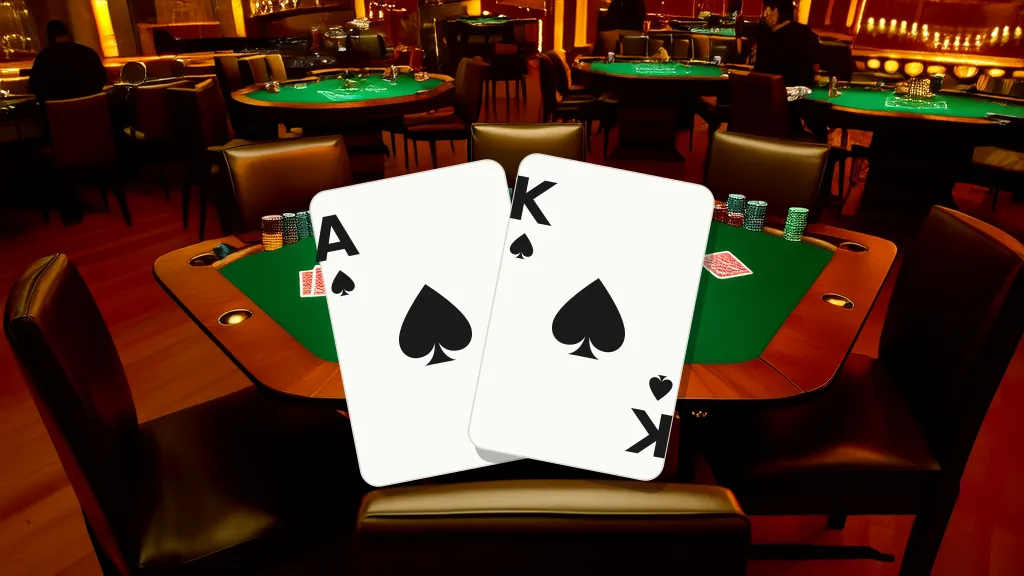
Master King-Jack Suited strategy. Navigate domination risks against AK/KQ, exploit flush and straight draws, and learn position-dependent play for this popular suited broadway hand.
- how to play KJS
- KJS strategy
- GTO
- poker strategy
King-Jack suited is one of the most popular suited broadways in No-Limit Texas Hold'em: it opens comfortably from every position at sane stakes, flops Broadway draws and flush equity, and makes top pair top kicker when a Jack hits. It also carries heavier domination baggage than KQs—AK, KQ, and AJ all remain realistic nightmares—so your flush draws are often second-nut at best, and KQ kickers your King on King-high boards when both players pair the King.
Introduction: Why KJs Deserves Its Own Chapter
Most recreational players “love” KJs because it looks strong and plays smoothly postflop. The edges live in details: when King-high top pair is not actually top kicker, when Ace-high boards cap your one-pair stack-off thresholds, and when monotone runouts punish non-nut flushes even though your hand looked “premium” preflop.
Winning players separate three frequency layers:
- Preflop: Raise-first-in everywhere by default; lean toward more 3-betting from late position where ranges widen and dominated offsuit broadways appear more often—while sometimes flatting or tightening mixes versus EP strength without drifting into nit folds facing single raises.
- Flop/turn: Leverage suited semi-bluffs aggressively when ranges are capped, but downgrade naked one-pair commits deep versus thoughtful polarization—especially on K-Q-x textures where KQ dominates your paired King.
- River: Respect aggression when runouts favor Ax flushes and dominating pairs—second-nut flush illusions lose stacks faster than ego prefers admitting.
This guide assumes standard cash-game depths near 100 big blinds unless noted, with tournament segments isolated where ICM or shallow-stack mechanics materially change incentives.
Hand Strength Analysis
Where KJs Ranks
King-Jack suited typically sits around the top ~8–11% of starting hands versus random holdings depending on methodology. In 6-max, it remains an automatic open from every seat at equilibrium-style constructions. In full ring, it still opens UTG in most modern charts, but it is closer to the margin than KQs—some tougher games justify slightly tighter mixes only if your population genuinely under-defends or over-3-bets EP opens (do not use “I feel nitty” as a substitute for evidence).
Heuristically: KJs is weaker than TT+/AQ+/AK-type tiers in many ranking lists, weaker than KQs head-to-head, yet stronger than suited connectors such as T9s because high-card strength and Broadway pairing matter more often.
Raw Equity Numbers
Anchoring examples help internalize domination geometry:
- KJs vs a random hand: roughly low-to-mid 60s equity.
- KJs vs AA: catastrophic—often ~17–21% depending on suits.
- KJs vs KK: dominated pair territory (~17–22%); improving to two pair/trips/boats matters—runner-runner flush equity occasionally rescues drama spots.
- KJs vs JJ: miserable (~18–23%); pairing your King can still be second-best to sets/boats depending on action.
- KJs vs AKs: dominated Ace (~27–32%); Ace-high flops punish you; King-high flops help less often because KQ still dominates your King.
- KJs vs KQs: dominated King (~33–38%); you share the King—KQ outkicks you when a King pairs.
- KJs vs AQo / AJo: poor (~30–36%); Ace dominance persists on Ace-high textures.
- KJs vs KJo: excellent (~62–66%)—suited playability edge frequently compounds postflop.
- KJs vs KTs / QJs / JTs: dominating territory (~60–68%)—this is where stubborn one-pair payouts arrive.
- KJs vs 87s: ahead (~56–61%) but wary on low coordinated boards multiway.
- KJs vs a tight EP opening range (~top 12%): roughly high 30s to mid 40s equity—usually defend in position; avoid bloating OOP without a credible postflop plan.
Treat these as snapshots; suits matter enormously on monotone boards.
Royal Flush and Broadway Straight Geometry
KJs retains rare royal-flush upside in its suit (Broadway runout T-J-Q-K-A).
Straight ladders that commonly matter:
- Broadway: you hold K-J; completing Broadway typically involves coordinated arrivals with Q-T-A connectivity depending on board sequencing—always recount outs after card removal.
- King-high nine-wheel segment: 9-T-J-Q-K lines frequently matter versus JT/T9-heavy ranges—your Jack interacts directly with many plausible villain combos.
Recount effective outs after pairing changes full-house ladders.
The Suited Advantage Versus KJo
Suitedness buys roughly 3–4 percentage points versus offsuit in many matchups—particularly valuable when you flop Jack-high top pair with live backdoors or when you pick up a flush draw that upgrades your equity versus floats.
Critically, however, KJs does not guarantee nut-flush outcomes:
- Ax flush dominance: Ace-high flushes of your suit beat you when you lack the Ace.
- Second-nut (or worse) reality: Even when an Ace is not “obvious,” KQ with the nut flush can still appear in realistic ranges on King-high monotone textures—do not treat every suited flush as stack-off automatic.
High-Level Equity Narrative
KJs realizes equity best heads-up with initiative or position. Multiway pots deflate one-pair value and inflate the importance of draws that can become nuttier holdings by the river—play more cautiously when several players continue with capped-but-coordinated ranges.
Domination Dynamics and Equity Realization
Dominated By AK / AQ / AJ (Ax Pressure)
When an Ace lands and money starts going in, KJs is frequently dominated by Ax holdings that either pair the Ace or threaten higher implied-odds ladders than your single pair can comfortably withstand.
Mitigations:
- Prefer pots where initiative + position compound.
- Treat Ace-heavy textures as risk amplifiers—semi-bluff credibly with draws; avoid station-style stubborn calls with naked marginal pairs deep.
Dominated By KQ on King-High Paired-King Scenarios
When the board plays King-high and both players have a King, KQ dominates KJs. This is one of the defining strategic lessons of the hand: top pair does not equal top kicker.
Mitigations:
- Use SPR discipline—deep stacks punish autopilot stacking off with one pair.
- Be especially cautious on K-Q-x textures where two pair and dominating King combos concentrate.
Dominating KT-, QT-, and Weaker Jack Kickers
Exploit capped callers who pay off too thinly with worse Kings and weaker Jacks—particularly live pools where “I had top pair” rationalizations proliferate.
Blockers (Preflop Perspective)
Holding K and J removes KK/JJ combos only modestly—do not treat KJs like a blanketing blocker bundle versus AK/AQ/AJ/KQ clusters when deciding whether to stack off preflop.
Jack-High Top Pair (TPTK) Versus Overpairs and Dominated Draws
When you flop Jack-high top pair with King kicker, you are often value-heavy versus floats—but remain wary on highly coordinated boards (QT/T9/Q9 textures) where two pair and straights show up at higher frequencies versus continuing ranges.
Stack-to-Pot Ratio (SPR) and Commitment Thresholds
SPR frames whether top pair + draw merges into stack-off regions:
| SPR | Situation | Commitment Heuristic for KJs |
|---|---|---|
| 1–3 | 3-bet pots, short stacks | Top pair + strong flush draw / combo draws often stack off; bare top pair more situational versus capped ranges |
| 4–6 | Raised pots standard depth | Top pair + flush draw frequently proceeds; naked top pair careful versus Ace-heavy runouts |
| 7–10 | Deep single-raised pots | Prefer two pair+ / flush / nut-heavy draws for large commits |
| 10+ | Very deep | Avoid stacking off one pair without elite redraws when villain polarization credible |
Worked intuition: You 3-bet KJs from SB, BB calls, effective stacks 100 BB. Approximately SPR mid-single digits postflop—King-high connected flops justify aggression but Ace-high reversals demand restraint absent draws.
6-Max Versus Full Ring (9-Max) Adjustments
6-Max
- Open frequencies widen globally—KJs remains mandatory raise-first-in from every seat at sane rake tiers.
- 3-bet incentive rises versus LP opens due to range-width exploitation while retaining suited postflop breadth.
- Iso-pressure versus BTN steal dynamics encourages polarized yet frequency-stable blind defenses incorporating KJs heavily.
Full Ring (9-Max)
- UTG opens tighten upstream—KJs still opens but faces tougher continuing ranges when cold callers lurk.
- Cold-call traps versus UTG become comparatively attractive when villains over-fold later streets—don't autopilot 3-bet without positional rationale against mature opponents.
- Multiway frequency climbs—tone down unconditional flop stacking thresholds.
Online Versus Live Poker Adjustments
Online
- Higher 3-bet/4-bet churn demands disciplined responses—solver-ish frequencies punish naive overfolding to 3-bets with suited Broadway hands.
- Smaller open sizes produce lower SPR transitions—flush draws arrive with geometry favorable for smaller continuation sizing mixes.
- Rake sensitivity at microstakes implies tightening marginal blind flats versus EP aggression absent antes—still rarely folding KJs to a single raise.
Live
- Larger opens inflate pots—KJs appreciates implied odds when hitting disguised two pair or flush versus sticky villains while simultaneously worsening reverse scenarios versus tighter value concentrates.
- Limp-fests reward isolation raises—KJs prints enormous EV lifting over multiple limpers using bulk sizing formulas.
- Physical timing tells occasionally correlate with strength on Ace-high boards—maintain Bayesian skepticism but integrate reads cautiously.
Preflop Strategy by Position
UTG / Early Position (EP)
Raise-first-in mandatory.
Choose standard sizing (often 2.5–3x live translation scaled upward per house norms). Mixing limps burns equity realization—reject passive lines.
Facing EP cold callers behind—still raise; don't shrink premium suited Broadway purely trepidation.
Middle Position (MP)
Continue raising entire baseline range portions containing KJs.
Versus UTG open ahead—usually fold absent antes/sp antes reshuffle incentives changing dramatically—don't cold-call UTG without structural dead money reasons except exploitatively versus identifiable whales.
Hijack / Cutoff
Increase steal consciousness—KJs blocks some stealing-defense combos imperfectly yet retains robust steal equity.
From late position (CO/BTN) versus LP opens, 3-betting for value enters your default toolkit more often than from EP—your suited Broadway dominates many offsuit peeling mistakes while retaining playability postflop.
Facing Button squeezers behind occasionally incentivizes slightly smaller opens—solver territories fragment—but never omit KJs from raising matrix.
Button
Highest realization seat—open aggressively.
Versus SB/BB 3-bets, mixing frequency emerges—pure strategies absent exploit reads tend toward calling + occasional 4-beting versus capped polar profiles.
Small Blind
Facing opens—predominantly 3-bet at equilibrium population frequencies due to positional deficit needing initiative compensation.
Versus BB after folds—open sizable subset containing KJs; flat completions historically inferior outside crafted exploit subsets.
Big Blind
Versus opens—mix defend strategies heavily weighted toward 3-betting versus steal-shaped ranges; versus UTG perhaps incorporate flats more often.
squeeze-eligible when callers ahead contribute dead money—KJs excellent structural candidate.
Facing Limpers
Never limp behind—raise isolation formulas:
Standard: baseline open + ~1 BB per additional limper (adjust live upward).
Why profitable:
- Narrows field preserving dominated Broadway collisions favorable.
- Builds pot with high equity realization prospects heads-up.
- Generates folds folding equity versus capped limped holdings.
Multiway aftermath:
- Downshift aggression frequency when flush/third-board monotone dangers escalate relative hand strength.
Playing as the 3-Bet Caller Out of Position
Cold-calling 3-bets without crafted reasoning rarely rivals solver baselines—yet BB flats versus SB polar clusters persist contextually.
Board heuristics after flatting SB 3-bet:
- King-high dry: Leading small occasionally merges equity denial versus air-heavy continuation neglect profiles—mostly check-call versus disciplined opponents.
- Jack-high: Top pair top kicker situations—often your best stacking texture absent dominating AJ coolers—monitor Ace turns.
- Ace-high: Check-fold frequency spikes without draws; semi-bluff equity prerequisites tighten massively.
- Low connected: Proceed cautiously—caller polar advantages amplify.
Donking merges versus autopilot c-bettors who cb Ace-high regardless—don't spam absent meta justification.
Facing Different Preflop Actions
As First-In Raising Range Member
Always open unless absurd ICM mandate rare tournament overlay anomalies excluded—cash paradigm unconditional raise.
Versus Single Raise
Never folding standard stakes sane rake—choose among call / 3-bet:
Lean 3-bet:
- SB/BB versus steals.
- Exploit isolation versus obviously capped villains.
Lean call:
- IP versus UTG nit opens deep stacks preserving dominated Ace combos incorrectly folding versus aggression sequences absent reads.
Versus 3-Bets
Population heuristic matrix:
| Context | Baseline |
|---|---|
| UTG open vs BTN 3-bet | Mix call / occasional 4-bet exploit |
| CO open vs SB 3-bet | Call frequently; 4-bet frequency rises versus merges |
| BTN open vs BB 3-bet | Call-heavy IP realization |
Against ultra-tight 3-bet factories folding fringe merges emerges—KJs typically continues albeit uncomfortably OOP.
Versus 4-Bets
At ~100 BB:
- Calling normal polarized 4-bets often justified—equity versus QQ+/AK portions supplemented by block removal nuances marginal.
Against QQ+/AK-only bots folding enters puzzle—verify pot odds rigorously.
Squeeze Dynamics
KJs squeezes effectively due value breadth vs caller capped tiers plus suited barrel elasticity—size 3.5–5x original raise scaling with OOP tax.
Multiway Inflation
After squeeze-call-call sequences prioritize nut-potential hands—flushes and straights rise relative one-pair EV—avoid inflated pots OOP without draws against Ace-heavy callers.
Postflop Strategy with KJs
Excellent Flops
King-high:
Top pair is not automatically top kicker—KQ dominates KJs when the King pairs. Bet for value versus capped floats and weaker Kings (KT-type mistakes), but proceed cautiously on K-Q-x textures versus competent aggression.
Jack-high:
Top pair top kicker with your King—often where KJs plays most comfortably as a one-pair hand—still monitor Ace overcards and AJ-heavy ranges depending on preflop geometry.
Two-tone with your suit:
Strong flush draws—often second-nut at best when Ax of your suit remains plausible—semi-bluff aggressively IP when ranges are capped; OOP check-raise mixes selectively versus delayed floats that peel too wide.
Broadway-connected:
Partial straight equity merges—size larger versus capped peels permitting dominated draws to continue incorrectly.
Difficult Flops
Ace-high without draws:
High-frequency check behavior unless opponent folds excessively versus tiny bets—don't torch stacks pretending Ace-high air disappears magically.
Low monotone non-Ace suit:
Your flush may rank highly yet Ace-high flush combos loom—pot control turns prudent versus competent aggression.
Paired boards:
Polarization advantages oscillate—small probes steal folds versus capped MG ranges occasionally profitable IP.
Turn Geometry
Ace turns:
- Downgrade one-pair commitment absent redraw—call modestly sized probes selectively versus merges.
King/Jack repeats:
- Trips frequency spikes versus callers—thin value shrinks; bluff-catch sensitivity rises.
Flush completes:
- Nut-non scenarios justify calls versus modest sizing facing polar jams tightening drastically.
River Stratification
Under-bluffed pools justify wider thin calls with top pair on dry runs versus missed draws absent scare coordination—versus balanced cohorts fold more readily facing raises because river aggression concentrates value.
Cash Game Versus Tournament Adjustments
Cash (100 BB)
At roughly 100 big blinds effective, KJs is primarily a postflop equity-realization hand that still loves initiative. Your suited Broadway geometry means you will frequently play for stacks when you flop strong draws or top pair with live kickers, but you should not confuse “strong Broadway” with “automatic felting range” on Ace-high boards against competent aggression.
In typical rake environments, focus on winning pots early when opponents cap themselves preflop with loose calls, and win pots late when your draws mature or your pair dominates weaker Kings and worse Jack kickers. Seat selection matters even at regulated sites: games where players limp-call dominated Broadway holdings reward isolation raises; games full of disciplined 3-bettors force you to tighten cold-call frequencies and refine your 4-bet mixing without drifting into timid folding mistakes.
Deep Cash (150–200 BB)
Depth amplifies both upside and downside. Implied odds improve when villains stubbornly stack off with worse pairs and worse non-nut flushes, but reverse implied odds spike when Ax flush combos appear on monotone runouts and when coolers involve dominating Broadway versus dominating Broadway with Ace-high outs still live.
At these depths, flatting a 3-bet in position can outperform pure 4-bet linear strategies against opponents whose continuance ranges are poorly structured—especially when they play poorly on Ace turns or when they over-fold to delayed aggression after checking ranges too weakly OOP. Conversely, avoid bloating pots without position early in the hand unless you have a clear exploit or you are playing against ranges that fold too often to pressure.
Early/Mid Tournament
When stacks are healthy and payout pressure is small, treat KJs much like a cash-game premium suited Broadway with modest tightening near antes because antes incentivize stealing—meaning your opens face slightly more resistance but also pick up slightly more dead money when successful.
You still open aggressively from every position at sane ante structures; you still defend reasonably versus steals from the blinds. Do not let tournament adrenaline trick you into turning every cooler hand into a lesson about “never stacking”—coolers exist; leaks hide inside folds that are too tight facing mathematically mandatory continues.
Bubble / Pay Jump Areas
Independent Chip Model effects can legitimately convert some chip-EV calls into money-EV folds when a covering opponent jams and your payout ladder sensitivity spikes—particularly satellite bubbles where preservation locks identical prizes.
Even then, KJs rarely becomes a pure folder facing reasonable prices unless the ICM solver scenario explicitly demands survival-first behavior (for example, a satellite bubble where folding preserves a ticket). When you cover shorter stacks, KJs often gains incentive to apply pressure because dominated offsuit broadways may incorrectly gamble near elimination—extract thin value carefully without gambling your own ladder unnecessarily.
Short Stacks (~20 BB)
Below roughly twenty big blinds, KJs behaves like a premium reshoving hand because dominated Ace holdings appear less often within opponents’ jamming frequencies than they do within deeper calling ranges, and fold equity adds immediate chips regardless of showdown outcomes.
Open-jamming first-in from middle seats depends on table payout pressure and antes; as a baseline heuristic at chip-ev neutral zones, KJs remains firmly inside reshove-call ranges versus loose opens and remains a strong candidate to jam when folded to in late positions facing antes—still verify with push-fold charts calibrated to your site’s rake and payout structures.
PKO and Bounty Dynamics
In Progressive Knockout events, KJs frequently improves as a calling hand when covering because bounty equity adds to pot odds without requiring you to win the entire pot as often in chip terms—yet beware opponents who become artificially sticky once half their bounty is mathematically “almost yours.” Adjust accordingly by tightening thin river hero calls when villains have bounty-induced incentive to chase weaker draws against your value merges.
Shot-Taking and Bankroll Hygiene
When moving up stakes, KJs does not magically become weaker, but error rates compound—particularly Ace-high monotone catastrophes where competent regs barrel thinner for value. Treat stake jumps as sample-size builders rather than ego validations; keep buy-in rules conservative enough that one monotone cooler cannot cascade into tilt-induced discipline breakdowns across multiple sessions.
Your suited Broadway edges persist only when mental game and bankroll structure remain intact—protect both deliberately.
EV Calculations: Practical Examples
Example 1: Calling BTN 3-Bet IP
You CO open 2.5 BB; BTN 3-bets 8 BB; blinds fold.
Pot ~12 BB calling 5.5 BB → need ~31.4% equity continuation ignoring postflop complexity simplistically.
Versus ~10% 3-bet blend equity typically mid-high 40s raw—calling baseline profitable; 4-bet isolation merges exploitatively vs merges.
Example 2: Flush Draw Semi-Bluff EV Sketch
Pot 30 BB—you semi-bluff 20 BB with flush draw (~35–40% equity vs continuing range simplistically)
Rough indifference math weighs fold equity + equity when called—against underfolding stations emphasize sizing reductions prioritizing realization.
Example 3: River Bluff Frequency Requirement
Pot P, bet B success probability p must satisfy p·P > (1−p)·B rearranging p > B/(P+B)—apply monotone scare rivers cautiously because blocker removal influences villain continuing subsets asymmetrically.
Common Mistakes to Avoid
Mistake 1: Treating KJs Like KQs (or Like the Nut Flush)
KJs is not “KQ strength.” KQ dominates your paired King, AJ/AQ/AK patterns bite harder than many players rehearse in their head, and your flush is often second-best when Ax combos remain live—especially monotone transitions versus competent ranges.
Mistake 2: Folding Too Often to Single 3-Bets IP
Equity realization plus positional leverage typically forbids nit folds absent hyper-exploit justification.
Mistake 3: Auto-Stacking Top Pair on Ace Turns OOP (and Ignoring KQ on King Textures)
Reverse implied odds versus AQ/AK/AJ concentrate sharply on Ace turns; on King-high boards, do not confuse top pair with top kicker when KQ and two pair combos populate continuing ranges—pause unless your redraw is robust.
Mistake 4: Ignoring Multiway Equity Compression
Three-way King-high boards aren't identical heads-up—deny denial instincts firing relentlessly.
Mistake 5: Live Iso Sizing Too Small Over Limpers
Allows absurd price granting dominated connectors realization—punish width.
Mistake 6: Misallocating 4-Bet Bluff Versus Value Thresholds
Don't merge linear confusion—frequency hygiene matters.
Mistake 7: Underestimating Ace-High Monotone Danger
Second-high flushes lose immense EV absent disciplined pot control.
Advanced Tips and Exploitative Adjustments
Versus Nits
Respect large flop XR frequencies on Ace-high coordinated textures—top pair weak redraw folds earlier baseline.
Versus LAGs
Call wider pre retains dominated offsuit broadways peeling excessively—value-own thinner rivers selectively.
Versus Stations
Three streets thinner value with Jack-high top pair (and some capped King-high spots versus obvious KT peels)—avoid suicidal merges into raises that polarize toward KQ+, sets, and strong draws on coordinated textures.
Delayed Double-Barrel Turns
After flop check-back inducing floats—Jack-high boards where an Ace turns can become profitable delayed denial spots selectively versus floats that capped themselves.
Blocker-Aware River Raises
Rare—mostly avoid constructing heroic raises without nut anchors facing competent defenses.
Bet Sizing Recipes Anchored to Texture
Small (25–33% pot): Range-driven c-bets in 3-bet pots where absolute hand strength underperforms aggregate narrative—Ace-high misses included selectively versus high fold-to-cbet opponents only.
Medium (50–66% pot): King/Q paired boards needing protection versus gutshots and weaker pairs peeling incorrectly—also standard flush-draw semi-bluffs IP when villain continuing range capped heavily toward one-pair holdings.
Large (75–100% pot): Polar merges on river scare cards completing front-door draws you credibly represent after aggressive prior streets—blocker considerations influence density of Ax flush combos you inadvertently unblock when bluffing.
Overbets (125%+ pot): Rare with mere top pair absent extreme nutted polar backups—prefer nutted flushes/straights versus stations paying linearly.
Common Board Runout Walkthroughs
Scenario A — KJs on K♠ 7♦ 2♣ rainbow, heads-up IP single-raised pot
Flop pairs your King—remember KQ dominates when villain continues aggressively; versus capped KT-type holdings, bet small–medium for value/protection. Turn bricks favor thinner value; turns bringing a Queen escalate KQ two-pair / combo combinations—downgrade stack-off enthusiasm deep without reads.
Scenario B — KJs on J♥ T♦ 4♥ two-tone with hearts
Top pair top kicker with your King—often comfortable—but straight draws (KQ/Q9/98-type geometry depending suits) and flush equity demand sensible sizing; turn Ace spikes hurt one-pair stacks; heart turns upgrade semi-bluff merges—river flush completes require Ax honesty checks before felting large.
Scenario C — KJs on A♣ 9♠ 5♠ monotone club flop without club in hand
Marginal air versus continuation ranges dense Ace-high—check planning frequent folds versus large bets; versus tiny probes call selectively realizing King overs occasionally winning showdowns unexpectedly low-frequency merit based reads.
Scenario D — KJs on T♠ 9♦ 8♣ connected
Often gutter/Broadway messy outs requiring caution—prefer checking IP frequently realizing equity cheaply; aggressive barrels demand tighter continuing subsets absent reads villain over-bluffs coordination massively.
Pot Control Heuristics Deep Stacked
At 150–250 BB effective avoid inflating pots OOP with lone top pair when villain profile caps seldom yet realizes equity proficiently—your reverse implied odds versus sets/two pair escalate nonlinearly with depth—call-down thresholds tighten unless credible redraw transforms top pair into combo category.
ICM Sketch (Non-Rigorous Directional)
Near massive pay jumps survival premiums sometimes shrink continuing ranges facing jams—even premium suited broadways occasionally downgrade fold equity realization translates tournament utilities diverging chip EV baselines—verify with ICM calculators particular final table matrices rather than improvising emotionally during adrenaline spikes.
Expanded EV Examples
Example 4: Defending BB Versus SB Open
SB opens 3x, you're BB with KJs—calling invests 2 BB more into ~6.5 BB pot (depending ante presence). Rough pot odds ~31% excluding rake intricacies—versus SB steal range equity regularly mid-high 40s—defending mandatory mix dominated purely folding suicidal absent extreme rake punitive microstakes coupled opponent never folding postflop reducing realization—but still usually defend.
Example 5: Facing Triple Barrel After Calling Flop/Turn With Top Pair
River pot 80 BB villain jams 60 BB—you need ~43% equity ignoring ICM facing polar range—often lacking versus competent polarization unless blocker/removal narrative collapses value density—default folds increase EV population-wise unless timing/live tells contradict massively sample-noisy.
Example 6: Expected Chips From Open Jamming 18 BB Effective
Fold equity FE combined with called equity EC approximates EV ≈ FE×P + (1−FE)×(EC×(P+2S) − (1−EC)×S) stylized where P pot dead money S effective stack contribution simplistically—KJs typically exceeds threshold reshoving ROI versus realistic calling ranges dominated Ace fractions miscalibrated live—still verify with ICM trainer apps shallow stages.
Solver Insights for KJs
- 3-bet frequencies SB elevate versus steals versus linear calling historically weaker absent exploits.
- Small c-bets propagate in 3-bet pots leveraging capped opponent aggregates despite mediocre absolute holdings—range narrative dominates Absolute strength intuition.
- Mixed strategies dominate BTN defense BB—pure heuristics mislead; study PIO subsets versus rake-adjusted sims.
- Ace-high flop XR defenses tighten KJs without draws—frequency concentrates draws/nutted portions equilibrium-wise contrast live fish improvisations.
Frequently Asked Questions (FAQ)
Should KJs always open from UTG in full ring?
Yes at equilibrium absent bizarre ICM/rake pathologies—it's comfortably inside standard UTG ranges modern solver-era constructions.
Is KJs a good 4-bet bluff?
Occasionally versus merges blocking AK partially—but careful versus opponents calling jams liberally with dominated Broadway—it functions better as value merge versus capped weak ace-less tiers population exploits sometimes justify thin value jam thresholds tournaments shallow.
How often does KJs flop top pair?
Roughly ~26–29% any pair frequency umbrella split among Kings and Jacks plus occasional transitive textures—exact flop taxonomy drills worthwhile separately.
What if three players limp live?
Isolate aggressively—your equity premium compounded dead money frequently offsets multiway downside conditional disciplined flop discipline later streets.
Can I flat SB versus BTN min-raise?
Rarely at equilibrium—3-bet or fold overwhelmingly dominates naive flats bleeding realization absent crafted exploits versus predictable undersized cb cohorts.
Does KJs prefer suited connectors spots multiway?
No—nut upgrades valuable yet equity realization declines—prefer thinning field pre preserving dominated narratives versus capped Broadway tiers incorrectly peeling wide.
How play monotone flops without Ace?
Cautiously semi-bluff versus capped MG flats—respect XR densities versus thoughtful opponents holding Ace-high flush draws more densely than intuition suggests absent profiling contradicting.
Versus squeeze happy villains adjust?
Tighten opens CO occasionally mixing traps—but rarely omit raising KJs entirely—instead modulate sizing downward selectively preserving SPR maneuverability.
Tournament 40 BB facing UTG open jam?
Often fold versus pristine nit imagery unless bounty overlays inflate price sufficiently—else call comfortably versus merges dominated Ace-less segments weighted incorrectly jamming.
Does blocker matter facing 5-bet?
Marginal—KJs removes KK/JJ combos modestly yet does not nullify AK/KQ/AJ clusters—treat ultra-polarized jams as math problems, not vibe checks.
Online HUD stats thresholds?
Focus fold-to-3bet population leaks exaggerating fold frequencies rewarding isolation—but avoid treating HUD snapshots gospel absent sample sanity checks variance camouflaging.
Heads-up adjustments?
KJs strengthens relatively—more frequent stacking thresholds versus dominated offsuit King tiers widen profitability envelopes drastically exploit population stubbornness.
How should I play KJs on double-paired boards?
Treat one-pair strength as largely showdown value only unless you improved to a full house or flush—betting for thin value becomes hazardous because villain value concentrates on boats and better pairs while bluffs thin dramatically versus competent opponents.
What about straddle games?
Straddle dynamics shrink effective stacks relative to preflop posted dead money—KJs profitability typically rises due to splashy calls yet demands tighter stacking thresholds versus massive raises representing condensed strength—adjust sizing upward maintaining isolation discipline live alcoholic atmosphere occasionally punishes timid 3x opens failing thinning fields adequately.
Microstakes rake considerations?
At NL5/Nl10 some rooms implement uncapped rake per hand destroying marginal EV thin edges—still rarely fold KJs preflop facing single raises—instead tighten loose blind flats versus EP rather than omit opens altogether absent HUD-confirmed population absurdities.
Solver Insights versus exploit maximization?
Pure GTO baselines provide shields—population exploits deliver swords—KJs benefits attacking under-defended BB flats versus BTN steals while retaining defensive integrity versus thoughtful regs synthesizing both paradigms dynamically session-dependent rather than religiosity either extreme exclusively lifelong learning posture wins.
Deep ante MTT early levels?
Antes inflate pot encouraging wider steals—KJs opens/shoves frequencies rise modestly—still avoid committing massive pots pre without reads versus unknowns balancing survival narratives incorrectly ignoring chip accumulation imperative modern structures punish passive accumulation severely ICM notwithstanding early stages comparatively flat payout curvature most fields.
How does KJs compare with KJo long-term?
Offsuit variants typically sacrifice several percentage points of raw equity in comparable matchups and lose the suited semi-bluff lattice that helps you realize equity when turns brick—especially valuable when you flop King-high top pair and pick up backdoor or live flush equity. Full-ring EP ranges sometimes trim KJo slightly earlier than KJs, while KJs remains an automatic open from sane UTG constructions in most solver-derived charts.
Additional Equity Snapshots (Illustrative)
Approximate hot/cold percentages—always verify in your simulator:
- KJs vs JJ: ~46–49%.
- KJs vs TT: ~47–50%.
- KJs vs 99: ~48–51%.
- KJs vs KJo: ~63–66%.
- KJs vs KTs: ~62–66%.
- KJs vs JTs: ~58–62%.
- KJs vs ATs: ~38–42%.
- KJs vs AJo: ~36–40%.
- KJs vs A5s: ~42–46%.
- KJs vs 76s: ~56–60%.
Conditional equity after observing flop texture diverges sharply from these aggregates—use street-by-street filtering mentally during play and rigorous software review away from tables.
Study Plan and Review Checklist for KJs Spots
Weekly solver reps: Pick one cluster (for example, BTN open versus BB 3-bet, single-suited flops) and compare your guessed frequencies with PIO/GTO+ outputs for KJs specifically—errors on Ace-high monotone boards usually reveal conceptual leaks faster than vague study goals.
Database filters: Tag hands where you stacked off with one pair on Ace turns—measure whether you lacked redraws or misjudged villain polarization—separate structural mistakes from unavoidable coolers before changing strategy.
Preflop discipline audit: If you ever limped or limped behind with KJs, write down why (fatigue, autopilot, distraction)—environmental fixes often outperform strategic tinkering when leaks are rare but expensive.
Live note refinement: Track whether villains overfold to flop check-raises on dry King-high textures versus firing triple barrels too thin—KJs profits hinge on adjusting value-to-bluff ratios against those archetypes.
Summary: Key Takeaways for Playing KJs
KJs is a premium suited Broadway with heavy domination homework—AK/KQ/AJ and paired-K kicker wars are defining features, not footnotes.
Open aggressively first-in from essentially every position at sane cash stakes—never limp behind; isolation raises print versus live limpers.
Lean toward more 3-betting from late position versus wide ranges while avoiding autopilot OOP bloat versus EP strength without postflop clarity.
Jack-high top pair (King kicker) is your cleanest one-pair upside—still respect Ace overcards and AJ density.
King-high top pair is not automatically safe—KQ dominates KJs when the King pairs; K-Q-x textures demand caution versus thoughtful aggression.
Flush draws are often strong but second-nut at best—Ax (and sometimes dominating suited combos on texture-dependent boards) still lurk—pot control matters.
Broadway straight geometry is real—use disciplined out counting on coordinated runouts.
SPR gates commitment—deep stacks punish naked one-pair felts versus polarized ranges absent redraws.
6-max widens wars; full ring increases upstream EP concentration—adjust cold-call and 3-bet mixes accordingly.
Online rewards structured frequencies; live rewards isolation sizing discipline over limped crowds.
Facing limpers always raise—never passive limp behind wasting equity realization benefits.
As OOP 3-bet caller categorize flops ruthlessly—Ace-high misery contrasts with Jack-high comfort and King-high kicker caution (KQ dominates paired-K pots).
Learn baseline EV arithmetic—calling versus folding hinges frequently modest equity edges compounded positional realization premiums postflop.
Treat solver outputs as priors and population reads as likelihood updates—hybrid thinking beats fundamentalism.