
How to Play K7s (King-Seven Suited) in Texas Hold'em - Complete Strategy Guide
May 3, 2026
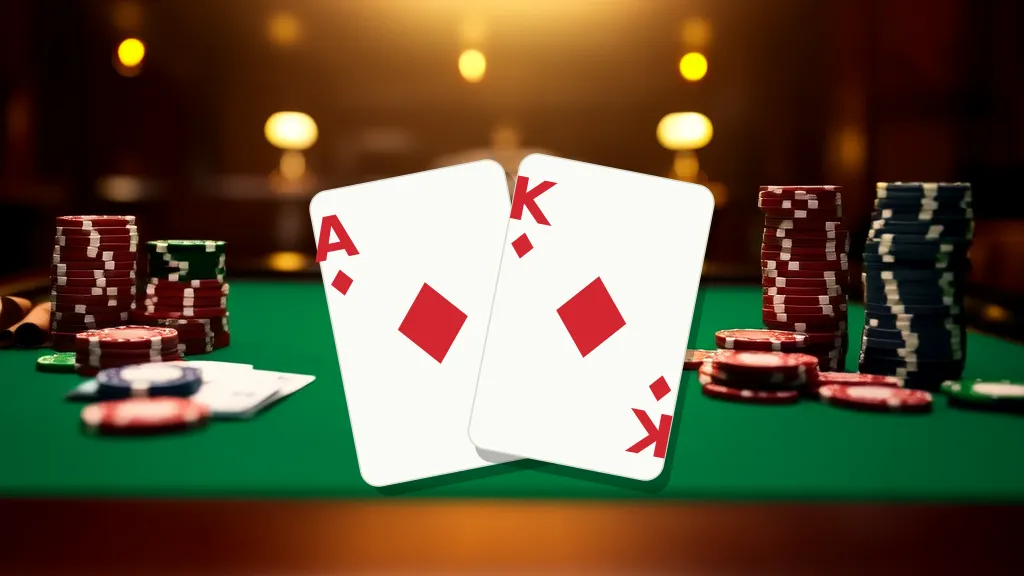
Play King-Seven suited as a speculative suited King: CO/BTN-first opens, flush draws as your economic engine, minimal straight value—and default folds versus competent 3-bets without targeted exploits.
- how to play K7S
- K7S strategy
- GTO
- poker strategy
King-Seven suited is a speculative suited King: your flush draws remain genuinely valuable (second nut), but your Seven kicker is weaker than K8s/K9s, straight-making geometry is basically an afterthought, and you are even more dominated when you pair the King (K8+, K9+, KT+, etc.). When you pair the Seven, hands like A7 and better middling pairs punish you in exactly the spots fish talk themselves into calling.
This guide treats K7s as flush-draw equity plus late-position theft. Default toward CO/BTN opens; treat MP as mixed/fold in tougher games even inside 6-max. Fold UTG/EP routinely. Versus 3-bets, folding is usually correct—you realize equity poorly without initiative and without reads justifying light continues.
Introduction: What K7s Is Trying to Accomplish
K7s is not a “value bomb” preflop hand in the sense that AA or AK are. It is a frequency hand: it performs best when you combine (1) fold equity before the flop, (2) postflop maneuverability when called, and (3) flush-draw upside that occasionally scoops huge pots. Most of your profit does not come from coolering someone with top pair weak kicker—it comes from winning uncontested pots, semi-bluffing credibly, and occasionally making powerful second-nut flushes.
There are three truths every competent K7s player accepts early:
- Suitedness matters far more than the Seven’s high card. The Seven contributes minimal straight potential—your EV lifeline is disproportionately flush draws, fold equity, and occasional steals—not connector fantasies.
- Domination is structural, not anecdotal. Hands like K8s+, K9s+, KTs+, AK, A7, and dominating Seven pairs appear constantly in continuing ranges after raises and 3-bets.
- Position converts a speculative suited King into a barely playable one. Out of position, K7s collapses; in position, it’s mostly a steal + draw hand—don’t confuse suited paint with strength.
If you remember nothing else: play K7s for flush equity and button money, not for showdown supremacy with one pair.
One macro mistake is treating K7s like K8s/K9s. Each step down the suited-King ladder loses precious showdown kicker quality; K7s crosses into territory where calling 3-bets is rarely a default.
Hand Strength Analysis
Where K7s Ranks
Depending on methodology, K7s is typically a CO/BTN-first open in tougher games and only expands wider when pools are soft or ante structures inflate pots intelligently. Think speculative—not default MP autopilot.
Useful mental buckets:
- Versus random: K7s is ahead in raw equity, but raw equity is not the operational metric—you care about realization against continuing ranges.
- Versus strong ranges: K7s performs like a speculative suited high card—sometimes calling is fine, frequently folding to pressure is mandatory.
Raw Equity Snapshots (Approximate)
Treat these as anchors; suits and removal effects shift numbers slightly:
| Matchup | Approximate equity for K7s |
|---|---|
| K7s vs random | High 50s–low 60s |
| K7s vs AA | ~17–20% |
| K7s vs KK | ~17–22% |
| K7s vs AKs | ~27–32% |
| K7s vs KQs | ~33–38% |
| K7s vs K8s | ~34–40% |
| K7s vs K9s | ~33–39% |
| K7s vs KTs | ~31–37% |
| K7s vs A7s | ~44–49% |
| K7s vs QJs | ~48–53% |
| K7s vs 87s | ~54–58% |
These numbers explain the lived experience: you are often close-ish against dominated-but-not-crushed holdings, yet still dislike realizing equity out of position against competence.
Straight Potential: Almost None (And Why That Shapes Your Strategy)
Unlike K8s/K9s, K7s almost never boasts meaningful straight ladders. You might flirt with gutshots on scattered textures, but you should not mentally file K7s beside suited connectors that routinely realize wrap equity multiway.
Operational consequence: when you continue postflop without a flush component, your story is usually high-card backup, weak pairs, or pure aggression—not “I have tons of straight outs.” That should tighten your stacking thresholds and increase your respect for coordinated boards dominated by callers’ suited-medium bundles.
Flush Potential: Second Nut Is Real Equity
When you hold K7s and the flop brings two cards of your suit, your flush draw is usually to the King-high flush, losing only to Ax of that suit (second nut). That distinction matters massively versus opponents who overplay smaller flushes—your suited Seven doesn’t weaken your flush when it completes; it weakens your paired-hand showdowns.
However, monotone flops and certain ace-present textures remain dangerous because nut flush draws dominate your equity when stacks go in on the flop.
King Pair Value: Strong Shape, Weak Showdown
When you flop top pair with a King, your kicker is a Seven. That is bleaker than K8s/K9s: you lose to KT+, K9, K8, and still tie-break miserably in thin spots. You beat pure air and worse Kings like K6s–K2s, but those portions shrink as ranges tighten—top pair is a bluff-catcher, not a stack-off pillar.
Seven Pair Value: Proceed With Extreme Context
Second pair with a Seven on Ace-high or King-high boards is usually underwhelming. Versus pressure, fold more than with stronger suited Kings unless you pick up a flush draw or a whale-specific exploit.
Domination, Equity Realization, and Why K7s Feels “Swingy”
Dominated King Kickers (K8+, K9+, KT+, KQ, KJ)
When a King hits and stacks escalate, the hands you fear most are those that also paired the King with a better kicker. With K7s this includes K8 at minimum and obviously K9/KT/KJ/KQ/AK structures depending on board pairing dynamics.
Practical heuristic:
- Single raised pot, in position: You can sometimes call one street with top pair weak kicker versus small sizing from a wide range.
- 3-bet pot, out of position: Top pair weak kicker becomes a marginal holding quickly—often best as a check-call at small frequencies or a fold to heavy aggression without redraws.
Dominated by AK (and Broadly Bad Ace-High Runouts)
Ace-high boards crush K7s unless you pick up a flush draw or meaningful straight equity. This is not “bad luck”—it is range geometry. When you open from MP and face a BTN call, many Ace-high flops favor Ax continuing frequencies more than your King-high air balls.
A7 and Dominated Seven Scenarios
Hands like A7 dominate your Seven pair in the spots where you feel tempted to “pay off” because “I have a pair.” Likewise K8/K9 dominate King-high kick wars when stacks escalate. K7s is rarely a cold-call versus EP opens without exceptional dead money and skill edge.
Equity Realization Drivers
K7s realizes equity best when:
- You have initiative (raised preflop).
- You are in position.
- You see heads-up pots (or at least win multiway pots by hitting draws).
- SPR remains manageable—deep stacks amplify reverse implied odds on dominated top pair.
K7s realizes equity poorly when:
- You flat out of position versus strong, linear ranges.
- You allow multiway disasters without nut draws.
- You inflate pots pre without a plan for Ace-high and King-high textures.
Stack-to-Pot Ratio (SPR) and Commitment Thresholds
SPR tells you how committed you are once money starts flying.
| SPR band | Typical geometry | K7s commitment heuristic |
|---|---|---|
| ~1–3 | 3-bet pots, jam-prone | Strong draws and combo draws can stack off; naked one-pair top pair is situational |
| ~4–7 | Standard raised pots | Prefer pair + draw or premium draws for large commits; cautious with bare top pair OOP |
| ~8–12 | Deeper single raises | Often play draws aggressively but avoid felting weak one-pair |
| 12+ | Deep | Treat dominated top pair like a bluff-catcher; prioritize nut draws |
Micro-lesson: At low SPR, draws gain leverage because fold equity plus equity spikes. At high SPR, reverse implied odds dominate top pair weak kicker spots—exactly where K7s hurts.
6-Max vs Full Ring (9-Max)
6-Max
Opens widen; K7s becomes:
- Usually a CO/BTN priority open in tougher microstakes populations—treat MP as optional only when blinds over-fold or games are demonstrably soft.
- A comfortable steal candidate because flush equity remains your economic engine.
- A blind bundle candidate depending on rake—often fold SB steals vs tight BBs, but defend selectively versus wide BBs.
Full Ring (9-Max)
Upstream pressure matters:
- UTG open with K7s is often too loose in tough games—your dominated scenarios multiply when ranges tighten.
- From MP, opens become more palatable because fewer players remain.
- Cold-calling EP opens with K7s is usually inferior to folding unless you have exceptional postflop edge or massive soft multiway implied odds.
Online vs Live Poker Adjustments
Online
- Smaller sizes create frequent low-SPR transitions—flush draws matter more, but so do disciplined folds.
- Higher 3-bet frequency means don’t marry pretty suited cards—K7s folds to strong squeezes more than premium opens.
- Fast games reward simpler plans: steal/fold frequency hygiene beats fancy moves without reads.
Live
- Larger opens bloat pots—your flush implied odds can improve, but dominated top pair scenarios worsen.
- More limping means iso raises become attractive with K7s on the button and cutoff—provided you size properly and avoid bloated multiway spots without discipline.
- Physical reads matter on river decisions, but do not override baseline domination math preflop.
Preflop Strategy by Position
UTG / Early Position (EP)
6-max tough games: Prefer folding K7s UTG—your steal equity is weaker with four players behind and dominated-call disasters lurk.
6-max soft games: Some players still open for exploit, but keep sizing disciplined and avoid bloated multiway pots.
9-max tough games: Fold UTG more often than you open.
If you open:
- Use standard sizing (often 2.5x–3x live scaled upward per casino norms; online commonly 2.2x–2.6x depending on site culture).
Middle Position (MP)
6-max tough: Treat K7s as a mixed fold/open—many populations bias toward opening CO/BTN first before expanding MP.
6-max soft: You can widen toward occasional MP opens, but CO/BTN remains your economic core—don’t pretend UTG opens are “free” just because the game feels loose.
9-max: Default fold MP in tougher lineups; opens depend heavily on table softness.
Facing UTG open: usually fold. Cold calling is dominated-heavy without dead money incentives.
Cutoff (CO)
CO is a profit engine seat:
- Open liberally with K7s as part of a stealing range.
- Versus tight blinds, your fold equity rises.
- Versus loose BB defenses, emphasize postflop discipline rather than auto-barreling.
Button (BTN)
BTN is where K7s shines:
- Open frequently.
- Consider slightly smaller sizing versus nitty blinds if fold equity matters more than rake minimization (site-dependent debate).
Small Blind (SB)
SB is painful because you are out of position postflop:
- Versus BTN open, many charts prefer 3-bet/fold mixes or folds—not flatting wide without a plan.
- Versus CO open, similar dynamics—flatting K7s OOP is often a leak unless villain is dramatically capped.
When folded to in SB:
- Some players complete too often—prefer raise-or-fold frameworks versus competent BBs.
Big Blind (BB)
Versus a raise, K7s is usually a defend candidate depending on price, position of opener, and rake:
- Versus BTN min-raise, defending is common.
- Versus EP large raise, folding occurs at higher frequency—especially OOP without antes.
Versus squeeze spots, treat K7s as a marginal bluff candidate only when ranges justify it—often better alternatives exist.
Facing Limpers
Limped pots tempt chaos. With K7s:
- Raise (isolate) on BTN/CO frequently when limpers are weak/passive.
- Avoid tiny iso sizes that invite five-way flops—your flush potential doesn’t compensate for constant multiway dominated scenarios.
- Formula mindset: baseline open + add per limper, then adjust upward live.
When multiple limpers call:
- Tighten flop stacking thresholds.
- Value flush draws and combo draws far more than one pair.
Playing as the 3-Bet Caller (Out of Position)
Calling 3-bets OOP with K7s is generally inferior to folding unless:
- Opponent is wildly loose and shallow enough that implied odds don’t destroy you, or
- You have excellent multiway dead money (rare with K7s).
If you find yourself in this scenario anyway:
- High-card boards favor the aggressor—check-fold more than your ego prefers.
- Low suited boards may favor peeling one street with backdoors—still proceed cautiously.
- King-high boards create top pair weak kicker nightmares—do not “prove” you’re good without reads.
Facing Different Preflop Actions
As the First Raiser
Your baseline is raise for initiative. Limping K7s wastes steal equity and invites dominated multiway disasters.
Versus a Single Raise
- In position: Calling can be acceptable versus wide steal opens—especially BTN vs blinds dynamics—but avoid bloating OOP.
- Out of position: Prefer fold or 3-bet bluff frameworks depending on opponent blockers and frequencies—not passive flats.
Versus a 3-Bet
Default assumption for learning players:
- Fold K7s to most standard online/live 3-bets unless you have a targeted exploit—this matches “fold to 3-bets usually.”
- Versus wildly wide 3-bettors, some continues emerge—still heavily position-dependent.
Additional notes:
- Fold K7s to substantial 3-bets from competent opponents, especially OOP.
- If you play back, prefer 4-bet bluff spots with blockers where ranges justify it—K7s blocks some KK combos weakly but does not erase AK.
Versus a 4-Bet
Almost always fold unless you have an exploit sized stack dynamic where villain is wildly bluffing.
Postflop Strategy with K7s
Favorable Textures
Two-tone with your suit (flush draw):
- Semi-bluff aggressively in position when villain’s range caps credibly.
- Out of position, mixing check-raises with draws balances calling fatigue.
Straight-heavy middling boards where your Seven rarely salvages you:
- Turn probes can buy pots when villains under-defend.
King-high boards where villain’s range is wide
- Sometimes top pair weak kicker goes for thin value versus tiny bets—but stack off carefully.
Danger Textures
Ace-high dry boards:
- Unless you have draws, give up frequently after reasonable stab attempts.
Monotone boards:
- If you lack the ace of the flush suit, tread carefully—your flush may be second nut but getting stacks in versus nut drawers is miserable.
Very connected low boards:
- Favors callers’ suited connectors—reduce c-bet intensity without range advantage.
Turn and River Heuristics
- When draws complete, polarize your aggression—either you represent completed draws credibly or you check back showdown value.
- River raises from passive players are overwhelmingly value—don’t “hero” with second pair.
Scenario Library (Heads-Up, Single-Raised Pot, ~100 BB)
Scenario A — CO open, BB defend, flop Q♠T♦5♠ with K♠7♠
You have overs + backdoor spades + gutshot-adjacent geometry depending on runouts. Many populations under-defend versus small continuations on semi-dynamic queens. In position, a 33–45% pot stab can win immediately while retaining equity when called. On the turn, any spade upgrades your world substantially; a Jack creates intense straight tension because broadway ladders interact with villain’s QT/QJ pockets frequently. If you peel and face a large turn probe without picking up equity, folding is normal modern poker—not a morality failure.
Scenario B — BTN open, SB calls (flatting disaster template), flop K♦J♣2♠
Top pair weak kicker arrives—congratulations and condolences simultaneously. Versus SB check ranges that include Kx, pocket pairs, and floats, your hand cannot support massive swelling unless villain is demonstrably capped. A common robust approach is small stab / check back mixes on turns when villain is passive. Versus aggressive SB players who xr flop at high frequency, lean under-bluff-catching without redraws—especially when their line removes busted floats early.
Scenario C — MP open, BTN calls, flop A♣7♦4♥
You pair your seven—second pair on an Ace-high board facing a caller who often contains Ax, sets, and strong floats. This is a classic under-realized equity texture for K7s. In position, mixing small probes with checks can be fine versus capped villains; versus straightforward opponents who always continue Ax, give up earlier than your impulse suggests. If you face a big raise on flop or turn, don’t sculpt elaborate stories—most balanced opponents aren’t raising thin here often enough.
Scenario D — BTN steal, BB defend, flop J♥T♣7♦
You flop middle pair with messy connectivity—precisely where suited connectors and broadway hands continue aggressively. Do not treat your pair like a stack-off anchor; without a flush component you often realize equity best by controlling pot size and picking realistic continue frequencies. Checking back flop in position occasionally preserves EV versus opponents who probe thinly on turns. If you bet and get raised, pause—your equity prefers cautious calls at most when SPR is deep, not autopilot aggression.
Scenario E — 3-bet pot as aggressor, flop K♠Q♦6♠
Two-tone King-high texture hits your range hard but KQ dominates K7s top pair kickers when kings pair later weirdly—still, immediate flop reality includes your king pair vulnerability. Small continuation frequencies can remain profitable due to fold equity, but large bets commit you closer to guessing games versus competent BTN flats that include KQ/KJ/sets/gutshots. Prefer sizing that preserves maneuverability unless you’ve arrived at a deliberate exploit versus over-folder.
Scenario Library (Multiway Notes)
Multiway pots punish vanity:
- With flush draws, continue more aggressively when villains cap ranges; otherwise temper ambition—nut redraw scarcity matters more than your suited optimism.
- With top pair weak kicker, treat raises as near-always value from passive populations.
- Avoid automatic flop stabs into three players without equity—you’re burning chips feeding disciplined defenses.
Cash Game vs Tournament Notes (Brief)
Cash: Play more disciplined folds pre—rake matters.
Tournaments: Short stacks push priorities toward shove/fold simplicity; K7s becomes more notable as a blocker-heavy steal/shove candidate only at specific depths—do not copy cash flats blindly.
EV Calculations: Worked Examples with K7s
Example 1: Open steal EV approximation
You open 2.5 BB from BTN with K7s. SB folds; BB defends 25% overall.
If BB folds 68%:
- Immediate profit from folds matters; even small edges accumulate.
Quantify fold equity profit roughly:
- Pot before steal includes blinds 1.5 BB; your risk is 2.5 BB to win 1.5 BB immediately sometimes.
Even modest steal success rates justify wide BTN opens—K7s sits comfortably inside that bundle.
Example 2: Calling a flop bet with a flush draw
Pot 10 BB, villain bets 6 BB (60%). You have K♠7♠ on a two-spade board with 9 outs sometimes (~35% from flop to river depending on clean outs accounting).
Required equity:
- Call 6 to win 16 → need 6/(16+6) ≈ 27.3% immediate pot odds on one street alone—but you must model implied odds and reverse implied odds.
If villain stacks off worse draws/overpairs when you hit, implied odds help; if villain only continues with nut-heavy ranges when spades hit, reverse implied odds bite.
Example 3: Bluffing frequency needed on river
You miss everything; pot 40 BB, you shove 40 BB.
Fold frequency needed:
- Risk 40 to win 40 → villain must fold 50% if bluff has 0% equity when called.
K7s blocker effects rarely salvage zero-equity calls—choose rivers where ranges truly fold.
Example 4: 3-bet pot c-bet decision
You 3-bet pre and flop comes K♣6♦2♠. You hold K♠7♠.
You have top pair weak kicker + backdoor spades. Equity retention versus continuing ranges may justify smaller c-bets at equilibrium versus capped villains—but versus linear callers, check more often.
Example 5: Multiway flush hit EV sanity check
When you make second nut flush multiway, prioritize extracting from worse flushes and stubborn two pair. However, if action goes raise / re-raise, pause—nuts appear more often than players admit.
Common Mistakes
- Opening K7s UTG in tough 9-max because “it’s suited.”
- Cold calling 3-bets OOP without a precise exploit plan.
- Stacking off on King-high boards versus tight ranges with only one pair.
- Ignoring ace-high board discipline for suited optimism.
- Iso sizing too small live, inviting six-way flops.
- Over-bluffing rivers without blocker logic or fold equity.
- Under-bluffing flops in position where range advantage exists—passivity leaks EV.
- Mis-evaluating monotone boards because “second nut feels nutty.”
- Calling river raises with bluff-catchers versus populations that never bluff.
- Treating backdoor draws as reasons to call huge turn jams without SPR logic.
Advanced Tips
Population Exploits
- Versus overfolding blinds, expand BTN opens including K7s.
- Versus under-bluffing regs, fold more marginal continues, especially OOP.
Balanced Lines
Mix small flop bets with draws and weak pairs to avoid transparency.
Ace-high Semi-bluff Selection
Occasionally stab Ace-high boards only when ranges favor aggressor continuation bundles—do not donate chips blindly.
Solver Insights (Interpretive)
Solvers frequently:
- Prefer structured mixes rather than “always open / never open” unless rake extreme.
- Reduce SB flats with marginal suited Kings—3-bet/fold patterns appear.
- Use smaller sizes in 3-bet pots with range advantage—but domination buckets temper naked value bets with K7 top pair.
Treat solver outputs as guardrails, not religion—population reads move EV more at low stakes.
Frequently Asked Questions (FAQ)
Should I open K7s UTG in a full-ring casino game?
Usually no in tough lineups. Suitedness doesn’t erase dominated top pair math or multiway frequency. If your game is extremely soft, some opens become profitable—still proceed cautiously.
Is K7s better than K7o?
Yes materially. Suitedness boosts flush equity and semi-bluff credibility—critical for steal-centric EV.
Why is flush draw strength labeled “second nut”?
Because Ax of your suit makes the nut flush when completed; your King-high flush loses to that narrow but meaningful slice.
When should I 3-bet K7s?
Primarily as a frequency bluff candidate versus wide opens when blockers and geometry align—not as a default value 3-bet.
Can I call a BTN open from BB with K7s?
Often yes with correct price versus steals—especially online—provided you avoid passive multiway inviting disasters.
How do I play top pair on K-J-x?
Carefully. KJ dominates your kicker; K8/K9 still beat you on king-only runouts—prioritize pot control versus aggression.
How often should I barrel Ace-high boards?
Low frequency without draws or credible range stories—population under-bluff recovery spots aren’t automatic licenses.
What’s the biggest leak with suited Kings?
Overplaying dominated top pair and under-folding to 3-bets.
Is K7s good multiway?
Only when you’re drawing to nutty or near-nutty outcomes—otherwise equity realization collapses.
Should I limp K7s ever?
Almost never—initiative and isolation matter.
How does rake change play?
Micro rake increases fold frequencies pre—especially marginal opens from MP.
Does blocking matter preflop?
Slightly—K7s blocks some KK combos, but does not remove AK fear from realistic ranges.
How should I adjust if antes are in play?
Antes inflate pots preflop and generally reward wider steals and more frequent defenses—but they don’t magically erase dominated King mechanics. With antes live or online, you may widen BTN/CO bundles marginally while tightening miserable cold-call buckets unless villains dramatically over-fold postflop. Track whether increased multiway frequency offsets ante gravy—sometimes it doesn’t.
What about straddle games?
Straddle dynamics shorten effective stacks relative to blinds-only bookkeeping even when nominal stacks look deep—SPR skew favors disciplined aggression with draws yet punishes speculative flats without plans. Treat early-position vanity opens as even leakier when straddle pressure concentrates stronger defenses behind you.
Summary: Key Takeaways for Playing K7s
- K7s is a speculative suited King: mostly CO/BTN theft + flush draws, with weaker kickers than K8s/K9s.
- CO/BTN-first in tougher games; cautious MP mixes only when soft; fold EP/UTG routinely in tough 9-max.
- Flush draws are legitimately strong because many completing runs make second nut flushes that crush worse flush combos.
- K-high boards create kicker catastrophe versus K8+, K9+, KT+, AK, and similar continuing bundles—avoid stacking off naively.
- Almost no meaningful straight potential—flush equity carries you.
- Dominated by K8+, K9+, KT+, AK, A7—build strategies around that reality instead of denying it.
- Prefer raising limpers for isolation with disciplined sizing; reject passive invitations to multiway roulette.
- Fold to most 3-bets OOP unless you have verified exploits—this hand isn’t built for stubborn preflop bravery.
- Postflop: leverage draws, respect Ace-high textures, and treat river aggression as mostly value versus typical pools.
- SPR discipline separates winners from players who “had a pair.”
Appendix A: Practice Drill Checklist
Use these drills away from the table:
- For five minutes daily, list flop textures as favorable / neutral / terrible for K7s—without hesitating.
- Review three hands where you stacked off with one pair—tag whether K7s-like kickers were the culprit.
- Track BTN steal success rates—if folds are low, tighten opens regardless of suited temptation.
Appendix B: Glossary Snapshot
- Second nut flush: King-high flush when Ace-high flush is possible.
- Domination: Shared rank where opponent’s kicker wins at showdown when both pair.
- SPR: Effective stack divided by pot—commitment compass.
- ISO raise: Raising after limpers to play heads-up.
Appendix C: Minimal Range Philosophy
Think in tiers:
- Premium: happily continue versus aggression frequently.
- Playable suited steals: K7s belongs here—never confuse tier with premium.
- Trash: offsuit gappers—avoid confusing them with K7s purely due to “King prettiness.”
Appendix D: Street-by-Street Reminders
Preflop: prioritize position and reject UTG vanity opens in tough games.
Flop: classify draws first—flush draws and combo draws drive continues.
Turn: escalate with equity upgrades; retreat without redraws versus pressure.
River: respect raises—population honesty matters.
Appendix E: When Not to Trust “Feel”
If your internal narrative sounds like:
- “But it’s suited,”
- “I can’t fold top pair,”
- “He might be bluffing,”
pause and check SPR, range, and population.
Appendix F: Online HUD Tags (If Legal)
If HUDs permitted:
- High Fold to Steal → widen BTN bundle including K7s.
- Low Fold to C-Bet → fewer naked bluffs; more equity-driven barrels.
Appendix G: Live Tell Caveats
Timing tells can hint at strength but rarely overturn strong cluster math—use reads as tiebreakers, not foundations.
Appendix H: Bankroll Reminder
Marginal hands generate variance—proper bankroll reduces forced scared money adjustments that destroy EV.
Appendix I: Session Review Prompts
Ask yourself:
- Did I open K7s outside profitable seats?
- Did I isolate limpers with sizing that controlled player counts?
- Did I stack off OOP without redraws?
Honest answers compound faster than ego defense.
Appendix J: Quick Conversion Table (Heuristic)
If effective stacks < 40 BB, simplify decisions:
- Prefer fold pre to strong squeezes.
- Prefer aggressive draws when committed zones approach.
Appendix K: Final Encouragement
K7s rewards adults who enjoy geometry and punish children who chase shiny suited cards. Learn the flush strength, respect the kicker pain, choose positions wisely, and your graph will thank you—even if individual nights feel chaotic.