
How to Play K4s (King-Four Suited) in Texas Hold'em - Complete Strategy Guide
May 3, 2026
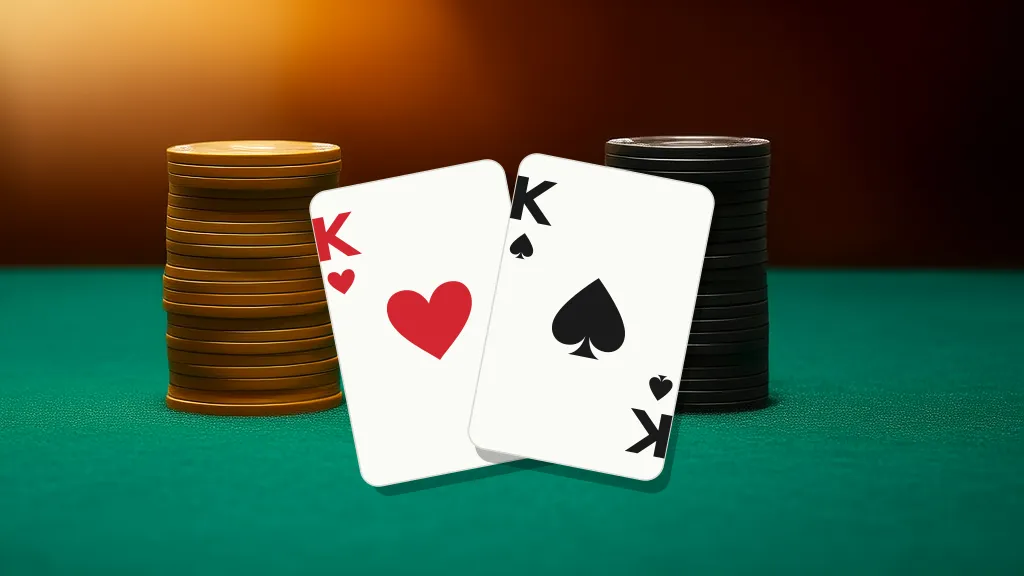
Very weak suited King: BTN/SB opens only in most games, almost no high-card value, flush-draw primary plan. Fold to any standard 3-bet; postflop you need a flush draw or a clean give-up—never marry dominated king-high pairs.
- how to play K4S
- K4S strategy
- GTO
- poker strategy
Introduction
King-Four suited is a very weak suited king in modern No-Limit Hold’em: it retains nut-flush chemistry and steal equity from late position, but it carries almost no credible high-card showdown value relative to ordinary continuing ranges. Compared with K5s, your low connector is thinner; compared with KQs, you are playing an entirely different sport. This guide’s mantra is intentionally blunt: open BTN/SB in most disciplined cash games; fold EP; fold to essentially any competent 3-bet; postflop, pursue structured flush draws or give up rather than “getting cute” with dominated kings.
Internalize this checkpoint before raising: if you are not stealing dead money or playing a draw, you are probably punting. High stakes winners do not moralize—they frequency-control marginal suited kings until environments prove otherwise.
Context still matters: splashy live pools with chronic limpers can justify isolation raises when sizing shrinks fields; tough online zones with squeeze-heavy regs behind should trim K4s from CO stealing matrices entirely.
Extended Primer: Low Connectivity Reality Check for K4s
King-Four suited is weaker structurally than K5s for low-board geometry: the Four helps fewer intuitive straight wraps, and your flush-draw DNA remains the dominant profit engine. The wheel nut remains A-2-3-4-5, but your Four does not carry the same five-high anchoring stories that beginners romanticize when they hear “wheel adjacent.” Translation: treat K4s as flush equity first, thin straight lottery tickets second, and king-high showdown value last.
That realism should shrink your CO appetite slightly versus softer K5s baselines in tougher pools: BTN/SB opens remain the core, while EP remains pure fold territory in serious games. Postflop mentality sharpens to flush draw or clean exit—king-high pairs rarely justify heroics without redraws.
The Emotional Trap (Why This Guide Exists)
Humans love suited paint. Casinos market suited paint. Your brain releases dopamine when you see two matching icons. K4s exploits that addiction unless you install procedural brakes: positional gates, fold-to-3-bet discipline, and exit strategies when your “pretty King” hits without redraws. Emotional discipline is not peripheral—it is central EV.
Before continuing, commit to a behavioral checkpoint: if you cannot articulate why this steal is profitable—whose folds you expect, what flops you continue, what turn cards you shut down—you should not raise. Click fold and preserve clarity.
Hand Strength Analysis
Where K4s Ranks Relative to All Starting Hands
Ranking lists fluctuate with rake, antes, table size, and solver configuration, but robust intuition holds: K4s sits deep inside the playable-but-not-default-open bucket from early positions, migrates into mixed steal territory from the cutoff depending on game texture, and becomes defensible as part of a BTN/SB stealing matrix in 6-max baselines. It is not “trash” in absolute equity terms heads-up against random combinations; it is tier-shifted trash by positional realization because dominated king-high catastrophes arrive frequently enough to punish sloppy ambition.
Raw Equity Snapshots (Anchors, Not Religion)
Exact equities vary by opponent modeling, but directional truths stabilize study:
- K4s vs a random hand tends to land around low-to-mid 60% heads-up—similar structural neighborhood as many suited junky holdings that nonetheless fail realization filters.
- K4s vs a tight EP opening range plunges—you share topology with dominated Ax/Kx compositions far less often than you fear heads-up, but when you connect incorrectly, reverse implied odds punish brutally.
- K4s vs a typical SB defending range remains workable partly because fold equity preflop pays your freight—remember conditional EV includes folds, not only showdowns.
- K4s vs a polarized 3-bet range collapses: treat fold as the default printout in any game where opponents understand polarization—calling persists only in absurd exploit fantasies you should not build your career around.
Treat calculators as maps, not commandments. Your implementation quality—who you isolate, how multiway pots balloon, whether rake consumes thin edges—often moves profitability more than third-decimal equity deltas.
Comparative Strength Versus Other Suited Kings (Qualitative Matrix)
| Holding | Flush anchor | Broadway pairing strength | Low connectivity | Typical EP policy |
|---|---|---|---|---|
| KQs | Strong | Elite | Weak | Open |
| KJs | Strong | Strong | Weak | Open/mixed MP |
| KTs | Strong | Moderate | Weak | Mixed CO/BTN |
| K4s | Strong | Very weak on K-high | Thin low-board equity | Fold EP |
Use this matrix as orientation: suitedness lifts K4s above offsuit garbage, but kicker tier keeps it far below suited kings that retain credible top-pair showdown plans.
Primary Value: The Flush Draw, Not the King
Suited kings share flush DNA. With K4s, internalize the hierarchy:
- Flush draws provide robust equity pockets you can semi-bluff with mathematical justification.
- Flush completions may lose to Ax-suited nut dominance depending on board—still strong, but not spiritually identical to nut Ace-high flush physics.
- King-high flops pair your top card while frequently pairing villains’ superior kickers—your suitedness helps only if flush textures accompany the collision.
Therefore your EV maps emphasize drawing geometry and fold equity, not happily-ever-after top pair stories.
Secondary Texture Equity: Low Boards and Backdoors
On favorable low textures—examples include flops like 4-3-2, 5-4-3, 6-5-4 with relevant suits—you may pick up pair-plus-gutshot/gutter bundles or double-backdoor landscapes. These spots justify continuing more often than complete air on K-Q-T two-tone nightmares where your king is second pair and your flush draw may be second nut. Always classify flops before auto continuing.
Domination, Reverse Implied Odds, and Equity Realization
Dominated Top Pair Scenarios (The Core Disease)
Domination appears when opponents hold K with stronger kickers—KQ, KJ, KT, K9, sometimes wider in loose games. When you flop top pair with K4s on K-9-3, your Four invites catastrophe versus ordinary continuing ranges. Even versus apparently “weak” K8, you trail; versus KJ/KQ you are crushed absent flush miracles.
Your strategic implication is blunt: King-high one pair without flush equity is rarely a stacking plan at meaningful SPR unless villain’s range is wildly capped or stacks are tiny.
Reverse Implied Odds When You “Hit” Wrong
Reverse implied odds punish dominated improvements: you invest chips believing you improved, yet you only improved into second-best hands. K4s suffers this pathology often enough that disciplined players shrink pot geometry deliberately—preferring steals that fold villains preflop or flops where draws remain structured.
Equity Realization Filters
K4s realizes equity best when:
- You attack late position with initiative,
- You avoid huge multiway pots without nut-draw structure,
- You 3-bet occasionally from SB as polarized bluffs against folds, accepting rough equity when called,
- You give up efficiently when you lack draws and face aggression.
K4s realizes equity poorly when:
- You open EP and get called by competent players in position,
- You iso enormous multiway fields with dominated top pair upside,
- You flat 3-bets hoping to “outplay” without SPR discipline.
Stack-to-Pot Ratio (SPR) and Commitment Thresholds
SPR answers how married you are to stacks after the flop. With K4s—flush-dependent and kicker-poor—SPR interpretation tilts toward drawing freedom and away from commitment with naked one pair.
| Approx. SPR | Strategic posture with K4s |
|---|---|
| <2 | Commit mainly with strong draws or made strong hands; cautious with bare top pair |
| 2–5 | Semi-bluff aggressively with good draws; avoid stacking off with K-high no redraw vs pressure |
| 5–10 | Pot control common; steals matter preflop |
| 10+ | Strict preflop discipline; deep mistakes compound |
Worked intuition: At SPR 1.5 with a combo draw on a two-tone board, stacking off can be fine. At SPR 10 with top pair weak kicker on a dry King-high board, stacking off is often malpractice.
Commitment Myth-Busting
Players often misapply “I’m pot committed” after bloating preflop without planning. With K4s, pot commitment should track draws, not vanity.
6-Max vs Full Ring (9-Max)
6-Max Dynamics
Six-handed poker compresses positions: blinds defend wider, steals occur more frequently, BTN/SB openings widen. K4s earns its keep here as part of tuned steal frequencies—especially BTN opens and SB attempted steals versus BBs who over-fold or mis-defend.
You should still fold EP in serious games: UTG at 6-max is not license to splash K4s without evidence.
Full Ring (9-Max) Dynamics
Nine-handed poker tightens EP ranges and increases multiway pots. K4s rarely belongs in UTG/MP open matrices absent antes and extraordinary reads. CO opens become situational; BTN remains primary theft seat.
Multiway caution escalates: flush draws retain viability; king-high one pair declines.
Online vs Live Poker
Online
- Faster, more automated defenses encourage tighter EP policies.
- HUD-driven opponents punish loose iso raises—watch squeeze tendencies behind.
- Smaller opens shift SPR subtly; postflop discipline dominates.
- Rake at microstakes erodes thin steals—verify profitability.
Live
- Larger opens and limped pots appear frequently—isolation sizing becomes a skill.
- Passive callers inflate multiway frequency—shrink K4s iso ranges when Table averages four-way flops.
- Physical tendencies vary; default geometry > theatrical reads.
Preflop Strategy by Position
UTG / Early Position (EP)
Default: fold. K4s lacks the top-pair robustness and dominated-K mitigation you want when six or eight unknown hands remain. Solver-trained opponents punish loose EP opens; recreational miracles do not justify systematic leaks.
Rare exceptions: extremely passive tables, antes restructuring incentives, or documented whale blinds—still proceed cautiously.
Middle Position (MP)
Default: fold in tough games. Some splashy live pools tolerate cautious opens; online disciplined populations typically do not. Treat MP as danger zone: worse position than CO/BTN with identical informational deficits.
Cutoff (CO)
Mixed / game-dependent. Against blinds folding excessively to steals, adding K4s at modest frequency can be fine. Against squeezers left to act (BU cold dynamics uncommon—typically none behind except blinds when CO opens), emphasize blind tendencies.
If BTN is an aggressive 3-bettor who flats traps, tighten CO steals—including trimming K4s.
Button (BTN)
Primary steal seat. K4s commonly appears in stealing matrices versus two blinds. Size standard opens (often ~2–2.5x online at 100 BB). Plan continuation frequencies by flop class rather than autopilot.
Small Blind (SB)
High variance battle seat. Versus BB:
- Open raises appear at tuned frequencies when folded to SB—K4s can appear as part of wide stealing ranges especially when BB under-defends.
- 3-bet bluffing sparingly leverages blocker effects on KK/K4 combos modestly and fold equity versus BTN/CO opens—do not confuse occasional with perpetual.
Play SB sequences with clear postflop blueprint: steals succeed often enough preflop; when called, flush boards matter.
Big Blind (BB)
Defending versus SB opens includes calling ranges with suited holdings depending on price and rake. K4s may defend sometimes versus wide SB steals—implementation depends on solver outputs filtered by rake.
Versus BTN/CO opens, flatting K4s is typically inferior to hands with stronger postflop playability unless odds compel—avoid habitual flats without rationale.
Facing Limpers
Limped pots tempt theatrics. Discipline:
- Prefer iso-raising over limping behind—build initiative.
- Sizing: adopt standard formula tendencies—bigger with more limpers to shrink fields.
- Shrink frequencies multiway: three limpers plus callers forecast catastrophe for dominated king-high paths—sometimes fold even suited temptation.
Live pools especially reward isolation mastery—provided you avoid elephant-sized multiway flops without draws.
Playing as the 3-Bet Caller Out of Position
Cold-calling 3-bets with K4s is generally unacceptable in principle-first frameworks—you lack equity and dominated paths dominate. If you find yourself in rare defended pots due to bizarre sizing or ante weirdness:
- High-card coordinated textures without your suit: rapid exits.
- Low paired textures with backdoors: proceed cautiously only if stacks and reads justify advanced maneuvering—default fold.
The blueprint remains: do not volunteer for bloated OOP catastrophe.
Facing Preflop Aggression (Raises, 3-Bets, Squeezes)
Facing an Open
From BTN/SB steal scenarios:
- only occasional SB 3-bet bluffs versus documented overfolders—frequency discipline matters; population overfold patterns justify sparse inclusion.
From blinds versus EP opens:
- Fold almost always—reverse implied odds dominate.
Facing a 3-Bet
Default fold to any standard 3-bet after your opens. K4s lacks the equity and domination resilience to continue versus disciplined polarization—do not talk yourself into “set mining” culture with a dominated king.
Squeeze Dynamics
If you open CO/BTN and face squeezes behind regularly, trim steal combos including K4s unless opponents squeeze poorly.
Postflop Strategy
Favorable Categories
- Two-tone flops with your suit: semi-bluff candidates; raise aggression selectively IP/OOP depending on ranges.
- Low boards pairing your Four or enabling gutshots: structured equity emerges—still villain-dependent.
Unfavorable Categories
- Dry King-high boards without flush draws: cautious pot control; do not marry showdown value.
- Ace-high boards: your king loses relevance frequently—abandon dreams quickly facing pressure without draws.
Barrel Honesty
Continue aggression when your draws remain credible and villain caps ranges; halt when runouts favor dominated pairs.
Multiway Adjustments
Shrink continuation frequencies without draws; prioritize nut-draw purity.
EV Calculations: Worked Examples
Example 1: BTN Steal Break-Even Fold Equity
You open 2.5 BB BTN, blinds collectively risk defend thresholds. Simplified steal EV hinges on fold frequencies:
Let pot stolen = 1.5 BB antes-less illustrative pot before raise; after raise to 2.5, folds win ~3.5 BB total-ish depending on dead money—precise accounting varies.
If folds occur fraction (f), crude preflop EV comparisons illustrate necessity of adequate fold equity—K4s is not auto-profit without defender tendencies.
Example 2: Semi-Bluff EV Sketch
Combo draws frequently exceed 35–45% equity versus calling ranges; combining equity with fold equity pushes semi-bluff raises into profitable terrain—provided sizing coherence.
Example 3: Dominating Cost of Loose EP Open
Compare lifetime BB loss when opening K4s UTG at -EV frequencies—even small negative edges compound brutal sums monthly.
Common Mistakes
Mistake 1: Opening K4s EP Because “Suited”
Suitedness does not erase positional catastrophe.
Mistake 2: Calling 3-Bets “to See a Flop”
You rarely realize equity profitably without plans.
Mistake 3: Overvaluing Top Pair Weak Kicker
The Four is not doing heroic lifting.
Mistake 4: Iso-Sizing Too Small Multiway
You invite dominated equity realization nightmares.
Mistake 5: Ignoring Nut Flush Risk When You Make Lower Flushes
Ace-high suits punish lower kings—stay observant.
Mistake 6: SB 3-Bet Bluff Fever Without Fold Equity Reads
Turning a situational weapon into default chaos burns wealth.
Mistake 7: Predictable CB Patterns Without Draw Structure
Opponents adjust—mix honesty.
Mistake 8: Tournament ICM Blindness
Near bubbles, steal equities swing—study independently.
Advanced Tips and Exploitative Adjustments
Population Reads
- Versus BB overfolders, widen BTN/SB steals modestly including K4s.
- Versus squeeze-heavy villains, trim opens.
SB Polarization Hygiene
Occasional light SB 3-bets thrive versus steals but require disciplined exits versus 4-bets—usually fold.
Board Texture Drills
Flash-card flops into categories nightly until classification becomes instantaneous—margins live there.
Solver Insights
- BTN/SB-centric frequencies dominate disciplined baselines.
- EP folds remain baseline-normal absent antes or structural incentives.
- Polarized SB 3-bets include weakest suited kings rarely—not never—versus documented folds.
- Postflop aggression correlates with draws, not naked king-high wishes.
- Multiway pots shrink continuation—solver outputs reinforce cautious checking.
Frequently Asked Questions (FAQ)
Should I open K4s from UTG?
Default no in serious games; exceptions require compelling environmental reads.
Is K4s better than K6s?
Marginal differences exist—avoid treating either as EP powerhouse.
Can I call a BTN 3-bet after I steal?
Usually no—equity realization deficits dominate.
How often should I 3-bet bluff SB with K4s?
Rarely and situationally—fold equity dependence renders autopilot poisonous.
What flops are best?
Flush-draw and favorable low connectivity flops outperform dry Broadway nightmares.
Do blockers matter?
Somewhat—K5 removes modest combos—but never confuse modest removal with permission for reckless expansions.
Live adjustments?
Iso limpers carefully; avoid gigantic multiway pots without draws.
Tournament play?
ICM modifies steals near bubbles—study shorter-stack matrices independently.
How do I handle monotone boards?
Carefully—recognize nut susceptibility and range disadvantages.
Is slow-playing ever correct?
Rarely at low SPR with monsters—default toward geometric clarity.
Online HUD stats?
High fold-to-steal encourages theft; low fold-to-3bet discourages light squeezes without reads.
Why does everyone say the Four kicker is useless on King-high boards?
Because typical continuing ranges include stronger kickers—your pair faces reverse implied odds unless redraws exist.
Summary: Key Takeaways for Playing K4s
- K4s is a weak suited king whose flush draw supplies primary equity pockets.
- Fold from EP/MP in disciplined environments; steal from BTN/SB in 6-max structures when blinds cooperate statistically.
- Never confuse King-high top pair without redraws for premium showdown value.
- Occasional SB 3-bet bluffs appear as situational exploit—not structural autopilot.
- SPR discipline prioritizes draws over doomed king-high marriages.
- Multiway pots demand caution; iso sizing shapes fields deliberately.
- Online favors tighter structural play; live rewards isolation reads but punishes loose multiway blobs.
- Solver baselines cluster late-position theft—mirror that unless population demands deviation with evidence.
- Fold to competent 3-bets as default—thin continues require documented imbalance.
- Study flop taxonomy faster than impulse—margins arrive via classification discipline.
Precision beats romance: play K4s like mathematics dressed in suited paint, not like royalty entitled to stacks.
Introduction Addendum: Study Protocols That Actually Stick
Most players read one article, nod thoughtfully, then autopilot their old frequencies within two sessions. If you want K4s to pay rent instead of burning matches, adopt a lightweight study protocol that mirrors how professionals retain marginal holdings. First, tag every K4s showdown you reach across ten thousand hands—note position, open versus isolate, field size, flop texture class, and street of exit. Second, separate outcomes into buckets labeled fold equity profit, semi-bluff realized, draw completion, and dominated disaster. Third, compare bucket frequencies against your intended blueprint; if dominated disasters dominate numerically while semi-bluff successes lag, your steal geometry or flop discipline is broken regardless of how clever your table talk sounds.
Fourth, rehearse three verbal sentences before sessions featuring temptation: (1) EP folds by default, (2) King-high no redraw is not a life partner, (3) flush draws justify aggression; vanity does not. Neuroscience suggests priming sentences reduce impulse clicks measurably—cheap intervention, meaningful rake preservation.
Fifth, audit rake and promotions quarterly; microstakes loyalty structures occasionally reshuffle steal viability subtly enough that solver frequencies from foreign sites mislead your local cardroom EV. Sixth, pair mental rehearsal with breathing anchors—inhale before committing large turn bets without redraws; exhale before firing coordinated multi-street semi-bluffs where combo draws remain vibrant. Behavioral scaffolding prevents ego narratives from overriding arithmetic during fatigue spikes.
Cash Game vs Tournament Dynamics With K4s
Cash games reward repeatable steal frequencies when blinds behave predictably. At 100 BB effective, treat K4s as structure-first: choose theft seats, decline bloated preflop warfare, and emphasize geometric clarity postflop. At 200 BB effective, tighten SB light 3-bet enthusiasm slightly—deep stacks amplify positional disadvantage when called without superior draws; fold equity remains valuable, but postflop catastrophe depth expands painfully.
Tournaments shift incentives via antes, ICM, and payout jumps. Early levels with antes resemble cash-with-splash dynamics—BTN steals widen modestly; EP remains cautious. Middle stages reward disciplined theft versus tightening blinds until ICM skews incentives near pay bubbles—there, stealing ranges dilute when shorter stacks jam reshoves aggressively against opens. Short-stack scenarios rarely elevate K4s into premium jam categories except as blocker-heavy pushes in specialized charts—consult tournament-specific references rather than extrapolating cash heuristics blindly.
PKO bounty formats inflate call equities versus shorter stacks—usually affecting jam responses rather than K4s EP ambitions—still relevant when weighing marginal BTN opens facing reshove-heavy populations behind.
Extended Postflop Atlas: Concrete Runouts
Scenario A — Single-raised pot, BTN vs BB, flop K♠ 7♥ 2♦ (your hand K♠5♠)
You hold top pair catastrophically weak kicker without flush connectivity beyond backdoor spades dependent on suits—recalculate carefully: if suits align such that you maintain nut-flush ambitions rare with king-low suited combos when board lacks three spades yet—here only one spade on flop limits immediate flush equity to backdoors plus weak pair. Default small stab versus capped BB ranges occurs sometimes; versus competent defenders who retain Kx and pocket pairs with discipline, prefer checking back portions of range for pot control rather than inflating dominated catastrophe geometry.
Scenario B — BTN steal, flop 8♣ 5♣ 2♦ with K♣5♣
Middle pair or bottom pair with flush draw retains robust equity pockets versus continuing ranges—semi-bluff aggression frequency rises; raises appear versus opponents who over-fold versus pressure or who cbet air excessively.
Scenario C — SB open vs BB, flop Q♥ J♦ 7♠ rainbow with K♠5♠
You retain two overcards fragmentary equity plus gutshot scarcity—generally weak continuation unless opponent checks excessively often; default checking mixed frequencies avoids burning chips versus robust defending ranges.
Scenario D — 3-bet pot as SB aggressor, flop T♠ 9♠ 4♥ with K♠5♠
Flush draw plus fragmentary straight textures—semi-bluff thresholds elevate but recognize dominated flush risks when Ax♠ appears frequently in BB continuing bands—still better than naked king-high air.
Scenario E — Multiway limped pot inflated iso, flop K♥ 9♠ 3♣
Top pair weak kicker multiway—dramatically downgrade stacking ambitions; small probes occasionally exploit passive stations—versus competent players check-fold discipline dominates.
Turn and River Heuristics Tailored to K4s
Turn cards completing obvious draws demand brutally honest reassessment—when flush completes and you lack it while holding one pair, folding versus sizable aggression frequently correct even if ego protests. Turns pairing bottom cards sometimes stabilize medium pairs heroically—contextual. Rivers polarize—large bets represent stronger concentration value—do not hero-call widely with marginal king-high catches absent credible blocker narratives.
Expanded EV Calculations
Preflop steal EV (symbolic algebra)
Let (P_F) be probability both blinds fold to your BTN open of size (R) into antes-adjusted dead money (D). Your immediate profit when folds occur approximates (D + 1.5 - R) framing varies—customize to your site’s blind posting rules. When called, your expectation equals continuation EV weighted by flop distributions—difficult analytically—hence empirical tagging matters. Directionally, raising K4s becomes attractive when (P_F) exceeds opponent-specific breakpoints derived from population databases.
Semi-bluff raise profitability sketch
Suppose pot (P), you semi-bluff raise additional (R) with flush draw equity (E) versus villain continuing fraction (C). Approximate EV mixes fold equity ((1-C)\cdot P) contributions plus (C) multiplied by equity versus continuing subset—simplified models illustrate necessity of both components—K4s thrives when (C) depressed by pressure credibility.
Cost of dominated hits
Estimate big-blinds lost when stacking off incorrectly thrice per thousand hands at average mistake magnitude—annual totals sober quickly—motivating disciplined king-high shutdown.
Additional Common Mistakes
Mistake 9: Misreading Backdoor Glamour as Monster Equity
Backdoors help continuity frequencies slightly—they rarely justify triple-barrel fantasies without credible nut narratives.
Mistake 10: Ignoring Positional Order Behind When CO Stealing
Players focusing only on blinds forget incentive chains—tighten when mysterious cold callers lurk.
Mistake 11: Overplaying Equity Calculators in Multiway Pots
Cold equities plummet—trust taxonomy more than isolated percentages.
Mistake 12: Session Selection Denial
Playing K4s correctly yet choosing unbeatable lineups still loses—game selection matters meta-strategically.
Advanced Exploit Extensions
Delayed double floats rare with K4s—generally inferior to honest draws—yet versus opponents who stab turns only with air after flop checks, disciplined floats occasionally appear—reserve for reads-heavy environments.
Solver-aligned micro-adjustments versus BB who folds to probe bets after checking flop prone ranges—expand probe frequencies modestly when flush branches remain—but shrink versus check-raise manic opponents.
Extended Solver Commentary
Solvers emphasize positional theft because EV concentrates where realizeable draws intersect initiative—not because K4s possesses hidden royalty rights. Mixed frequencies arise near CO/BTN borders depending on rake—export solutions only after matching ante/rake modules to your environment. Parameter sensitivity tests reveal K4s inclusion swings sharply when BB defend algorithms tighten one notch—human populations sometimes tighten silently after coaching spikes—recalibrate quarterly.
Expanded FAQ
When should I definitely fold preflop?
Facing EP raises, competent squeezers behind, or EP opens after your marginal steal attempt faces aggression—default humility.
Can K4s defend BB versus SB min-raise?
Sometimes at adequate prices—consult solver charts filtered by rake—avoid nostalgic flats without math.
How does player-type tilt isolation sizing?
Against calling stations, larger iso reduces multiway probability; against fit-or-fold weak players, moderate sizing preserves steal profitability.
Should I balance SB 3-bet range with K4s?
Balance matters versus attentive opponents—versus oblivious populations exploit folds first—study opponent modeling.
Do suited connectors play similarly?
Structural parallels exist—kickers differ—king-high dominated pathways appear more frequently—nuance accordingly.
What about straddle games?
Straddle dynamics widen stacks weirdly—shrink marginal steals unless antes justify—refer straddle-specific charts.
How important is mental game?
Critical—marginal holdings punish tilt brutally—quit triggers advised after catastrophic sequences unrelated to K4s discipline decay.
Can GTO purists never open K4s UTG?
Purists rarely need UTG K4s publicity—exceptions hinge structural incentives—copy cautiously.
Is solver deviation wise live?
Yes when evidence accumulates—document sample sizes—avoid theatrics.
Why emphasize low-card connectivity with the Four if king branding still dominates mistakes?
Because beginners overweight stories about “wheel proximity” while underweight flush-draw necessity—truth aligns with draws, not fairy tales.
Narrative Closure Across Streets
Integrate storytelling discipline: each aggressive line requires plausible value/bluff ratio spanning future runouts—if turn and river combinations lack coherent polarity, abort earlier—K4s cannot afford incoherent melodrama.
Historical Pedagogy Note
Training literature historically underrated suited king-tier segmentation—modern solver outputs clarified stratification—honor updates rather than vintage platitudes.
Practice Drill Appendix
Deal thousand-hand simulations mentally: classify twenty flops per session verbally—timer yourself—speed correlates live win-rate preservation under pressure.
Play K4s like an accountant who enjoys adrenaline—never like royalty leasing crowns—flush geometry funds vacations; king-high vanity funds opponents.
K4s Structural Edge Case Paragraph
When debating thin CO steals, remember K4s rarely solves complexity better than waiting one seat—CO temptation kills hourly silently because squeeze distributions widen faster than intuition admits. Document weeks where you delete CO K4s entirely; if red-line steal profits rise while showdown disasters fall, you uncovered empirical proof that patience beat romance.
Closing Frequency Note for K4s
When lobby textures tighten globally, reduce K4s opens before your win-rate histogram turns ugly; re-expand steals only after databases show blinds defending too loose again—marginal kings punish optimistic autopilot harshly.
Closing Calibration Paragraph
Before your next session, write one sentence answering: what fold equity evidence justifies this steal? If you cannot cite population tendencies, positional incentives, or opponent-specific leaks, leave K4s in the muck and preserve clarity. Long-run winners accumulate thin edges through repeatable filters—not through sporadic hero opens fueled by boredom or selective memory after fortunate flops—because disciplined theft frequencies compound quietly while dramatic mistakes advertise themselves in ledger red ink.
K4s-Specific Calibration Add-On
If you are deciding between K4s and a trash offsuit king at BTN, remember K4s’s entire dignity lives in flush geometry—without two-tone or monotone textures that interact with your suits, you are not “clever,” you are simply burning rake slower. Use this add-on as a hard rule: when stacks deepen beyond 150 BB and villains defend stubbornly in position, trim K4s before trimming K5s—the thinner low connectivity matters more when realization paths lengthen across multiple streets.