
How to Play J7o (Jack-Seven Offsuit) in Texas Hold'em - Complete Strategy Guide
May 3, 2026
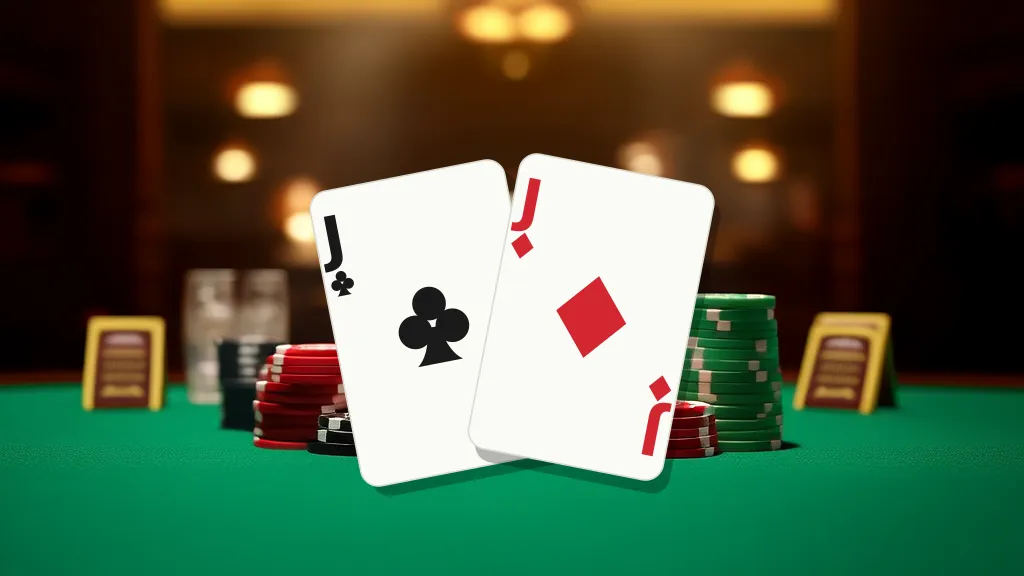
Master Jack-Seven Offsuit (J7o) in every position and situation. Learn when to open, 3-bet, or fold, plus postflop strategies for various board textures and opponent types.
- how to play J7O
- J7O strategy
- GTO
- poker strategy
1. Introduction: Offsuit Broadway-Gapper Dynamics
Jack-Seven offsuit sits in an awkward structural category that casual players routinely misunderstand: it carries high-card Broadway appeal via the jack, yet it behaves far more like a marginal offsuit connector/gapper than like a classic Broadway broadway hand such as KQo or QJo. In solver-informed frameworks, hands like J7o are rarely “automatic opens”; instead they exist at the fringe of playable combos, earning thin profitability mostly through positional steal equity, frequency-balanced mixes, and defensive realization against wide ranges.
The defining tension for J7o is simple but decisive:
- Upside: You sometimes flop top pair on jack-high textures; you occasionally pick up weak gutshots toward non-nut straights; you retain modest blocker-ish relevance against certain steal lines (you block some — but not all — jack-heavy holdings).
- Downside: You are offsuit, which removes an entire equity realization pathway (flush draws, backdoor flush equity, multi-street barrel forgiveness). Your connectivity is severely degraded: jack-to-seven is a three-gap structure (T–9–8– gap conceptually between ranks), producing infrequent strong draws and poor two-pair/trips synergy compared with closer connectors.
Players often anthropomorphize hands (“feels playable because Jack”), but modern game theory optimal (GTO) thinking treats J7o as a high-frequency fold from early seats and a sometimes-defend / rarely-open candidate only when ranges widen, antes exist, antes compound incentives, or payoff structures reward steals. Honesty matters: J7o is dominated heavily by superior jacks, thin when realizing equity out of position, and uncomfortable when facing aggression — precisely because top pair + weak kicker (TPWK) is its most common “good news” flop outcome.
Understanding offsuit Broadway gapper dynamics requires separating three overlapping lenses:
Structural equity asks how often your cards cooperate with boards to produce pairs, draws, and disguised monsters. J7o produces frequent single-pair outcomes, occasional two-pair when both ranks hit, and relatively rare nut-tier holdings — exactly the profile that invites painful cooler-ish confrontations against stronger jacks rather than clean scoop scenarios.
Playability equity asks how smoothly your hand traverses multi-street trees when ranges collide. Offsuit three-gappers stumble here: turns frequently introduce scary overcards or connectivity shifts without gifting you credible semibluffs; rivers arrive with your SDV (showdown value) frozen while villain’s stronger jacks happily maximize.
Incentive equity asks whether the game’s payout geometry rewards gambling edges: antes, bounty EV, rake ladders, blind hypersensitivity. J7o sometimes climbs into profitability not because it “likes pressure,” but because cheap pots plus positional folds subsidize mediocre holdings — a fragile subsidy easily revoked by competent defenders.
Training intuition often miscategorizes J7o beside hands like T9s because both feel “connector-ish.” That analogy fails under scrutiny: T9s gains suited chemistry and tighter gaps that spike combo draws and doubled Broadway wraps far more reliably than J7o ever does. The honest analog class for J7o is closer to marginal offsuit tens-and-badmiddle holdings — hands that flirt with TP misery unless steal mechanics bail them out.
This guide treats J7o as what it is: a low upside, high embarrassment-risk holding whose best-case scenarios often coincide with tough rivers versus better jacks and better ranges overall.
2. Hand Strength Analysis
2.1 Structural Classification
Combo basics:
- Hole cards: Jx 7y, suits differ (offsuit).
- Connectivity: Three-gap offsuit — far weaker than one-gap hands like J9o and weaker still than suited variants that gain flush combinations.
- Domination topology: Any J8+ (JT, J9, depending on exact matchup nuances but broadly better jack) tends to dominate your top pair scenarios; premium jacks (JQ+, AJ) crush your stack-off thresholds.
Because poker equities depend on ranges, quoting a single number is never “the truth,” but pedagogically useful anchors exist:
2.2 Equity Anchors vs Broad Categories
Against a uniform random hand, J7o historically sits around ~38–40% raw equity preflop (simulation-dependent). That sounds respectable until you recall nobody plays random hands, and real ranges are condensed.
Illustrative preflop equity snapshots (approximate; tools like Piosolver, MonkerSolver, GTO+, or equity calculators refine these against precise ranges):
| Villain range (illustrative) | Approximate equity for J7o |
|---|---|
| Top 10% of hands | ~27–31% |
| Top 20% | ~31–35% |
| BTN steal range (solver-ish) | mid/high 30s to low 40s |
| BB defend vs minraise | often mid/high 30s+ |
More Granular Equity Lenses (Illustrative Snapshots)
Use these only as orientation — rebuild with your solver or calculator:
| Matchup class (illustrative) | Approximate J7o equity band |
|---|---|
| vs JJ+ , AK (tight value) | low-to-mid teens |
| vs TT–QQ, AQ+ (strong but wider) | ~22–28% |
| vs any pair | ~45–49% |
| vs random ace (A2o–AKo) | low-to-mid 30s |
Notice: J7o jumps when ranges include random aces because domination symmetry differs — versus paired and Broadway-heavy constructions, equities collapse.
Notice the pattern: J7o can be “fine” versus wide, linear-ish stealing, yet becomes thin versus polarized 3-bets or underbluffed continuing ranges.
2.3 Playability and Realization (Why Equity ≠ Profit)
Raw equity understates weakness when:
- You are out of position (OOP) with a capped medium pair/draw portfolio.
- Your opponent auto-continues better jacks.
- Turn cards inflate villain’s stronger jacks while freezing your SDV hands.
Equity realization — how much of your raw equity converts into captured pots — is mediocre with J7o because many flops force guessy margins: you flop middle cards without suited backup; you flop weak draws that lack nut integrity.
2.4 J7o vs J7s: The Correct Comparison
J7s is not “slightly better”; it is often meaningfully more playable, particularly deep:
- Flush equity: Adds multi-street barrel tolerance, semibluff credibility, and improved equity retention across runouts.
- Solver frequencies: Suited junky broadways/gappers creep into opens/defends more often than offsuit counterparts because backdoors matter over longer streets.
Rule of thumb used by strong players:
- Treat J7s as a sometimes playable speculative hand at realistic depths.
- Treat J7o as speculative-minus: comparable lines exist but at much lower frequency, narrower positions, and higher folding tolerance facing aggression.
If your study workflow lumps suited and offsuit combos together, you will systematically overplay offsuit trash edges.
2.5 Dominance Map (Jack Hands)
When you flop top pair with J7o, your disaster class is simple:
Dominated by: JT, J9, J8 (though J8 itself is marginal), JQ, JK, AJ, plus occasionally better pairs entirely (QQ+) depending on board.
So top pair is seldom “the nuts”; it’s often TPWK facing continuing ranges packed with better jacks.
2.6 Combo Math, Blockers, and Why “Jack Blockers” Overpromise
There are 12 offsuit J7o combos in the deck (four jacks × four sevens minus suited overlaps handled separately as J7s combos). That modest multiplicity matters because trainers sometimes rationalize steals using blockers: holding a jack removes some AJ, KJ, QJ, etc., from villain’s exact-card holdings — true at the singleton level — yet ranges remain dense enough that jack-blocking rarely salvages structural mediocrity.
What J7o blocks cleanly depends on villain’s topology:
- Versus AJ-heavy 3-bet ranges, your jack removes a slice of combos — sometimes relevant when contemplating 4-bet bluffs with elite blocker constructs — but J7o is generally not where you live for those sequences anyway.
- Versus BTN steal ranges, jack-blocking competes against rag ace, suited junk, middling pairs, hands not dominated along jack lines — diminishing blocker narratives.
Strong players therefore rarely cite J7o as a principled 3-bet bluff anchor; when blockers matter, they prefer combos coupling playability + polarization credibility, which J7o lacks OOP.
2.7 Monte Carlo Intuition vs Solver Priors
Equity calculators produce satisfying numeric outputs (Monte Carlo simulations converge toward stable percentages versus fixed ranges). Solvers extend into strategy coupling: frequencies emerge because alternative combos compete for the same defensive bandwidth.
Imagine solver budgeting defense combos in the BB: premium traps, suited anchors, suited connectors, occasional offsuit stretches priced by pot odds. J7o survives only where priced defenses remain cheaper folds otherwise — implying many routes proceed cautiously, often checking and conceding marginal confrontations.
Thus Monte Carlo might claim 37–41% versus a plausible steal depending on sizing — useful orientation — while solver outputs whisper: yes, occasionally defend — no, don’t fantasize.
2.8 Study Drill — Built-In Reality Check
Run three calculator spots weekly:
- J7o versus BTN steal range exported from your trainer.
- J7o versus BB defend versus CO open chart approximation.
- J7o versus AJ, JT, 77 individually — absorb domination visuals emotionally so autopilot disappears.
Quantitative empathy beats slogans — numbers imprint caution deeper than rhetoric alone.
3. Preflop Strategy by Position
Interpret everything below through stack depth filters:
- ~100 bb cash: tighter defaults for offsuit junk edges.
- Shorter stacks: steal/defend dynamics compress; offsuit nonsense declines unless antes justify gambling structures.
Also: solver outputs vary by rake, ante, open size, 3-bet sizing, limp pots. Treat recommendations as principles, then patch with sims.
3.1 Under the Gun (UTG) / Early Position (EP)
Default: Fold.
Even in softer games, J7o lacks:
- Suit synergy
- Strong connectivity
- Robust nut potential
If your player pool literally punishes isolation with jelly folds across streets, marginal opens occasionally scrape EV — yet verifying that thesis demands evidence, not vibes — default folding remains the analytical backbone absent airtight reads.
Some trainers might mix tiny frequencies at deeper stacks with antes to remain balanced — but practically, human EV usually rises by selecting stronger structural combos unless your population massively overfolds.
If you insist on studying UTG mixes: assume <5% open frequency only if your sim explicitly rewards it — and understand this is primarily balance clutter, not value.
3.2 Middle Position (MP)
Default remains Fold versus disciplined tables.
Potentially mixed open only when:
- Games are exceptionally passive postflop.
- Opens are tiny relative to stacks.
- You have elite postflop discipline.
Still: fold is the baseline expert answer.
3.3 Hijack (HJ)
Generally Fold.
Occasionally enters solved worlds as tiny mixing versus weak blinds — but versus competent defenders, J7o realizes poorly OOP against flat calls.
3.4 Cutoff (CO)
Begin consideration territory — still mostly Fold at equilibrium versus tough blinds.
Population exploitation lens:
- If blinds fold excessively to steals, marginal offsuit steals rise in EV — J7o might appear as low-frequency opens.
Against competent players who flat wide and punish weakness:
- Prefer folding J7o rather than bleeding chips across streets.
3.5 Button (BTN)
BTN is where J7o most plausibly appears as part of a solver-ish steal range:
- Button isolation incentives reward opens because positional advantage boosts realization.
Still not “always open.” Typical patterns:
- Fold a large fraction.
- Open small sometimes as part of frequency-balanced steals versus blinds who defend correctly but not aggressively enough.
Concrete heuristic:
- Versus average live opponents who overfold BB, stealing ranges widen — J7o can sneak in sometimes.
- Versus aggressive BB defend / squeeze dynamics, trim heavily.
3.6 Small Blind (SB)
Usually Fold when facing an open ahead (complete garbage defend scenarios excluded).
Versus BB limps / passive dynamics:
- Completing or raising depends on antes and villain tendencies — J7o is rarely a slam dunk.
When action folds to SB:
- Some players widen SB steal ranges; J7o might occasionally raise “because cheap.” Expert stance: prefer stronger steals unless BB demonstrably overfolds.
3.7 Big Blind (BB)
Where J7o most commonly survives preflop:
Defending BB vs SB steal, BTN minraises, or wide CO opens — depending on price, rake, and villain sizing.
Against a standard BTN open:
- Solver landscapes often include some defend frequencies with marginal offsuit hands due to pot odds — but realize many continues are checks, not cheerful stacking dreams.
Against UTG opens:
- Typically Fold J7o absent enormous incentives.
3.8 Open Sizes, Rake, and the Hidden Tax on Junk Defenses
Marginal defenders bleed unnoticed via rake and dry flops:
- Larger opens tighten defending thresholds — J7o folds more often facing 3x than facing minraise architectures at equal stacks — because realized pots shrink relative to continuing liabilities.
- Uncapped rake with caps punish small pots less severely — altering steal/defend frequencies subtly — yet dominated holdings remain risky because domination hurts regardless of rake clocks.
When evaluating BB defenses:
- Ask whether continuing yields profitable realization paths net of rake — not merely acceptable raw equity snapshots.
3.9 Straddle Live Dynamics (Utmost Caution)
In live games featuring straddles, effective stacks shorten relative to posted dead money — tempting splashy steals with junk.
J7o rarely becomes magical merely because money mushroomed pre:
- Straddle pots invite multiway scrutiny.
- Raises sizes distort geometric commitments later.
Default tightening versus sane aggression remains prudent unless empirical reads justify widening.
4. Facing Different Preflop Actions
4.1 Unopened Pot — Limps Ahead
Against limpers:
- Iso-raising J7o is generally poor unless villains massively overfold postflop or play fit-or-fold on flops.
Prefer:
- Overlimp sparingly only in absurdly passive pools.
- Default Fold in disciplined environments.
4.2 Open Raise (You Face a Raise)
Versus early raises:
- Fold nearly always.
Versus CO/BTN steals:
3-betting J7o as bluff is usually inferior because:
- Dominated jack blocker effects are messy.
- Your hand lacks robust postflop playability OOP.
Default responses:
- Fold most often.
- Call only when solver-informed defend charts justify it — typically BB price versus wide opener — accepting medium realization.
4.3 Three-Bets
Facing 3-bet:
- Fold unless villain is wildly insane or stacks/payout geometry produce bizarre incentives.
J7o lacks strong 4-bet bluff blockers narrative compared with suited wheel aces / suited connectors.
4.4 Four-Bets / Cold Spots
Fold.
4.5 Multiway Pots
J7o degrades sharply multiway:
- Top pair wins less often.
- Flush backup absent.
- Straight draws weaker.
Default:
- Avoid voluntarily entering multiway pots with J7o unless extremely priced — even then cautious.
4.6 Facing Squeezes After You Cold Call
Suppose you defend BB versus BTN open with J7o (already marginal), then SB squeeze jams or raises large:
- Fold almost always — your hand lacks robust 4-bet cold merit and miserable set-mining upside relative to price.
Occasionally gigantic implied odds narratives tempt calls — rarely justified with J7o.
4.7 Cold Calling from the Button (Flatting Opens)
Sometimes BTN flats CO opens rather than isolating:
- J7o flat ranges shrink because flatting forfeits initiative while retaining dominated topology — prefer opens when stealing viable or fold.
If flatting charts include marginal offsuit combos, verify via solver — humans often confuse BTN flats with BTN steals.
4.8 SB Complete Decisions Versus BB Posters
Live nuances like dead blinds, partial stacks, missed antes distort incentives:
- Avoid turning J7o into punishing completes that bloated pots multiway — dominated misery scales with field count.
5. Postflop Strategy
Postflop with J7o is dominated by three realities:
- TPWK misery on jack-high boards.
- Rare weak straight draws lacking nut integrity.
- SPR dictates whether your marginal pairs become commits or folds.
5.1 TPWK Dynamics (Top Pair Weak Kicker)
Flop J-x-x rainbow:
You have top pair, often medium kicker strength collapsing into weak versus sensible villain ranges:
Versus passive villains:
- Bet for thin value smaller sometimes when ranges include worse jacks and floats.
Versus competent aggression:
- Check-call thin sometimes only when villain barrels too thin.
- Often check-fold turns when pressure concentrates.
Concrete heuristic:
- At SPR ~8–15, top pair can feel obligated to stack off incorrectly — resist autopilot.
At SPR ~2–4:
- Money flies in faster; J7o becomes more gamble-shaped, but still frequently crushed by better jacks.
5.2 Straight Draw Scenarios
Straight-making connectivity is poor:
- Boards like T-9-8 give you awkward marginality — you might pick up gutshots depending on holding — but nut disadvantage persists.
Examples:
- 8-9-T with J7: complicated draws exist situationally — yet many turns reverse realization.
Honest framing:
- Your straight equity is seldom clean enough to happily pile money without reads.
5.3 SPR Thresholds (Stack-to-Pot Ratio)
SPR framing helps prevent melodrama:
Low SPR (~0–3):
- Hands become commit-or-fold faster.
- J7o as top pair might go with it versus wild ranges — still wary versus competent tags.
Medium SPR (~4–10):
- Street-by-street maneuvering dominates.
- J7o frequently prefers pot control lines because dominating jacks linger.
High SPR (~11+):
- Avoid building enormous pots without stronger combos or reads.
- J7o performs poorly in inflated pots because reverse implied odds versus better jacks intensify.
5.4 Board Texture Atlas — Five Example Flops
Below are five flops illustrating how J7o navigates textures (assume BTN vs BB single raised pot flavor for intuition):
Flop A — J♠ 7♦ 2♣ (Two Pair Monster — Rare Happiness)
You flop two pair.
Strong — yet still vulnerable to sets and growing straight textures later depending on runouts.
Play:
- Generally fast-play value versus passive villains.
- Versus aggression, don’t treat as immortal — board-dependent runouts exist.
Flop B — J♥ T♦ 6♠ (TPWK + Chaos Potential)
Top pair weak kicker with straight-heavy contextual danger depending on villain range.
Play:
- Often check-call selectively versus small bets.
- Fold more versus large probes without history.
Flop C — Q♠ J♦ 5♣ (Top Pair, dominated jungle)
Dominated by AJ, KJ, QJ, sets, two pairs possible depending — messy.
Play:
- Lean pot control.
- Fold versus clarity-seeking aggression from competent villains absent reads.
Flop D — 9♠ 8♦ 7♥ (Middle Pair, ugly future cards)
Less TP misery but marginal showdown value.
Play:
- Frequently check-fold versus pressure.
- Occasionally peel once versus tiny cbets from obvious air-heavy villains.
Flop E — K♠ Q♦ 7♣ (Air-ish Whiff)
Missed jack except gutshot/backdoor fantasies depending suits — mostly weak.
Play:
- Fold to frequent cbets unless villain statistically under-bluffs.
Flop F — A♦ J♠ 7♥ (Two Pair, dominated straight redraw tension)
You flop two pair — stronger than TPWK — yet AJ exists; sets of aces/jacks loom depending preflop construction.
Play:
- Bet medium-small for protection/value versus sticky villains.
- Versus EP strength-weighted ranges, tread carefully when raises appear — SPR determines stack-off bravery.
Flop G — 7♣ 6♦ 5♠ (Middle Pair, volatile connectivity)
Middle pair faces immediate straight-making textures even though you hold in-board pair.
Play:
- Mostly check-fold versus probing aggression from competent villains.
- Delayed floats only if villain’s continuation frequency proves wildly inflated.
Flop H — J♦ 9♣ 4♠ (TPWK, cleaner than wet Broadway wraps)
Jack-high somewhat dry besides generic turn straight runners (QT completions later).
Play:
- Cbet small sometimes when aggressor — deny equity to overs + random floats.
- As caller, check-call selectively versus undersized bets; escalate caution versus large polarization.
These examples reinforce the atlas mindset: J7o rarely generates nut-equities; plan early whether you’re stealing pots thin or escaping cheaply.
5.5 Solver / GTO References (Interpretive)
Solvers illustrate principles relevant to J7o:
- Polarization vs linear continuation impacts whether your TPWK is a call or fold.
- Range betting favors smaller sizes on dynamic boards — influences whether your marginal pairs survive.
When studying:
- Compare BTN range betting frequencies versus BB defenses.
- Notice offsuit junk tends toward checks rather than explosive aggression unless board favors range denial patterns.
Solvers won’t make J7o glamorous — they’ll distribute its combos thinly across marginal regions.
5.6 Turn Play After Flopping a Jack — Barrel Elasticity
Assume flop J-5-2 rainbow and you hold TPWK. Turn bricks (8♦):
Versus passive villains:
- Second barrels extract thin value from worse jacks (J6, J8 depending — rare) and stubborn ace-high floats — proceed cautiously small.
Versus competent villains:
- Second barrels polarize your range — competent opponents exploit capped continues by raising lighter or floating broader.
Elasticity heuristic:
- When villain’s continuing range remains AJ-heavy, KQ with floats, etc., check more frequently to realize cheap showdowns.
When villain’s continuing range remains dense with worse jacks (possible only in loose games):
- Thin value persists — population-dependent.
5.7 River Decisions — Underbluffed Pools vs Honest Aggression
River discomfort peaks with J7o because kicker misery culminates:
Scenario: J-5-2-8-K rainbow; you checked turn; villain fires triple.
Versus underbluffed rivers:
- Fold TPWK more often — nitty but EV-positive when bluff scarcity meets large sizing.
Versus spewy rivers:
- Hero call margins widen — reads dominate solver nuance here.
Concrete principle:
- Large river bets correlate with polarized nuts more often in mature player pools — adjust accordingly.
5.8 Playing In Position (IP) vs Out of Position (OOP)
IP advantages magnify steal equity:
- You realize cheap showdowns after checks.
- You punish capped checks with delayed bets.
OOP disadvantages crystallize domination pain:
- You lead into raises more awkwardly with TPWK.
- You face tougher probe sequences.
Thus J7o prefers BTN steals rather than HJ opens — not merely because “position good,” but because realization gradients steeply punish dominated offsuit combos OOP.
5.9 Cbet Geometry as the Preflop Aggressor
When you opened BTN and flop J-high:
Small cbets (25–33% pot) accomplish:
- Equity denial versus floats.
- Thin value extraction versus sticky pockets.
Large cbets polarize prematurely — risky when your TPWK hates raises.
Against BB defenders who check-raise aggressively:
- Trim cbet frequency — pot control via checks preserves EV.
Solver cultures increasingly distribute small range bets — human takeaway: avoid auto 75% pot panic punts with fragile edges.
5.10 Leading Donk Lines (Rare but Population-Real)
Some live villains donk-lead flops after defending:
With TPWK:
- Often raise small versus transparently weak leads only if reads justify pressure — otherwise call turn deciding modes.
Leading yourself (donk) as BB rarely suits J7o unless exploiting timid villains — generally preserve check paths to retain optionality.
Remember population clustering:
- Weak leads sometimes represent stubborn mediocrity (middle pairs) rather than traps — decipher frequencies holistically rather than autopilot raising every suspicious small donk into oblivion without stack leverage reasoning.
6. Cash Game vs Tournament Adjustments
6.1 Cash Games
Cash emphasizes:
- Rake impact: marginal steals/defends shrink.
- Deep stacks: emphasize suited hands and robust equity realization — trims J7o.
Population exploitation:
- If villains fold too much preflop or spew postflop, J7o steals rise slightly — still capped by domination risk.
Concrete micro-structure lens:
- Winrate elasticity versus rake hinges on avoiding dominated stacks — marginal steals elevate variance without guaranteeing hourly drift upward unless folds genuinely spike.
Session planning heuristic:
- When reviewing databases monthly, tag pots where J7o faced 3-bets or multiway entropy — leakage hides inside aggregated lines disguised as adventurous aggression.
6.2 Tournaments
Tournaments introduce:
- ICM pressure: marginal dominated holdings worsen near payouts.
- Antes: widen incentivizes — slightly increases fringe steal/defend viability at certain depths.
Near bubbles / pay jumps:
- Tighten J7o sharply — survival premiums punish dominated TPWK punt spots.
Short stacks:
- Push/fold mechanics dominate — J7o becomes mostly folding unless charts dictate desperate steals — highly readable-dependent.
6.3 Online vs Live Microstakes Psychology
Online pools often feature higher 3-bet frequencies — trimming J7o opens matters.
Live pools sometimes feature passive calling stations — thin value opportunities rise postflop, not always preflop:
- Avoid translating loose live calls into justification for UTG junk opens — stations still punish dominated jacks multiway.
6.4 Deep Stack Cash (200bb+) Implications
Deep stacks amplify reverse implied odds:
- J7o declines further because dominated scenarios extract larger penalties across streets.
Prefer suited speculative classes when depth stretches implied odds curves.
7. Common Mistakes (At Least Five)
Opening too wide from EP “because Jack”
Jack high-card bias seduces players into rationalizing garbage structure. Default folds save EV.
Iso-raising limpers relentlessly
Without extreme reads, turning J7o into an isolation raises reverse implied odds multiway disasters.
Stacking off blindly with TPWK
Treat top pair weak kicker as conditional strength — not permission to pile chips versus thoughtful aggression.
Ignoring domination topology
Better jacks exist abundantly in continuing ranges — failing to weight those combos yields systematic punts.
Confusing suited and offsuit frequencies
Playing J7o because you memorized J7s charts leaks chips silently across thousands of hands.
Overcalling multiway
Equity collapses and realization worsens — yet players chase “priced” peel excuses forever.
Mis-sizing steals
Tiny steals versus competent squeezers balloon awkward pots — J7o hates inflated SPR warfare without robust draws.
8. Advanced Tips (At Least Three)
Population-Based Blind Theft Calibration
Track fold-to-steal stats whenever possible. J7o profitability often equals macro-adjustments: widen only when blinds empirically capitulate — not because charts philosophically permit marginal junk.
SPR Discipline as Domination Defense
Before committing chips on jack-high boards, compute SPR mentally:
- If committing implies stacking off versus better jacks often, downgrade aggressively.
Solver Spot Checks Rather Than Memorizing Tables
Instead of brute-forcing J7o frequencies, study:
- How often BTN checks back marginal showdowns.
- How BB responds with probes versus delayed bets.
That qualitative shape improves decisions faster than rote combo memorization.
Exploit Anchoring Through Fold Equity Diagnostics
Before stealing BTN with J7o, estimate fold equity composite:
- SB fold to steal, BB defend, squeeze likelihood.
Marginal combos deserve marginal deployment — analytics discipline prevents rationalization.
Turn Delayed Double Barrel Thresholds
Document mentally when delayed turns favor TPWK:
- Brick textures favor calls versus small bets.
- Broadway-completing turns warrant caution even when you still hold top pair.
Range Composition Cross-Examination
Ask: “Which worse hands pay me?” If answer shrugs, downgrade aggression.
9. FAQ — Frequently Asked Questions
Q1: Should I ever open J7o from UTG?
Almost never. Expert default is Fold. Solver mixes might sprinkle microscopic frequencies under antes/deep configurations — irrelevant for most humans optimizing exploitatively.
Q2: Why does J7o have ~38–40% equity versus random hands yet feel awful?
Because nobody defends random. Condensed ranges concentrate dominating jacks and stronger structures — equity drops while realization worsens OOP.
Additionally, humans overweight preflop warmth (“almost flipping”) while ignoring street geometry: even comparable raw equities shrink tactically once villains filter continuing combos toward stronger jacks and superior pairs — leaving your jack-high narratives stranded without suited outs or robust redraw packages.
Q3: Is J7o better than 72o?
Obviously yes — high-card strength matters. The strategic mistake is comparing garbage to worse garbage instead of comparing J7o to better steals.
Q4: Can I 3-bet bluff with J7o?
Rarely advisable OOP. Blockers aren’t compelling enough; playability suffers. Prefer canonical 3-bet bluffs with suited wheel-ish holdings or stronger blocker combinations depending on theory packages.
Q5: BB defend versus BTN minraise — call or fold?
Often mostly fold, sometimes call depending on rake and solver charts — anticipate check-fold heavy paths postflop.
Q6: Flopped top pair — bet or check?
Versus checks-through favorable villains: betting thin can work.
Versus competent opponents who punish capped ranges:
- Prefer checking sometimes to induce bluffs — accepting complexity.
Q7: How often does J7o flop a jack?
Rough ballpark categories:
- Pairing at least one hole rank occurs moderately often across all flops — but pairing the jack specifically is less frequent than “any pair” narratives imply — precise flop calculators quantify ~28–29% chance of pairing either card depending definitions — interpret tools carefully.
Don’t memorize sloppy rounded myths — verify with calculators.
Q8: Multiway limped pot — limp behind?
Usually Fold. Cheap prices tempt disaster multiway — dominated TPWK misery intensifies.
Q9: Live reads matter?
Massively.
Exploit vast overfolding → steals widen modestly.
Exploit straightforward aggression → fold J7o aggressively.
Q10: Should beginners study J7o deeply?
Beginners gain more EV studying:
- Strong opens.
- Blind defense fundamentals.
- Postflop buckets.
Treat J7o as an advanced marginal edge — not core curriculum.
Q11: Should I balance my BTN open range with J7o?
At micro/low stakes versus populations who never exploit frequencies, pure exploit folding often dominates balancing.
At tougher stakes:
- Tiny mixing prevents systematic exploitation — yet humans leak more via postflop errors than via lacking J7o combos specifically.
Practical synthesis:
- If balancing stresses you, omit J7o entirely — EV-neutral-to-positive simplifications beat sloppy marginal execution.
Q12: What about Pot Limit Omaha comparisons players misuse?
Some learners analogize Hold’em jacks to PLO rundowns — misleading.
Hold’em J7o lacks doubled connectivity and suited multiplicity — discard cross-game intuition here.
Q13: How does SPR interact with donk leads versus check-raises?
Low SPR:
- Raises translate quickly into commits — hesitate floating light OOP.
Medium SPR:
- Raises retain maneuver space — combine reads with removal logic (AJ density versus floats).
High SPR:
- Raises concentrate polarization — TPWK folding thresholds rise versus honesty-weighted villains.
Q14: Is J7o ever a cold 4-bet bluff?
Almost never credible versus sane sizing — prefer combos coupling stronger blockers + suited wheels depending solver packages.
Q15: Should charts memorization include exact combo frequencies?
Better workflow:
- Anchor principles (dominated jacks, SPR, position).
- Spot-check exact combos occasionally via solver exports.
Charts decay without comprehension — J7o especially punishes robotic continuation.
10. Summary: Key Takeaways
J7o is offsuit, three-gap, dominated jack topology, with weak realization outside favorable steal geometry.
Anchor equities (~38–40% vs random) mislead if imported blindly — versus realistic ranges, J7o is thin EP–MP, marginal BTN steal, occasionally BB defend priced.
Postflop reality revolves around TPWK, scarce nut draws, and SPR-sensitive commitments — avoid autopilot stacking versus thoughtful aggression.
J7s frequently outclasses J7o thanks to flush equity and deeper maneuverability — separate their frequencies.
Cash favors tighter junk pruning due to rake/stack geometry; tournaments modulate slightly with antes and ICM — still cautious near payouts.
If you remember nothing else: respect dominated jack misery, prefer position, don’t inflate pots without robust equities, and let folds be profit — especially when tempted by illusory Broadway shine.
Longitudinal improvement matters more than any single combo chart:
- Track showdown outcomes where you held TPWK facing aggression — categorize villains — refine thresholds quarterly rather than emotionally after singular coolers.
J7o teaches restraint: poker rewards disciplined folding margins precisely because weaker jacks pretend strength credibly until rivers clarify catastrophe.
Treat study time allocation proportional to leverage:
- Minutes saved avoiding EP leaks compound faster than mastering marginal steal mixes prematurely.
Finally, revisit J7s separately:
- If your suited frequencies resemble offsuit frequencies, you are leaking — separation discipline is foundational to modern preflop hygiene.