
How to Play J6s (Jack-Six Suited) in Texas Hold'em - Complete Strategy Guide
May 3, 2026
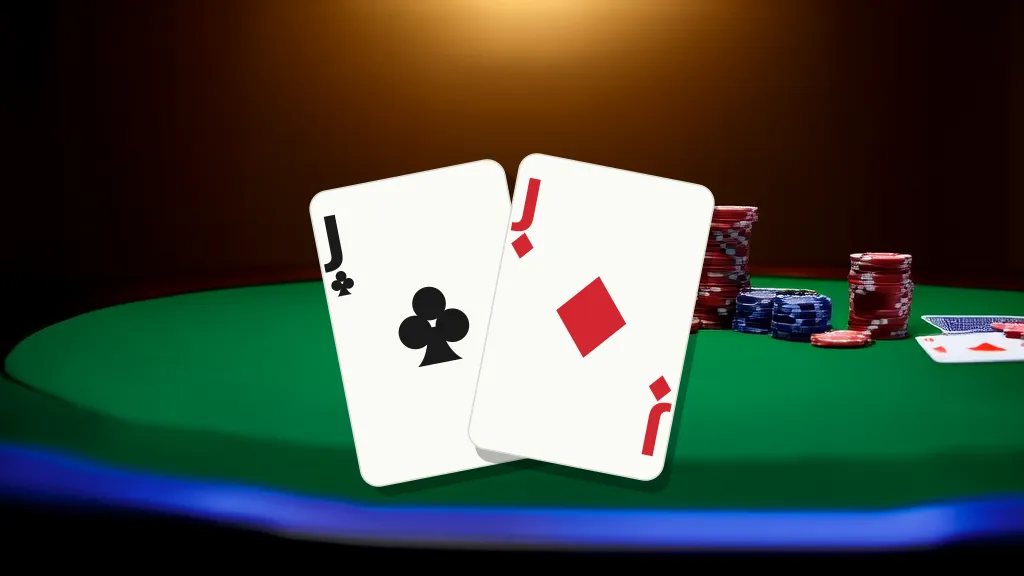
Master Jack-Six Suited (J6s) in every position and situation. This guide covers preflop ranges, postflop play on various board textures, flush draw strategy, 3-bet pots, and advanced exploitative plays.
- how to play J6S
- J6S strategy
- GTO
- poker strategy
Jack-Six suited sits in one of poker’s awkward neighborhoods: too weak to treat like a premium, too playable to auto-muck, and easy to mis-evaluate because the Jack visually upgrades the hand while the six quietly sabotages dominated-top-pair scenarios. This guide treats J6s as what it actually is—a marginal suited gapper whose primary redeeming feature is flush equity—and builds position-aware, SPR-conscious, solver-aligned defaults you can tighten or loosen based on rake, stakes, and opponent tendencies.
1. Introduction: Suited Gapper Dynamics and the High–Low Card Combination
What “suited gapper” means for J6s
In modern range construction, hands are often grouped by connectedness, high-card strength, suitedness, and playability across streets. J6s is suited, which grants flush-making potential, but it is also a four-gap combination between ranks (Jack down to six): J-T-9-8-7-6 spans six ranks with missing interior cards. Compared with suited connectors like JTs or J9s, J6s flops fewer straight draws that retain equity when opposed by strong ranges, and it generates fewer multi-way favorable textures where secondary draws compound.
That gap matters because postflop equity realization—how much of your raw preflop equity you convert into expectation after betting sequences—is heavily influenced by nut potential, domination, and the frequency you face pressure. J6s frequently realizes equity primarily through flush draws, occasional middle pairs, and top pair with a terrible kicker rather than through robust two-way draws or the nuts.
The high card / weak kicker trap
The Jack encourages cognitive bias: players mentally bookmark top pair as “strong,” but top pair with a six kicker is among the most expensive holdings in Hold’em because it looks like value and performs like a bluff-catcher or a thin value spot at best. Against serious opening and continuing ranges—especially three-bet ranges and polarized river ranges—Jx with a low kicker is often reverse-dominated by better Jx, all overpairs, and many better Jx combos that remain in villain’s value region.
Suitedness partially compensates by adding backup equity on many boards, but backup equity is not a license to inflate pots. Playability increases; showdown value against strong ranges often does not increase proportionally.
Why J6s shows up in solver outputs (but not everywhere)
Game-theoretically optimal solutions and high-quality nodelocked trainer ranges sometimes include J6s as a mixed candidate in late position opens and big blind defense because the pot odds, antes (in tournaments), position, and range advantage on certain textures can justify thin continuations. That inclusion is highly frequency-sensitive: you may see J6s appear at non-trivial mixing percentages on the button or cutoff, and at smaller frequencies defending from the big blind, while it is commonly pure folds from early position in rake-heavy cash environments.
Reading solver charts literally (“if it’s green once, always open”) is a common leak. Treat solver frequencies as prior distributions: confirm with rake, stack depth, live tendencies, and table softness.
Reverse implied odds and the suited illusion
Suited junk carries a seductive narrative: “I can stack someone when I make a flush.” That story is partially true—and materially false in exactly the spots where beginners bleed. Reverse implied odds describe situations where you make a strong-looking second-best hand and lose multiple streets of value (or your stack) against superior holdings that were always comfortable continuing.
With J6s, non-nut flushes collide with:
- Nut flush combinations anchored by Ax suited that defended preflop or three-bet polar ranges containing suited aces,
- Boats on paired boards where your flush arrived late while villain slow-played full houses,
- Occasionally higher suited connectors when stacks go in lighter.
These collisions do not imply you should fear every monotone texture—rather, they imply pot geometry matters: deep stacks amplify downside when your flush’s effective nuts density is low relative to villain’s continuing policy.
Range interaction on typical late-position flops
Think of range versus range equity instead of hand versus hand. When you open J6s from the BTN and the big blind calls, many flops slightly favor the caller’s defensive composition—particularly middling connected boards—while Ace-high disconnected textures often shift leverage toward the aggressor depending on sizing and four-bet dynamics absent here.
J6s thrives comparatively on flush-heavy paths where your suited side qualifies draws frequently and where villain’s capped region expands enough that semi-bluffs retain folds. Conversely, J6s suffers on Jack-high dry textures where your top pair looks heroic yet performs poorly versus merged continuance.
2. Hand Strength Analysis: Equity, Dominance, and Comparisons
Raw equity versus a random hand
Against a uniformly random opposing hand at showdown after seeing all five community cards, J6s typically sits near 39% to 41% equity depending on simulation constraints and card-removal effects. That figure is useful mainly as intuition: Hold’em is not played versus random cards. Real opponents fold garbage preflop, three-bet premiums, and continue with ranges shaped by board texture.
Still, the ~40% neighborhood anchors an important lesson: J6s is not hopeless, but it is below many playable continuing thresholds unless position, pot odds, or implicit odds intervene.
J6s versus J6o (Jack-Six offsuit)
The offsuit variant lacks flush potential and therefore loses a large share of its semi-bluff equity and double-barrel credibility. Measured approximately, J6s commonly gains on the order of 3 to 6 percentage points of equity versus strong, connected, or high-card-heavy ranges compared with J6o, but the bigger difference is playability: J6s can realize more equity because it can continue on flush boards with correct pot odds and can apply pressure with equity denial on some textures. J6o more often becomes a bluff-catcher with fewer clean outs.
For most students, the practical dividing line is stark: J6o is usually a pure fold outside extremely favorable dead money spots, whereas J6s earns conditional entries.
Compared to stronger Jxs suited hands
Hand classes like Q6s and K6s share the “broadway + low kicker suited” dynamic: high card upgrades some top pair situations, but kicker weakness remains. Broadway cards generally improve blocking properties against some Ax and Kx compositions and can shift flip outcomes on high boards slightly—yet dominated top pair risk persists.
Relative to JTs, J9s, and J8s, J6s is materially weaker:
- Straight potential: JTs flops wraps and robust draws frequently; J6s rarely flops powerful straight equity.
- Double-suited board interaction: Suited connectors collide with more middling textures where both players have plausible ranges.
- Implied odds: Hands that make well-disguised nuts extract more on average; J6s more often makes non-nut flushes vulnerable to higher suited Ax.
Comparison table (conceptual equities vs illustrative ranges)
Exact equities swing with card removal and software settings; treat these as pedagogical anchors, not gospel:
| Matchup class | Approximate takeaway for J6s |
|---|---|
| Versus top 20% of hands | Often mid–high thirties percent equity preflop |
| Versus a linear CO open | Frequently below parity, realization-dependent |
| Versus a BTN open defended by blinds | Equity rises slightly due to wider villain ranges |
| Versus JJ+ / AK style premiums | Equity collapses unless suited flush outs matter postflop |
The actionable conclusion is structural: J6s is a drawing-hand-heavy equity profile dressed in Jack clothing.
Combo counting for dominated Jx realities
When you flop top pair with J6s, villain’s value combinations include numerous better Jx holdings depending on preflop construction:
- From BTN opens, hands like JT, JQ, JK, AJ, sometimes KJ remain plausible value tiers that crush your kicker,
- From BB defense, dominated scenarios compound because villain arrives with wider suited broadways that peel flops efficiently.
You do not need precise enumeration at the table—training drill builds intuition—but conceptual awareness prevents fancy-play syndrome. Domination is not merely “they might have AJ”; it is structural: their continuing range on Jack textures skews toward better kickers once bets escalate across multiple streets.
Equity realization checklist
Ask:
- Who has nut advantage on this texture class?
- Who benefits from aggression given typical continuation bet frequencies?
- Does my hand retain equity when called, or does it collapse versus strong continuing ranges?
J6s frequently passes item (3) only when flush draws exist or when villain demonstrably under-bluffs.
3. Preflop Strategy by Position (UTG Through BB)
Preflop planning should emphasize frequency discipline. J6s is not a hand to “balance” from early position at low stakes where rake destroys thin edges.
Under the gun (UTG) and early position (EP)
In full-ring and many six-max cash games with standard rake, J6s is typically a fold UTG/UTG+1. You open a narrow, strong range that prioritizes high card strength, connectivity, and nut potential. J6s fails too many filters: poor kicker, wide domination, weak straight structure.
Solver exception: Some very deep, ante-heavy, or specialized configurations may introduce rare mixes; absent those incentives, treat EP as no.
Middle position (MP)
MP opens widen slightly. J6s remains mostly a fold in rake-heavy environments because calling stations behind you shrink fold equity, and better opens behind punish loose EP/MP ranges.
If your game is exceptionally soft—with frequent limps and passive cold calls—you might expand slightly, but J6s is rarely the best marginal expander versus alternatives like suited seven-gap broadways that retain better postflop maneuverability.
Hijack (HJ)
The hijack is transitional. Default fold remains sensible for players building fundamentals. Exploitative widenings toward suited junk sometimes incorporate low-frequency J6s opens only when:
- Effective stacks are deep (meaningfully above 100 bb),
- Antes or dead money inflate rewards,
- Opponents over-fold to steals,
- Three-bet frequencies behind are low or predictable.
Even then, prefer cleaner widenings first (better suited aces, superior suited broadways, stronger suited connectors).
Cutoff (CO): a primary expansion seat
The cutoff is one of two seats where J6s begins to resemble a real holding. Solver-inspired CO ranges widen substantially because fold equity versus the blinds rises and positional advantage improves equity realization.
Practical guideline:
- Against typical blinds in theory-aligned populations, J6s may appear as a mixed open—sometimes opened, sometimes folded—depending on stack depth and rake.
- At live low stakes where blinds defend widely and rake caps hurt small pots, lean fold unless reads justify steals.
Frequency intuition: think low tens down to high single digits of opens at equilibrium—not “always,” not “never.”
Button (BTN): the flagship steal seat
The button is the second primary seat for J6s. Fold equity, postflop position, and range asymmetry combine to justify inclusion more often than from the CO.
Defaults:
- Open small sizing commonly used by your population (often 2–2.5 bb online; live may vary).
- Prefer linear steal sizing consistency rather than odd tells.
Against frequent three-bets, tighten dramatically: J6s does not resist pressure well without a defined plan.
Small blind (SB)
From the small blind, J6s is usually:
- Fold versus a raise (limp-call lifestyles aside),
- Occasionally part of three-bet bluff mixes only when blockers, size, and opponent folds align—a specialist tactic, not a default.
Completing or limping against passive tables happens in live poker, but theory-forward guidance favors Fold or Raise frameworks.
Big blind (BB): defense ranges
The big blind is the third major practical home for J6s. Versus opens, pot odds and closing action invite defends with suited hands that flop reasonable equity.
Against a min-open or standard open, J6s can be a call at mixed frequencies versus late-position ranges; versus early-position tight ranges, it trends toward fold unless odds are extraordinary.
Versus three-bets as the cold caller pipeline: generally release unless you have specific manipulation reads.
Live dynamics: straddle, antes, and effective depth
Live cash introduces structural distortions:
- Straddled pots tighten optimal stealing widths because cold callers widen behind you while SPR anomalies emerge,
- Bomb pots and promos aside, standard straddle environments punish speculative opens without disciplined three-bet responses mapped.
If your room plays persistent under-the-gun straddle, treat HJ as effectively earlier relative to incentives—often folding J6s entirely unless stacks explode beyond 150–200 bb and villains fold excessively.
Online versus live defensive thresholds
Online populations exhibit higher three-bet and cold four-bet frequencies at comparable stakes versus many live pools. Therefore:
- Online BTN opens may face squeeze-heavy blinds more often—trim J6s opens when blinds cold-call liberally pre inviting squeezes behind,
- Live pools sometimes under-three-bet, expanding steal viability—still beware rake.
Opening size interactions
Small opens (2 bb) widen defend ranges but cheaply invite multiway scenarios bad for J6s. Larger opens (2.5–3 bb) tighten caller compositions slightly—often favorable if it trims multiway frequency—yet reduce steal ROI.
There is no universal optimum independent of rake structure; adopt population-stable sizing then adjust J6s frequency rather than reinventing sizing solely for Jack-six suited.
4. Facing Different Preflop Actions
Versus limpers
Against single limp, limped pots, J6s gains temptation because price improves. Still:
- Multiway pots reduce realization for drawing hands without nut upside.
- Prefer isolating only when villains fold enough postflop to steals.
Default: overlimp sparingly, isolate rarely, prioritize stronger suited holdings.
Versus open raises
Facing an open:
| Raising position | Lean |
|---|---|
| EP tight open | Fold |
| MP open | Mostly fold |
| CO/BTN open | Call sometimes from BB; generally fold from SB unless squeezing theory applies |
| SB completion dynamics | Usually avoid |
Versus three-bets
When you open J6s (mixed frequency seat) and face a three-bet:
- Four-bet bluff frequency should be microscopic with J6s (typically never as a default).
- Call only in shallow-frequency solver mixes versus micro three-bet sizes from predictable opponents at deep stacks—and even then often inferior to simplifying.
Population heuristic at live mid stakes: fold.
Versus squeezes / cold four-bets
Treat pressure packages as truncators. J6s rarely continues profitably unless you explicitly modeled deep stacks, weak squeezers, and high fold equity.
As a squeeze candidate
Occasionally J6s enters squeeze bluff consideration due to blocking effects against some JJ and broadway-heavy segments—not because blocks are enormous, but because squeezes are partly frequency weapons. This is advanced and opponent-dependent.
Cold-calling raises (non-blind)
Cold calling opens from intermediate seats with J6s is generally inferior to three-betting premiums or folding—classic modern doctrine—because squeeze risk and range disadvantage loom. Exceptions arrive in exceptionally passive games where squeezes rarely occur and stacks are deep enough that skill edges dominate—still rarely prioritize J6s over stronger suited holdings.
Versus isolate raises / loose EP opens
Against wide isolators who reopen weak ranges but fold postflop to pressure, J6s can theoretically defend big blind profitably due to price—yet realize poorly multiway when callers proliferate. Prefer tightening overall defend matrix unless heads-up likelihood is high.
Multiway preflop raises
Facing three or more players consistently once you enter pots signals structural trouble for J6s:
- Flush draws retain relevance but face greater risk someone holds higher suited combinations,
- Top pairs lose confrontation purity—calls cascade into tougher rivers.
Fold more liberally preflop when pots routinely go multiway unless antes or promotion pots dictate gambling frameworks outside core curriculum.
5. Postflop Strategy: Flush Draws, Weak Top Pair, SPR, and Board Atlas
Postflop with J6s splits cleanly into buckets:
- Flush draws (primary weapon),
- Top pair weak kicker (TPWK) situations—often expensive,
- Weak pairs / ace-high boards—often folding equity realization spots,
- Pure air—selective aggression based on range advantage.
Stack-to-pot ratio (SPR) scaffolding
SPR approximates commitment geometry:
| Approx SPR | Interpretation for marginal one-pair hands |
|---|---|
| SPR ~15+ | Deep; more turns and rivers to navigate; draws prefer implied odds scrutiny |
| SPR ~10–15 | Standard depth; caution with TPWK versus aggression |
| SPR ~6–10 | Commitment emerges faster; draws gain stacking leverage selectively |
| SPR ≤ ~4–5 | Many top pairs approach commitment thresholds—TPWK remains hazardous |
With J6s, SPR interacts with flush texture: nut flush concerns matter when your six flush is secondary to Ax suited in villain’s continuing range.
Flush draw dynamics
On two-tone boards where you hold a flush draw:
- Equity is often meaningful—roughly nine outs (~35% from flop to river, but betting charges reduce clean realization),
- Prefer semi-bluff lines when you have fold equity and range advantage,
- On paired boards or paired top card textures, caution: opponent traps and shrunken bluffing regions alter optima.
Example texture: flop Q♣ 7♣ 2♦ holding J♣ 6♣
- You have backdoor straight chaos limited; primary equity is club outs.
- Versus continuation bets, continuing frequencies depend heavily on villain range and size.
- Versus large polarization on wet boards, sometimes calling realizes equity; versus small range bets, raising mixes appear but require calibration.
Top pair weak kicker with Jx
Example: flop J♠ 9♦ 4♣ with J♣ 6♣
You have top pair, weak kicker, no flush draw yet if clubs aren’t assisting sufficiently:
- Versus single raises, calling once may be reasonable in position versus range bets.
- Versus triple barrels, especially on runouts that favor better Jx, folding earlier saves expectation.
When you hold second pair instead, downgrade aggressively.
Board atlas: five-plus flops discussed explicitly
Below are representative flops paired with heuristics—adjust for opponent and sizing.
Flop A — Monotone club (K♣ 9♣ 4♣) holding J♣ 6♣
You flopped a flush:
- Strength is non-nut; Ax♣ dominated scenarios loom if villain arrived with suited aces or defended broadly with AcXc.
- Early streets often prefer raising for protection selectively versus draws that can over-realize.
- Avoid slow-playing multiway pots against competent aggression.
Flop B — Two-tone high wet (A♠ J♠ 8♦)
You have pair of jacks, weak kicker, backdoor spades:
- Dominated by AJ, often crushed by sets of JJ / 88 depending on reads,
- Turn spade rolls increase complexity; without reads, proceed cautiously versus pressure.
Flop C — Dry broadway (J♦ 7♠ 2♣)
Top pair appears inviting:
- Actually dangerous versus HJ/CO/BTN ranges rich in better Jx, especially JT, JQ, JK, sometimes AJ if applicable—precisely because ranges hit broadway.
- Small-medium pots favor pot control; large bets demand respect.
Flop D — Low connected (9♠ 8♠ 7♦)
You have six-high, gutshot aspirations marginal:
- Mostly give up unless excellent steal dynamics,
- Semi-bluffs rare without stronger draws.
Flop E — Paired bottom (T♠ T♦ 6♣)
You pair sixes:
- Often weak showdown value multiway,
- Fold to substantial aggression absent reads.
Flop F — Double broadway rainbow (Q♦ J♥ 5♠)
Top pair weak kicker returns:
- Turn cards like T, K, A reshape dominance hierarchies,
- Calling ranges tighten versus triple-barrel populations.
Additional textures worth noting:
Flop G — Middling monotone danger (8♣ 5♣ 2♣)
You hold high clubs:
- Flush draws exist but villain three-flush boards spike raises frequency from competent players—your draw still aims well but beware paired boards later.
Flop H — Ace-high dry (A♦ 8♠ 3♣)
Mostly check-fold continuation zones unless villain range-cbet poorly.
Flop I — Low rainbow with backdoor clubs (7♠ 5♦ 2♣) holding J♣ 6♣
You have six-high, backdoor flush potential, limited straight chemistry:
- Default fold to substantial continuation betting frequency unless villain range-bets absurdly wide,
- As preflop aggressor in position, small stab mixes exist versus populations that fold too much—but treat this as refinement, not autopilot.
Flop J — Broadway straightening (K♦ Q♠ T♣)
You hold gutshot aspirations with J6s—marginal connectivity:
- Equity exists versus some hands but realization poor out of position,
- Prefer give-ups absent reads that villain over-folds turns after checks.
Single-raised pots (SRP) as preflop aggressor
When you opened CO/BTN and defend calls:
- Ace-high disconnected flops often reward small continuation bets at equilibrium because range advantage concentrates in nutted kickers—but J6s specifically remains a marginal peel candidate only when secondary equity accompanies (backdoors), otherwise check back planning frequent turn folds,
- Low connected flops shift defense toward caller—lower continuation bet frequency for your side; J6s drops into check-give-up buckets unless you picked up draws.
Probe stability: adopt population baselines then deviate only with stats—HUD metrics like Fold to Cbet, Raise Cbet, and WTSD materially change whether flush draws should raise or call.
Single-raised pots as caller (primarily BB)
From the big blind, J6s realizes equity best when:
- Pot stays heads-up,
- Villain uses predictable sizing that permits mathematically anchored continues,
- Turn decisions remain defined—ambiguous giant bets wreck marginal holdings.
Versus triple-barrel opponents, tighten flop continues unless draws appear—passive chips saved fund better spots.
Three-bet pots (cold caller rare; caller after three-bet uncommon)
Most readers should simplify: avoid entering three-bet pots with J6s. For completeness:
When stacks are deep (SPR ~12+) and you somehow arrive postflop as caller with a draw-heavy holding, prioritize positional folding discipline: three-bettors compress ranges toward strength; top pair weak kicker becomes catastrophically overplayed.
If you opened and face squeeze, default fold. If you defend BB versus squeeze rarely with suited junk due to insane odds, treat turns and rivers as high-variance survival training—still not recommended curriculum.
Probe bets, delayed c-bets, and donk leads
Versus probe aggression after you check back flop:
- Flush draws sometimes raise thinly versus obvious floaters,
- Weak pairs mostly fold.
Versus donk leads into aggressor:
- Population often under-bluffs—yet J6s still lacks conviction without draws,
- Calling once with combo draws remains more plausible than calling down with naked sixth pair.
Turn play heuristics by bucket
Pick up flush draw on turn:
- Re-evaluate SPR; raising becomes more attractive versus capped ranges when fold equity emerges,
- Calling remains viable versus polar large bets only when pot odds justify drawing—avoid seductive prices that disguise domination later.
Brick turns after flop peel:
- Often fold to second barrels without draws—do not invent elaborate floats,
Broadway completes:
- TPWK degrades quickly—release earlier than ego prefers.
River thresholds and blocker effects
J6s carries modest club blockers when suited in clubs—occasionally relevant on flush-completing rivers against opponents who triple-bluff thinly—but generally six kicker prevents heroic logic.
Develop rubrics:
| Villain archetype | TPWK facing river jam |
|---|---|
| Under-bluffer | Fold aggressively |
| Over-bluffer (rare but real) | Consider thin calls only with correct pot odds |
| Merged value stations | Fold earlier streets instead of rivers |
Turn and river simplifications
As stacks deepen:
- J6s benefits from positional realization—take free cards when prudent,
- Avoid large hero calls with TPWK versus polarized rivers absent strong blocker reasoning.
Solver libraries frequently prefer checking marginal showdown regions at equilibrium to protect checking ranges—humans sometimes simplify by betting thinly versus massive under-bluffers; verify with evidence, not intuition.
6. Cash Game Versus Tournament Adjustments
Cash games (rake-aware)
Cash introduces rake and caps that punish marginal holdings:
- Lean fewer defend frequencies with J6s from BB unless villains open wide and play poorly postflop.
- Prefer BTN steals where fold equity pays rake indirectly through uncontested pots.
Deep cash (200 bb+) increases playable complexity:
- Implied odds rise slightly for suited holdings—still tempered by dominated flush risk.
Micro-stakes nuance:
- Where rake represents enormous fractional pots, marginal suited opens bleed subtly across thousands of hands—track sessions honestly; if steals seldom succeed, eliminate borderline opens before blaming variance.
Mid stakes live:
- Exploit massive limp-call ecosystems by tightening isolation politics—but remember J6s isolation rarely constitutes best expanding candidate versus stronger suited Broadway combos still folded.
Tournaments (ICM and pressure)
Tournaments reshape incentives via antes, pay jumps, and fold equity near bubbles:
- Steal widening can justify slightly more J6s usage late position short-handed,
- Near heavy ICM situations, survival premiums shrink thin-call defenses—fold more.
Short-stack mechanics:
- With ≤ ~20 bb, J6s rarely wants complex lines—mostly shove-fold contexts governed by Nash-like charts that seldom prioritize J6s unless extremely wide blind stealing dynamics apply.
Middle stages (40–70 bb) introduce playable postflop depth:
- Here J6s occasionally appears as steal/defend mixes similar to cash—but three-bet wars escalate faster near payouts.
Final tables:
- Payjump pressure skyrockets—thin BB defenses with dominated-top-pair tendencies become catastrophic,
- Prefer simplifying late-position steals toward stronger blockers unless reads dominate.
Solver versus population at different formats
Online MTT regs nearer equilibrium justify retaining mixed BTN frequencies closer to trainers; live satellites with manic payout structures justify heavier simplifications—often pure fold except widest steal dynamics.
7. Common Mistakes (At Least Five)
Over-opening from early position because “it’s suited.” Suitedness does not erase positional disadvantage.
Paying three streets with TPWK against linear Value-heavy villains—especially when runouts favor better Jx.
Treating non-nut flushes like the nuts on scary boards versus aggressive opponents whose range contains nut flush combos densely.
Ignoring rake when defending BB with marginal suited trash—thin edges evaporate.
Auto-barreling flush draws without fold equity—burning chips when villain’s continuing range crushes draws.
Mis-calibrating multiway pots: calling raises loosely then complaining when realization collapses—J6s hates crowded flops without nut chemistry.
Solver cargo-culting: copying trainer frequencies without adjusting to live pool leaks—often failing to exploit tighter folds or failing to tighten versus sticky stations.
Calling flop bets “because pot odds” without planning turn reactions—especially when villain barrels merges—leading to expensive peels with TPWK.
Underestimating nut-flush density on monotone flops after BTN opens wide yet BB defends suited aces—then stacking off lightly.
Spiking curiosity: playing J6s because boredom replaces disciplined range charts—long-run ruin disguised as experimentation.
8. Advanced Tips (At Least Three, Including Flush Draw Strategy)
Tip 1 — Flush draw route selection tied to range advantage
Segment opponents:
Versus under-bluffers, prioritize calling strong draws sometimes to trap—balanced against allowing free cards.
Versus over-folders, construct semi-bluff raises with combo draws preferably; pure flush draws work better when blockers matter less and folds abound.
Use SPR: shallow stacks sometimes prefer committing earlier with draws if villain range capped.
Tip 2 — Blocker-aware squeeze theory
J6s lightly interacts with broadway compositions; squeezing remains situational but illustrates how marginal suited hands participate in frequency warfare, not pure showdown poker.
Tip 3 — River discipline with TPWK
Develop explicit thresholds: when villain triple-barrels flush-completing runouts or broadway completing cards, fold unless population massively under-bluffs—because J6s lacks blocker strength to constrain nuts-heavy polar regions.
Tip 4 — Population exploits without losing GTO literacy
Even when playing exploitatively—attack wide limpers, steal blinds aggressively—maintain internal consistency so your BTN range isn’t arbitrarily stuffed with terrible suited combos without balancing frequencies elsewhere.
Tip 5 — Dual-draw prioritization
When holding flush draw + gutshot or flush draw + pair, equities compound—solver frequencies ramp aggression selectively. With J6s, such combos arise rarely; when they do, avoid passive lines that surrender initiative unnecessarily versus capped villains—still retain sanity versus raises.
Tip 6 — Timing tells and sizing exploitation (ethical live reads)
Live pools betray strength via chip placement, conditional shaking, conditional silence—use responsibly without angle-shooting. Large opens followed by hesitant checks sometimes correlate with capped middling pairs—contextual aggression with draws improves—but never universalize anecdotes into laws.
9. Frequently Asked Questions (At Least Ten)
1. Should I open J6s from the cutoff?
Sometimes as part of mixed strategies versus blinds that defend appropriately; at rake-heavy live games, often no. Prefer cleaner widenings unless steals print.
2. Is J6s better than J6o?
Yes materially due to flush equity and semi-bluff vitality.
3. How much equity does J6s have versus a random hand?
Roughly 39–41% all-in equity preflop versus random cards—informative only as intuition.
4. Can I defend J6s from the big blind?
Yes selectively versus wide late-position opens where pot odds justify peeling.
5. Should I ever cold-call three-bets with J6s?
Rarely; treat as expert territory.
6. What is the biggest leak with J6s?
Overplaying top pair weak kicker.
7. How do I play a flush draw facing a huge flop raise?
Often fold unless stacks deep and villain polarized predictable—large raises narrow continuing viability.
8. Is J6s okay multiway?
Generally worse—reduce continuation frequencies.
9. Does solver inclusion mean I must open J6s?
No—solvers output frequency mixtures tuned to assumptions; humans simplify profitably.
10. How does J6s compare to Q6s / K6s?
Similar weak kicker suited archetype; broadway upgrades some interactions slightly but domination persists.
11. What SPR makes TPWK sticky?
Avoid rigid rules—below ~5 SPR, commitment rises; TPWK remains villain-dependent.
12. Should I balance river calls?
Balance matters mostly at tough stakes; exploit populations first.
13. Is J6s ever a four-bet bluff?
Almost never—default no at all stakes until elite solver study plus opponent modeling justify microscopic mixes.
14. Should I limp J6s live?
Generally no—prefer raising or folding frameworks to avoid capped ranges unless table conventions explicitly reward limping strategies you’ve validated mathematically.
15. What stats justify wider BTN inclusion?
Look for elevated Fold BB to Steal, low three-bet from blinds, and excessive Fit or Fold post—combine signals rather than relying on single HUD boxes.
16. How do I study J6s specifically?
Use trainers filtering scenarios where this combo appears—observe mixed frequencies across flops rather than memorizing isolated charts without texture classification literacy.
17. Does six-max widen EP ranges enough for J6s?
Rarely meaningfully—six-max shifts incentives but EP remains restrictive for gap-suited junk unless antes/deep stacks reshape incentives dramatically.
18. What about Pot Limit Omaha comparisons?
Misleading—PLO emphasizes redraw structures absent here; avoid importing multiway soup logic into NLHE blindly.
10. Summary: Key Takeaways
Jack-Six suited is a marginal suited gapper: roughly 39–41% equity versus random hands preflop, but real poker rewards range discipline, position, and nut-awareness. Relative to stronger suited connectors, J6s lacks straight richness; relative to offsuit combos, suitedness restores semi-bluff vitality—primarily via flush draws. The hand’s defining tension is visual strength (Jack) versus structural weakness (four-gap, weak kicker)—successful users treat suitedness as conditional permission to continue, not automatic enthusiasm.
Preflop, emphasize cutoff, button, and big blind defense as the plausible homes for continued play; treat early-position opens as fundamentally unjustified in typical rake environments. Account for straddle, rake caps, and squeeze tendencies before copying online trainer mixes. Postflop, invest heavily in studying SPR, texture atlas patterns, SRP versus three-bet pot realities, and TPWK pitfalls—your Jack tempts optimism while your six quietly pays rake to better kickers.
On flush boards, prioritize semi-bluff construction when fold equity and range advantage align; on paired and Ace-high boards, downgrade quickly. Use solver frequencies as priors, not commandments; simplify versus predictable pools; protect your tournament stack near ICM pressure points; and remember that non-nut flushes and weak top pairs are powerful lesson generators—master J6s by refusing to glamorize its high card while respecting its suited utility where position, odds, and opponent error intersect.