
How to Play AA (Pocket Aces) in Texas Hold'em - Complete Strategy Guide
May 3, 2026
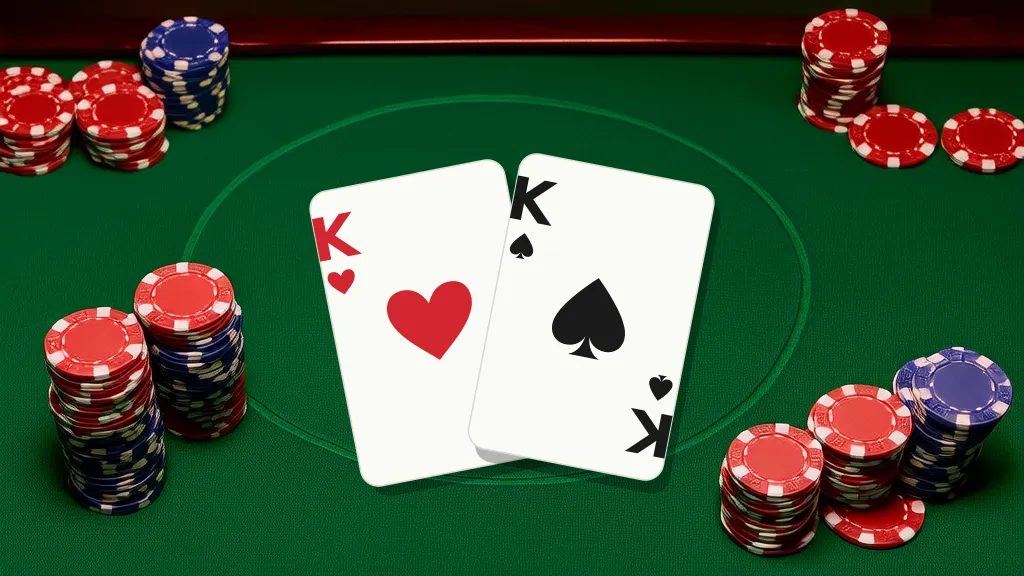
Master Pocket Aces in every position and situation with this complete strategy guide. Learn equity math, SPR commitment rules, preflop sizing, postflop lines on wet and dry textures, multiway pots, solver tendencies, and how to avoid the most expensive AA mistakes in cash games and tournaments.
- how to play AA
- AA strategy
- GTO
- poker strategy
Introduction
Pocket Aces—two aces in the hole—is the single strongest starting hand in No-Limit Texas Hold'em. That statement is not rhetoric; it is built into the mathematics of the game. Against a completely random hand, AA wins roughly 84.5% to 85.5% of the time all-in preflop depending on runout definitions and minor accounting conventions. In practical terms, that margin is enormous: most playable hands are thrilled to reach sixty percent equity in a favorable matchup. Aces are not merely ahead; they are overwhelmingly favored almost every time the money goes in before the flop.
Yet despite sitting atop the hand rankings, AA remains one of the most misplayed premiums in both live and online poker. The errors rarely come from “not betting enough” in a vacuum. They come from mis-calibrated risk, especially after the flop: slow-playing against multiple opponents on coordinated boards, failing to size up to protect equity, refusing to release an overpair when the action and the board tell a narrow story that excludes most worse hands, and treating multiway pots like heads-up confrontations.
This guide is written for serious students of the game who want modern, defensible strategy: a blend of game-theoretically sound baselines (what balanced ranges do with AA at various stack depths) and exploitative adjustments (how real human populations deviate, and how to print). You will find concrete equity references, stack-to-pot ratio (SPR) heuristics, sizing ladders, and explicit “when to fold” criteria—because the difference between good AA play and great AA play is rarely preflop. It is postflop discipline and clarity about commitment thresholds.
If you take one idea from the introduction, let it be this: AA is a preflop monster and a postflop hand classification problem. Your job is to get value while the deck is two cards thin, then navigate three-card, four-card, and five-card stories without letting nostalgia for “the best hand before the flop” override Bayesian updating.
Why Win-Rate Stats Can Mislead (And What to Track Instead)
Casual players love quoting how AA “prints” in aggregated databases. Directionally, they are correct: premiums drive much of a solid winner’s all-in-adjusted performance. But win-rate is a lagging indicator polluted by format (Zoom vs regular tables), rake, seat draw, and variance. A more useful framing is decision quality under uncertainty:
- Did you select a preflop line that maximized EV against the opponent’s continuing strategy?
- Did your postflop bets interact with the sets of hands villains actually continue with, not the hands you wish they had?
- Did you avoid the two silent killers: giving free cards in multiway pots, and paying off rivers because the story became coherent?
Pocket Aces also illustrate a psychological hazard: loss aversion spikes with premium starting hands because they arrive rarely and feel “owed” a reward. Strong players treat AA like any other combo in a matrix—remarkably strong preflop, potentially ordinary one-pair postflop—rather than as an identity.
How Often You Are Dealt AA (and Why That Matters for Frequency Thinking)
In Hold’em you receive AA about once per 221 hands as a rule-of-thumb frequency (6 combos of aces, 1,326 total starting combos). That rarity is exactly why habitual slow-playing is so toxic: you are not “balancing” with dozens of other equally strong hands; you are torching EV in the few spots nature gives you an unfair advantage. Frequency thinking also matters for metagame: if your opponents observe you never flat cold a 3-bet, your traps become telegraphed when you suddenly do. The modern solution is not theatrics—it is small mixed frequencies anchored by solver baselines, not by drama.
Hand Strength Analysis
Understanding AA begins with isolating its equity against representative holdings. The numbers below are standard preflop all-in equities (Monte Carlo or exhaustive enumeration; identical for practical play purposes).
Versus One Random Hand
Against any random two cards from a full deck, AA is approximately an 85% favorite—often cited as 84.9% to 85.2% in simulators. That performance is why limping “to be tricky” burns expected value (EV): you forfeit fold equity, let dominated hands see flops cheaply, and invite multiway choreography that reduces your ability to realize equity cleanly.
Versus Pocket Kings (KK)
The classic cooler matchup is AA vs KK all-in preflop, where AA holds about 81% equity (commonly ~80.95% to 81.1%). The second-best pocket pair is not close; KK needs straight miracles or the case ace to survive. This is why slow-playing AA against an extremely tight 3-bettor sometimes has merit as a frequency, but never as a religion: you are not afraid of KK—you want KK to pile money in.
Versus Pocket Queens (QQ)
AA vs QQ is similarly dominant at about 81% equity for aces (often quoted around 80.8% to 81.0%). The takeaway is structural: dominated-overpair dynamics favor AA massively preflop, but QQ (like KK) can flop terrifying sets; the hand strength difference is preflop isolation, not invincibility postflop.
Versus Ace-King Suited (AKs)
Against AKs, AA is roughly an 87% favorite preflop (often ~87.2%). The AK combo has more “live” outs than KK or QQ in the sense that any king improves it—yet AA still smothers it because the ace duplication and pairing dynamics are brutal for AK. Practically: never talk yourself into “AK might have me” preflop when you hold AA; your job is to build pots against that exact hand class.
Versus Pocket Jacks (JJ)
AA versus JJ is similarly lopsided—think on the order of ~80% equity for aces (sim outputs cluster near 80.5% to 80.9%). JJ flops overcards constantly, but sets remain the main threat postflop, not preflop variance.
Versus Suited Connectors (e.g., 76s, T9s)
Low and mid suited connectors live on implied odds and postflop playability. Against a single suited connector like 87s, AA might still be near 77% to 80% preflop depending on exact combo and dead cards—still a huge favorite, but not as invincible as versus broadway pockets. The bridge to strategy is not the raw preflop number; it is that suited connectors realize equity exceptionally well postflop, especially multiway, especially when you under-represent your strength or give free cards.
Versus Range Classes: Tight vs Wide
Preflop equity versus a range is more instructive than versus a single hand:
- Against a tight value-heavy 3-bet range (something like QQ+, AK), AA still has excellent equity—typically well into the 60s and 70s in percentage terms as a share of the pot at showdown preflop—but the important strategic point is that a tight range contains more combos that can cooler you postflop (sets with KK/QQ) while still paying you off preflop.
- Against a wide merge-y 3-bet range that includes suited broadways, weaker pairs, and bluffs, AA can approach 70% to 80%+ equity depending on how polluted the range is with dominated aces and trash.
The exploitative adjustment: wide ranges punish passivity; tight ranges sometimes reward trapping at a low frequency, but only if you can reliably execute later streets without losing the universe of worse hands that would have paid you preflop.
Worked Example: AA vs a “Strong But Human” 3-Bet Range
Imagine a tough opponent 3-bets a linear-ish value range with a sprinkle of suited Broadway and some bluffs—something like TT+, AQ+, KQs, plus occasional A5s–A2s bluffs and a few suited connectors. AA’s equity is still excellent because the range contains many dominated Ax and premium pairs you crush. The postflop difficulty versus this player is not preflop—all-in equity is lovely—it is that their continuing range on Q-J-T two-tone contains real nutted and combo-draw density. That single sentence is the bridge from “pretty preflop chart” to “actual poker.”
Against a nitty 3-bet range of QQ+ and AK only, AA still has very high raw equity, but you should internalize the set threat rate: pocket pairs below aces (KK, QQ) remain in range and can cooler you. That is not an argument for playing AA scared; it is an argument for not engineering gigantic multiway pots when you have the preflop betting lead almost every time.
Suited Glass Cannons: T9s, 87s, and Similar
Hands like T9s versus AA might still be only roughly high seventies percent for aces preflop in a vacuum, but they thrive when they see cheap flops, realize draws, and force uncomfortable turn decisions. Your strategic counter is structural: charge them preflop, and when they arrive anyway, use board-aware sizing so they cannot peel with infinite implied odds.
The Domination Dynamic
“Domination” in poker language usually means one hand’s outs and top-pair potential are structurally compromised by another’s higher duplicate cards. With AA, every other hand that contains an ace is catastrophically disadvantaged preflop—A-K, A-Q, even A-x suited is drawing nearly dead to two outs or reverse situations.
That domination is the engine of AA’s print rate: people continue with dominated aces, overplay top pair, and stack off with hands that looked “too pretty” preflop.
Postflop, the domination story flips textures:
- On an A-high rainbow disconnected board where you hold pocket aces, you almost always have top set (the board contains an ace). You still “dominate” worse Ax in the absolute sense, but Ax combos are scarce because you block aces—an availability issue that can paradoxically make your hand harder to get paid against competent foes who correctly weight your range on certain runouts.
- On connected boards like
9-T-Jor8-9-Twith suits in play, AA does not “dominate” anything in the sense of nut-proximity. Hands likeQ-K, sets, two pair, pair-plus-straight draws, and combo draws all exist in villain ranges, and your single pair—however pretty in absolute terms—is suddenly just a bluff-catcher against aggression from competent, polarized betting lines.
The strategic compression rule: preflop domination does not imply postflop invulnerability. Treat AA for what it becomes on each board: sometimes the effective nuts against a range, sometimes a strong-but-vulnerable one-pair, sometimes a marginal bluff-catcher when runouts and lines converge.
Blocking and “Payoff Availability” With AA
Because you hold two aces, you remove many Ax combos from opposing ranges. That can be strategically double-edged:
- Against thinking opponents, your story on certain A-high flops can become too strong, making worse hands fold earlier than you want.
- Against inexperienced players, blocking is irrelevant—they still pay off Kx on
K-9-4as if AA did not exist.
Advanced players therefore separate two ideas: card removal (real combinatorics) and incentive (whether worse hands can realistically continue). With AA, you are constantly asking: Who has the second-best hand, and why would they put money in now?
When the Second-Best Hand Is a Draw, Not a Pair
On wet boards, the “dominated pair” narrative disappears. The second-best “hands” are often combo draws that are not dominated—they simply fold equity against your continuation sometimes, and when they continue, they reverse dominate your ability to comfortably stack off at deep SPR. That is why SPR thresholds and depth matter as much as raw preflop equity.
SPR and Commitment Thresholds
Stack-to-pot ratio (SPR) is the stack divided by the pot going to the flop. AA interacts with SPR in a way that confuses weaker players because they remember “never folding aces” from home games while ignoring the conditions that justify commitment.
When Stacking Off Is Automatic (Low SPR)
As a practical heuristic used widely in coaching literature:
- At SPR below about 3, stacking off with an overpair to the board (including AA) is often “automatic” against non-nut-poker populations unless you have an extremely specific exploitative read.
- From SPR 3 to 6, AA is still usually a high-commitment hand, but you begin reading boards and opponent classes: combo draws, paired boards changing snap-jam frequencies, and multiway narrowing.
- From SPR ~6 to 10, AA is still commonly a stack-off hand versus many continuing ranges in 3-bet and 4-bet pots, but you must respect nut advantage on frightening textures—especially multiway.
Practical commitment anchor: below SPR 10, in typical heads-up single-raised or 3-bet pots at 100bb equivalent depth, AA is usually in the “happy to get it in” category on many flops because even when you are behind a set, you still have outs (though against a set you are crushed—about 8% to win by the river if no other complexity). The point is not that you “always win”; it is that pot geometry plus fold equity plus stack inclusion makes folding AA extremely costly in low-SPR geometry absent a crystallizing cooler story.
When Folding Overpairs Is Rare but Real
Folding AA postflop is not a myth. It is rare because the combination of conditions is rare:
- Extremely high SPR where you can take a free card early and still face massive polarization later.
- Multiway action where a raise indicates strength compounded across players.
- Board runouts that complete obvious front-door stories (straights/flushes) paired with sequences that heavy only value from a specific opponent.
Example sketch: deep stacks, multiway, flop monotone with you lacking the nut flush blocker relevance, turn completes low straight, facing a lead-jam line from a passive opponent. You are not “folding aces because scared”; you are folding because your equity against the likely value range collapses.
Numeric Illustration: SPR Snapshots Players Actually Encounter
Suppose you 4-bet preflop and the pot is about 24bb at 100bb effective remaining for both players after rake. That is roughly SPR ≈ 4.2. On many flops, a commitment mindset is natural: two-thirds pot on flop and turn can set up a river decision or shove for a stack that mathematically includes worse overpairs, top pairs, and draws that misread their equity.
Now change one variable: 200bb effective after the same 4-bet sequence, pot still ~24bb. Now SPR ≈ 8.3. AA is still an overpair powerhouse on K-8-3 rainbow, but on 9-8-7 two-tone your one-pair is no longer a “default three-street stack-off” versus competent aggression without supplementary reads.
If you let the pot remain small preflop—say single raised pot with 6bb in the middle and 97bb behind—SPR ≈ 16. This is the world where failing to build the pot with AA becomes a long-term leak: not because you lose showdowns, but because you win small when you are a huge favorite and still face difficult rivers when villains get there because you allowed cheap transitions.
Jamming vs Small 4-Bet at ~100bb: A Practical Decision Frame
Many training sites emphasize that AA wants to play giant pots. True—but implementation details matter:
- Jamming 100bb effective over a 4-bet can be excellent when villains call too many dominated combos or spew with merges.
- A smaller 4-bet that keeps weaker hands volumetrically in the pot can extract more postflop when villains overfold to jam preflop but flatter small 4-bets with dominated broadways.
You do not need to be perfectly solver-precise to apply the idea: choose the preflop sizing path that the population’s response function rewards.
6-Max vs 9-Max Adjustments
Full ring (9-max) tends to feature tighter open ranges from early position, more multiway pots, and more “honest” live tells at low stakes. With AA:
- Early position opens should remain robust and sizable; you want fewer seats to “correctly peel” with dominated holdings.
- Expect more callers behind in softer live games; your isolation raises need to be larger on average than in a tough 6-max online pool.
6-max increases blind-steal dynamics, widen late-position interactions, and pushes more 3-bet/4-bet choreography. With AA:
- You will frequently face squeeze dynamics from the blinds when you open the button or cutoff.
- Your 4-bet sizing interacts with wider defend ranges; you can sometimes use slightly larger 4-bets to punish merged continues without losing EV.
Population note: at equal skill, 6-max generates more preflop aggression around premiums, which is good for AA. Your job is not to hide AA; it is to select sizes that preserve worse hands without nuking SPR into awkward zones unless you intend to play for stacks.
EP Opens in Full Ring: Why Uniformity Beats “Tell Theater”
In 9-max, a classic amateur error is opening huge whenever they have aces. Strong players maintain stable open sizes from early seats so their range remains protected. AA is simply the top of the range, not a fireworks show. The EV of concealment is not theatricality—it is range protection and better multiway control when your size does not scream value.
Button vs Blind Wars in 6-Max: AA as the “Stop Loss” for Madness
6-max generates frequent steal/resteal dynamics. AA cleans up those wars when you avoid overthinking: 3-bet value, 4-bet value, and call occasionally only when you have a modeling reason (opponent jams too thin vs small 4-bets, opponent folds too much vs jams). The structural advantage of AA is that you are not trying to “represent A-high bluffs”—you are trying to capture the maximum from dominated premium ranges.
Online vs Live Adjustments
Live players often under-3-bet premiums at low and mid stakes, preferring “smooth calls” to trap. That has two implications for AA:
- When you 3-bet and get called instead of 4-bet, do not assume your opponent is capped—live traps exist, sometimes absurdly.
- When you open and face a small 3-bet from an otherwise passive opponent, weights shift toward traps and strength, not bluffs.
Online players, especially in aggressive pools, will 4-bet and 5-bet more correctly in frequency terms, mixing jams at 100bb with linear 4-bets and polarized shoves depending on site, rake, and stake. With AA, you generally want that environment: more mistakes come from incorrect bluff frequencies than from facing textbook value.
Exploitative ladder:
- Live: slightly larger opens and isolations to shrink fields; be cautious about “automatic triple barrels” against passive stations until you see showdowns; prioritize protection bets on wet boards because free cards are costlier multiway.
- Online: use solver-informed frequencies for 4-bet sizing (not necessarily min-4-bet); pay attention to rake and chop effects micro-stakes where your jam EV changes—AA is still a jam, but the marginal preference between jamming and small 4-bet can move at the edges.
Live “Trappy” Windows: How to Avoid Getting Outplayed After You “Play It Safe”
When live villains under-3-bet, they sometimes arrive postflop with under-repped strength. That does not mean you should stop value betting—it means your default assumptions about capped ranges weaken. Practical habits:
- Take thinner value earlier streets when villains call widely.
- Avoid auto-overbets that only isolate you versus boats on scary runouts unless you know they overfold.
- Actively note showdowns where a “weak preflop line” hid KK/QQ—that Bayes adjustment protects you from absurd hero calls later.
Online Pool Effects: Exploitatively Punish Over-Folded Continues
Aggressive online populations sometimes overfold to 5-bets or mis-defend BB vs 4-bets at certain rake structures. AA is the natural beneficiary: you can push slightly more thin value preflop (still mostly by playing straight-forward) simply because opponents’ mistakes cluster at the top of the decision tree.
Preflop Strategy by Position (UTG, MP, CO, BTN, SB, BB)
The default modern principle: AA always takes an aggressive preflop action—open raise, 3-bet, 4-bet, 5-bet, or jam—except in extremely rare meta/explo scenarios at specific stack depths (discussed later). Limping AA as a default is an EV leak against almost all populations because it forfeits Initiative, fold equity, and clarity.
Under the Gun (UTG) and Middle Position
Open for your standard sizing (often 2.2bb to 2.5bb online at 100bb; live may be 3bb to 5bb depending on elasticity). AA does not need a special “monster size” from EP: a uniform sizing conceals strength.
When facing a 3-bet, default to 4-betting with a significant frequency at 100bb equivalent. A common practical sizing pattern is 2.4–2.6x the 3-bet amount (not universal, but a workable anchor) with some mixing to call in position against opponents who either jam too much vs 4-bets or who spew postflop.
Cutoff (CO) and Button (BTN)
In late position, AA realizes position beautifully. You can:
- Open your standard steal size (often 2bb–2.3bb online depending on site culture), or match your chart for uniformity.
- 3-bet aggressively vs steals when applicable; AA is always a value 3-bet.
- Against a 3-bet, prefer 4-bet/jam motifs at shorter stacks; at 100bb, mix call only when you have credible postflop edge (opponent over-bluff-catches, ships too thin, etc.).
Small Blind (SB)
From the SB, opens are larger on average (common ~3bb vs a BB who defends wide) to deny equity realization. With AA:
- Flatting a BTN open from the SB is usually inferior to 3-betting unless you are implementing a meta exploit against a maniac who 4-bets bluff constantly and you want to trap—still, that is niche.
- Versus a BB squeeze after you limped—do not limp—your life is easier when you maintain an aggressive tree.
Big Blind (BB)
Defending against opens with AA is trivial: always 3-bet (squeeze if multiway limpers exist) or raise over limpers. Calling a single raise from the BB with AA is almost always dominated as a baseline by a 3-bet unless stack depth or bizarre multiway dynamics force a trap—which is rarer than players think.
Slow-Play Debate (Preflop)
Default: do not slow-play preflop. Exception frequencies might include:
- An extremely tight 4-bettor who only continues with premiums (you induce a 5-bet or a mistake).
- Satellite bubbles with odd payout mechanics—sometimes flat becomes pragmatic (not AA-exclusive, but relevant in tournament class later).
Even in exceptions, keep the frequency low. Poker’s economic engine is built on building pots with premiums.
Squeeze Spots When You Have AA in the BB (or Blinds Generally)
When there is a raise and one or more calls, AA wants to squeeze huge a disproportionate amount of the time. The squeeze accomplishes what a “smooth call” rarely does: it caps the field, grows the pot with dead money, and forces dominated hands into bad prices. A typical online anchor might be around 4–5x the open plus one additional multiplier per caller (game dependent), but live games often require another bump because inelastic calling is common.
Defending Against 3-Bets: Size Discipline Matters
When you 4-bet AA, pick sizes that preserve villains’ mistakes. Micro-stakes players sometimes min-4-bet everything; that can be fine if villains respond poorly, but against competent opponents you may want a chunkier 4-bet (still position-dependent) to avoid inviting perfect realize spots IP for villains with suited sets of hands. Do not treat advice as monolithic—track results by profile.
Facing Limper(s): Always Iso-Raise
Against one or multiple limpers, iso-raise AA every time. The reasons are mechanical:
- Dead money in the pot belongs in your stack trajectory.
- Limper ranges are often capped and sticky; you want them to pay.
- Allowing free multiway flops with AA is how you convert an 85% preflop monster into a guessing game on
8-9-Twith three players.
Sizing guide:
- Online against one limp: common 3bb + 1bb per limp adjusted for rake games (some use +0.5bb per limp in very steal-heavy games).
- Live against multiple limps: go bigger—often pot-ish or 6bb–12bb+ at low stakes—because callers are inelastic.
Elasticity note: if iso sizes fail to thin the field, increase, not decrease. AA wants heads-up or at most three-way far more than it wants six-way flirty nonsense.
When Limps Are Actually “Strong” in Live Games
Sometimes a limp represents monsters trying to induce. AA still usually iso-raises because limp-reraising ranges are not strong enough to make raising negative EV as a default. If a limp-reraise jam comes, congratulations—you are usually in one of the best cooler spots in poker. The nightmare pattern is different: limp-call multiway behind you, which is when your iso must be large enough to discourage half the table from “seeing a flop.”
Facing Different Preflop Actions
As the Open-Raiser
When you open and face calls:
- Heads-up: proceed with standard c-bet frequencies on many boards, but note AA does not always mandate a c-bet on every texture at equilibrium—some solver outputs delay with nut advantage distribution shifts.
- Multiway: tighten aggression slightly on coordinated boards; your hand is strong but your risk of getting drawn out rises fast.
Facing a 3-Bet
Against a 3-bet, AA should usually 4-bet for value at 100bb in aggressive games. Calling can be mixed in position against:
- Opponents who fold too much to 4-bets but continue poorly postflop when you trap.
- Opponents who jam bluffs at an incorrect frequency facing small 4-bets—sometimes a call induces.
A practical approach for students:
- Out of position (OOP): lean 4-bet, because postflop playability and realization suffer OOP even with AA.
- In position (IP): allow a small call frequency against selected villains, but avoid becoming transparent.
Facing a 4-Bet
At standard cash depth, AA should 5-bet/jam or call depending on size and opponent. Folding AA to a 4-bet is essentially nonexistent at 100bb against non-pathological ranges.
At deep stacks (200bb+), calling a 4-bet in position can become attractive to keep bluffs and dominated premiums involved—AA still stacks off on many flops due to SPR compression.
Should You Ever Just Call with AA? (Slow-Play)
Yes, at a low frequency, primarily IP against:
- Linear value-heavy villains where a 4-bet folds worse and isolates you against the top.
- Opponents with huge postflop leakiness when you keep their range wide.
No, not as a habit. Predictable trappers lose more than they gain once populations adjust.
Multiway Pots with AA
Multiway is dangerous not because AA “loses strength” preflop—it is because postflop ranges condense, backdoor equities multiply, and the incentive to chase implied odds rises.
Principle: build the pot preflop to reduce field size. If you still end up multiway:
- Use larger flop bets for protection on dynamic boards.
- Check less often as a default than you would heads-up on terrifying textures—except when a check is explicitly geared to trap a maniac (rare).
- Be willing to make thin folds on runouts where passive players suddenly wake up.
A Simple Multiway Heuristic (Not Perfect, but Useful)
In three-way pots, imagine each additional player as adding extra "realization pressure" on your one-pair. It is not a literal equity formula—it is a decision-making mnemonic: if you would bet big heads-up for protection, you should rarely shrink multiway on the same texture versus sticky players. If you would check back heads-up for pot control, multiway often makes betting even less attractive unless you are explicitly denying equity against obvious draws.
Cold 4-Bet Pots and AA: You Wanted This Pot—Now Own It
When stacks go in preflop or nearly so, AA is doing its job. When stacks remain deep after a cold 4-bet, your postflop density includes more strong hands from villains who are not donating—do not autopilot tiny flop probes that accomplish nothing except inviting complexity.
Postflop Strategy
Favorable Flops (Dry, Unconnected A-High, Paired Boards)
On A-high dry boards where an ace appears on the flop (e.g., A-7-2 rainbow) and you hold pocket aces, you have top set—not merely an overpair. Bet for value and protection against random backdoors; your blockers heavily reduce natural Ax combinations, so size to what worse hands can realistically pay with—stations want bigger pressure; nitty folders may force thinner sizing tradeoffs.
On dry low paired boards where you do not have a boat (e.g., 7-7-2), AA is extremely strong versus most ranges; larger sizings can be fine to charge draws that exist only as backdoors.
On boards like K-5-2 rainbow, AA is an overpair to everything but sets/two pair; c-bet small or medium frequently; consider range checks only versus opponents who punish OOP c-bets too effectively at equilibrium.
Dangerous Flops (Monotone, Connected like 8-9-T, Low Coordinated)
Monotone flops when you lack a flush draw blocker in the suit:
- Do not panic-bet tiny “to see where you are.” Tiny bets often accomplish little against draws and may help price in floats.
- Use sizes that deny equity to one-card flush draws when villains continue wide.
- Be prepared to call down less versus massive aggression from fit-or-fold players who only move with flushes—population dependent.
Connected boards like 8-9-T:
- Your AA is suddenly a marginalizable one-pair. With initiative, you may still c-bet at a lowered frequency or use smaller sizings at equilibrium; with passive opponents, protection can remain good.
- Slowing down with checks in position is more attractive on specific textures where your range wants to protect checking frequency—solver worlds show AA sometimes checks flop IP not because aces “want to be weak,” but because the strategy mixes to protect weak checks.
Low coordinated flops like 6-7-8 are nightmares multiway: straights, sets, and combo draws appear everywhere. Bet larger when you bet; consider checking more in position against uncapped opponents—then evaluate turns carefully.
Overpairs on Wet Boards
On wet boards, overpair play is a triangle of protection, pot control, and information.
- Protection: bigger bets shrink the price for draws—when opponents are sticky with weak draws, printing requires sizing up.
- Pot control: against uncapped nut-heavy ranges, checking back some runouts preserves EV when triple-barrel bluff frequencies are low.
- Information: betting gathers it; checking sometimes yields a free card—often bad with one pair, but occasionally good if villain over-bluffs turns.
When to Continue Betting vs When to Check
Use a decision tree mental model:
- Am I nuts-trapped frequently on this board type versus this opponent?
- Do worse hands pay often enough if I bet big?
- Do I need protection from real equity rejection?
If (2) is yes and (3) is yes, bet. If (1) is strongly yes and (2) is no, mixing checks rises.
Turn and River Play
On blanks that do not shift nuts advantage dramatically, continue value betting AA with sizes scaled to the stack and opponent call thresholds.
On “bad” turns—third flush card, four-liner boards completing obvious straights—downshift:
- Your bluff-catching mode becomes real versus polarized lines.
- Under-bluff populations shift you toward painful but correct folds on rivers when the bet size demands a hero call only if bluffs exist in quantity.
When Is It Correct to Fold AA Postflop?
Fold when all three converge:
- The line is polarized to value for this player type.
- Your equity vs that value range is insufficient given pot odds (including implied odds if stacks remain).
- Alternative lines (like raising) are inferior because villain continues with only better.
Concrete patterns: passive player check-raises flop multiway on wet boards then barrels off; nitty player 5-bets small pre then bombs monotone boards; station suddenly triple-jams on four-straight runouts. These are not “always folds,” but they are the neighborhoods where folding becomes strategy, not timidity.
Board Atlas: Concrete Flops and How AA “Changes Identity”
Use these as training prompts—not rigid laws—calibrated for 100bb single-raised pots versus typical continuing ranges:
A-6-2 rainbow: With pocket aces, an ace on the flop gives you top set (three aces). This is a value-printing texture versus most continuing ranges: worse Ax, two pair combos, and stubborn pairs all exist. Blocking matters: you hold two aces, so the number of natural Ax combos villain can hold is reduced—against thinking opponents that can slightly shift calling frequencies, while against calling stations you still size up for value because worse hands pay anyway.K-7-2 rainbow: Classic overpair spot. You will frequently c-bet for 25–40% pot online or a somewhat larger size live against calling stations. Decide whether you want three streets of value or a double street + river decision based on villain’s call-down elasticities.Q-J-Ttwo-tone: AA is still strong raw equity versus a random continuing range, but nut density is high. In position you may still bet, but you should audit whether a big size isolates you versus only the strong parts of continuing ranges. This is a flagship texture where solver mixes and good exploitative players sometimes reduce frequency or size compared to autopilot c-bets.9-8-7rainbow: Straight completes for T-x hands; many turns punish you further. With initiative, protection is real—but so is getting raised. Have a plan for raises: some opponents rarely raise without huge equity; others raise any draw.K♠-9♠-2♣with no spade in your hand: Monotone-in-one-suit textures elevate flush awareness. You need clear equity denial versus one-card flush draws and credible turn plans when the flush completes.4-5-6two-tone: Low connected. Multiway this is a catastrophe texture for one-pair. Heads-up versus a wide CO range you still bet sometimes, but treat raises as meaningful unless villain is known to spazz.
OOP C-Betting vs IP C-Betting: AA’s Role in Your Overall Strategy
Out of position, check-calling exists in equilibrium on some boards because range composition demands it. Students oversimplify:“If I have AA I must bet.” Often true at low stakes—because opponents under-bluff runs and over-call—but advanced play requires understanding that your range must defend checks sometimes so you are not auto-targeted.
In position, checking back can induce bluffs, under-rep strength, and control pot size on horrid runouts—again, frequency-bound. If your population never bluffs turns after you check flop, checking flop with AA transitions from “clever mixing” into fancy burning money.
3-Bet/4-Bet Pots vs Single-Raised Pots (SRP): Mental Accounting
The same flop texture can demand different AA plans depending on how the SPR was created:
- In 3-bet/4-bet pots, SPR is often lower relative to stacks; AA as an overpair more frequently lives in the happy-to-stack-off bucket, and clean K-high textures can support three streets of value more often.
- In SRPs that stay shallow preflop, SPR can be higher; on polarizing textures like Q-J-T two-tone, auto-triple-barreling without reads becomes a category error more quickly—you need clearer plans for raises, delayed aggression, and turn pressure thresholds.
Sizing Translation: From “Pot Percentage” to Stack Depth
At 100bb online, 30–45% pot c-bets are common extractors on dry boards; 55–75% (and sometimes larger) show up on wet boards for equity denial. Overbets can be powerful versus sticky ranges, but they can also isolate you versus boats on scary runouts against honest populations—treat overbets as conditional weapons, not defaults. Live, elasticity differences often force one notch larger isolation and flop sizes; when nobody folds, grow the flop first before growing the Hollywood.
EV Calculations: Concrete Math in Common Spots
Spot 1: All-in Pre-flop vs a Range of {KK+, AK}
Suppose villain shoves 100bb effective and you cover. If villain’s shoving range is only KK, QQ, AK, some JJ mixes in population play, AA still has monstrous equity. A toy example: versus KK, QQ, AK:
- AA vs KK ~81%
- AA vs QQ ~81%
- AA vs AKo ~92% (approx; depends on suits)
- Weighted by combos, AA’s total equity stays very high, typically clearly above breakeven once dead money and blinds are included.
Even if villain is only {KK+}, AA vs {KK+} is still about 75–80% depending on exact weighting—proving the “never fold AA preflop at 100bb to a single shove” mantra is mathematically grounded in most practical ranges.
Spot 2: Facing a Call After Your 4-Bet (Pot Geometry)
Suppose the pot is 20bb on the flop and effective stacks 70bb behind (SPR ~3.5). You have AA on K-9-4 rainbow. If villain continues with all Kx, sets, some draws, your equity is often still robust enough that committing is attractive—especially if villain stacks off with KJ, KQ, worse pairs too wide.
A rough EV intuition (without full matrix solving): if villain will get it in with top pair+ and some draws, AA’s equity share plus fold equity on later streets when you represent correctly can dominate passive lines—even if sometimes you cooler yourself into a set.
Spot 3: River Decision vs Pot Odds
Pot is 100 on river, villain bombs 100 (full pot), so you need 33% equity to call. If villain is value-heavy and only value hands beat you, and bluffs are rare, your equity might be 10% (occasional misread) → fold. AA is irrelevant iconography; only equity vs range matters.
Spot 4: Multiway Reduced Equity (Illustrative)
Heads-up, AA versus a strong draw might still be a favorite. Three-way, the draw’s realization improves because someone may bet, someone may raise, and your ability to control the size of the war declines. This is not a precise number without board and ranges—but always internalize that equity ≠ expected share of the pot multiway; realization effects bite.
Spot 5: Break-Even Bluff-Catch Math (Why AA Is Not Special on the River)
Suppose you face a 2x pot overbet shove on the river (toy numbers for illustration). Your pot odds are harsh: you must be good more often than with a standard pot bet. AA only matters as one pair; if villain’s value region is straights/flushes/full houses only, your pair of aces may be dead to that region. Always run the combo accounting (even intuitively): how many bluffs exist, which blockers matter, whether your line capped your range.
Spot 6: ICM Toy Model (Directional, Not a Substitute for Real Calculators)
In a satellite where a double-up barely changes your ticket probability but busting zeros you, some models make tight folds with strong hands more plausible in razor edges—AA is not magically immune to payout math. In practice, many live fields are so wildly incorrect that default aggressive play with AA remains correct; treat “ICM fold AA” claims with skepticism unless the simulation is real and the payout structure extreme.
Spot 7: Expected Value of “Getting It In Preflop” vs “Flat Calling” (Qualitative)
When villains three-bet/four-bet poorly—too linear, too few bluffs, strange sizes—flat-calling with AA can harvest postflop mistakes that jamming preflop would miss. The EV difference is not something to guess with bravado; it is something to A/B test with solver study and database review. If you lack tools, safer money is in straightforward aggression until you have evidence a trap outperforms.
Common Mistakes
1) Slow-Playing AA Preflop Too Often
You invite domination lawsuits you cannot win: multiway pots, disguised sets, and lost value from hands that would have paid a raise.
2) Not Adjusting to Board Texture Postflop
Barrel culture without reading nut shifts burns money. AA is still one pair on 9-T-J.
3) Inability to Fold When Clearly Beaten
Hero calls fuel legends; disciplined folds fuel bankrolls.
4) Playing AA Identically Multiway vs Heads-Up
Multiway demands bigger protection bets, more caution on raises, and less default triple-barrel romance.
5) Bet Sizing Errors (Too Small with Overpairs)
Small flop bets let hands with two live cards + backdoors continue cheaply. If your range wants protection, size commensurate with villain’s continuing elasticity.
6) “Solver Said Check Sometimes” as an Excuse for Passive Micro-Stakes Play
Mixing is real; cowardice rebranded as GTO is common. If your population never punishes passivity, default value-heavy simplicity typically wins until you have proof otherwise.
7) Mis-Timing Slowdowns: Checking flop With No Plan for Turn Leads
If you check flop IP to “induce,” you must pre-commit to a turn strategy against probes, overbets, and weird sizes. Inducing without a tree is just winging it with the best hand.
8) Over-Folding to 3-Bets with AA by Confusing Fear With “Discipline”
Some players develop irrational risk aversion—even with AA—because they have been coolered before. Preflop discipline with AA is normally about getting stacks in wisely, not avoiding confrontation.
9) Talking Yourself Into “He Could Be Bluffing” on Textures With No Natural Bluffs
River courage without combo accounting is expensive. AA is still eligible to hero call in polarized spots—but eligibility is not mandate.
10) Ignoring Positional Reality When Deep
Deep-stacked OOP play with one-pair is a skill test. Players autopilot c-bets without planning for raises, floats, and delayed aggression—then lose giant pots they did not need to inflate.
Advanced Tips
Bet Sizing Theory with AA
Modern play uses geometric growth: choose flop sizing so turn stacks align with desired river pressure thresholds. With AA, you are not always trying to shove the river—sometimes you want two-thirds → two-thirds on dry boards to extract from Ax that peels.
On wet boards, consider larger flop sizes (sometimes three-quarter pot or pot) when villain continues with too many floats and draws at a fixed strategy.
When to Slow Down with Overpairs
Slow down when:
- You are IP, villain is uncapped, and your bet barely gets called by worse.
- The turn dramatically favors villain’s defending range.
- SPR is huge and stacking off with one pair is a category error versus population.
Trapping Strategies
Trap only with a plan:
- Who pays you on later streets?
- What bluffs exist after you check?
- Are you balancing your traps with strong hands that check for board ownership reasons?
If you cannot answer, trapping is likely fancy-play syndrome.
Solver Insights
In strong solver outputs, AA sometimes checks flop in position on certain middling dynamic textures because the equilibrium requires protecting checking ranges and controlling the density of cbets—not because checking is “higher EV in a vacuum” every time. Implement as mixed strategy at high level; at low stakes, many players simplify to frequent value betting because opponents under-bluff and over-call worse.
Using HH Review: Three Questions for Every AA Pot You Lost
- Did you choose the preflop line that maximizes EV against this opponent class?
- Did your flop bet accomplish value, protection, or folding out equity, or did it accomplish none?
- If you lost at showdown, did you lose because of variance, a cooler, or a classification error you can fix?
Exploitative Population Reads That Matter More Than Fancy Lines
If villains never fold top pair, bet larger with AA on safe textures—three thin streets beats clever checks.
If villains only raise nuts, weight raises heavily toward folding later when runouts complete scary front doors—even if your hand is AA.
If villains float every flop and stab turns, checking flop IP occasionally can be strong—if you follow through with correct turn responses.
Mental Game: Variance Swings With AA
You will lose with AA often enough to feel offended by math. Strong players pre-decide that losing a cooler is not evidence you misplayed—but they remain willing to audit mistakes without ego.
Cash Game vs Tournament Adjustments
Deep Stack Cash
Deep stacks elevate set mining danger and nut-edge potentials. AA remains a premium, but postflop complexity rises: you need cleaner distinctions between commitment and pot control.
Short Stack Cash / Shoves
Short stacks reduce playability; jam or 4-bet jam motifs dominate. AA welcomes low SPR.
Tournament (Non-ICM)
Similar to cash until pay jumps distort incentives.
ICM, Bubble, and Final Table
ICM pressure can make survival EV legitimate. AA is still a premium open and jam candidate in many spots, but calling shoves can become tighter against specific coverage profiles—not because AA is weak, but because chips you lose cost more than chips you gain in some payout structures—yet be cautious over-folding AA: population under-bluffs in many tourney nodes.
PKO (Bounty) Dynamics
In Progressive Knockout tournaments, winning pots can carry immediate bounty EV, increasing incentive to play aggressively with premiums and to accept variance. AA typically wants more confrontation, not less, because realized knockouts can justify thinner commits—while still respecting ICM overlays in hybrid spots.
Short-Stack Tournament Resteal Chains
Under 25bb effective, AA is usually a shove or flat-call trap candidate only in very specific meta—most of the time it is a value jam facing opens and a premium continue facing jams. Do not let your ego demand “pretty play” when chip EV rewards direct confrontation.
Final-Table Payjump Psychology
Payjumps can make medium stacks behave bizarrely: some become nits, some become manic spazzers. AA remains a premium, but your risk premia shift—especially when covering or when covered matters for knockout mechanics. The actionable idea: do not use generic cash logic when payout curves dominate; plug the spot into an ICM tool when stakes matter.
Straddle Games and “Live Ante” Structures
In live straddle games, stacks are effectively shallower relative to the pot, often pushing play toward lower SPR postflop. AA generally likes that geometry—but multiway pots explode in frequency. The adjustment is structural: raise bigger preflop, expect more callers, and execute better postflop discipline rather than assuming aces “solve” straddle weirdness.
FAQ (Frequently Asked Questions)
1) Should I slow-play AA preflop?
Rarely. Default is raise, 3-bet, and 4-bet. Slow-play only as a low-frequency exploit when it clearly keeps worse in or induces bigger mistakes than raising.
2) How often should I 4-bet AA vs just calling?
In tough online games at 100bb, 4-bet heavily OOP; call a small mix IP only versus profiles where trapping increases EV. A student-friendly starting point: 80–100% 4-bet OOP, 20–40% call IP at most, unless your solver workflow says otherwise.
3) Is it ever correct to fold AA preflop?
Almost never in standard cash games against normal shove ranges. Exceptions are extreme ICM satellites where folding can be theoretically correct in razor-thin models—exceedingly uncommon in typical play.
4) How do I play AA in a multiway pot?
Iso-raise preflop to shrink the field. Postflop: bias toward protection sizes on dynamic boards, be cautious with huge raises facing passive players, and update heavily when multiway aggression appears.
5) AA on a monotone flop—what now?
Don’t autopilot tiny bets. Use sizing that interacts intelligently with villains’ flush-calling tendencies; mix checks IP more often versus uncapped opponents; prepare to face aggression from suited hands that flopped equity.
6) How to play AA when the flop has three connected cards?
Treat it as one-pair on a scary board. Your default may still be to bet IP or OOP depending on villain, but stack off thresholds tighten as stacks deepen and ranges strengthen.
7) AA in PKO / bounty tournaments?
Bias toward aggressive stacking when bounty EV offsets ICM pain, but still map each payout stage—there is no universal “always jam” without stack and prize structure.
8) What’s the biggest mistake with AA?
Ignoring board texture and population—playing aces like a permission slip to shovel money in regardless of runout, range, and multiway geometry.
9) How does AA perform at different stack depths?
Low SPR: AA is a stacking favorite and simple. Deep SPR: AA still strong, but set mining and nut edges matter postflop—discipline becomes the separator.
10) Should I always c-bet with AA?
No. Many textures and solver mixes include checking IP at nonzero frequency. Simplify at micro stakes if opponents fail to punish, but do not treat “always bet” as law.
11) Should I flat a 3-bet OOP with AA to trap?
Generally no—OOP realization is poor even for AA; you bleed EV in complexity. Prefer 4-betting.
12) What if I open, get 3-bet, and villain is a nit?
Still value 4-bet heavily; nits sometimes find JJ/QQ folds pre or post that a call-game fails to capture cleanly—though if villain only 3-bets QQ+ and you have a credible read, that is the rare world where calling might increase overall EV. Treat claimed reads skeptically.
13) How large should my open-raise be with AA from early position?
Match your default chart sizing. Do not “announce” strength with a larger EP open unless your entire EP range uses that larger size for rake and field-control reasons.
14) If I 4-bet AA and villain min-clicks, what does it mean?
Often monsters or confusion—especially live. Prepare for high variance postflop and do not assume AK is the whole story. Have stack-off plans on various textures unless you know villain is min-clicking traps only.
15) What if I’m on the BB facing a button open and a SB cold caller with AA?
Squeeze most of the time—your hand thrives when you cap the field and inflate the pot with dead money. Flatting should be rare and meta-driven.
16) Double-paired boards and AA—how scared should I be?
It depends on whether your overpair is vulnerable to boats that appeared on the flop versus boats that complete later. Play honestly: many small pairs make full houses on double-paired boards—do not autopilot the river against passive players who suddenly wake up.
17) Is AA a good hand to “balance bluffs with” in theory?
In practical studymax discussion, AA is usually value-heavy territory. Theoretical range talk sometimes includes mixing to protect other lines—but as a learning default, play AA straight unless you have high-level reasons.
18) Should I care about suit combinations with AA?
Mildly. Having aces of different suits can affect microscopic blocker effects on flush boards, but it should rarely change your preflop plan. The bigger lesson: do not waste mental energy on suits preflop—save attention for SPR and opponent tendencies.
19) How do I study AA spots without a solver budget?
Work texture buckets: dry A-high, dry K-high, wet broadway, low connected, monotone. For each bucket, write a one-sentence default and one opponent-dependent exception. Review hands weekly.
20) What is the simplest profitable default for most micro-stakes pools?
Aggressive preflop, aggressive protection on wet boards, disciplined hero folds on obviously polarized river lines from truth-telling players—with AA doing mostly normal, strong-player things rather than Hollywood lines.
Summary: Key Takeaways
- AA is the strongest starting hand—roughly ~85% equity vs a random hand, ~81% vs KK, ~81% vs QQ, ~87% vs AKs, and dominant against most broadway pairs preflop—yet postflop board texture determines whether you are value betting, protecting, or bluff-catching.
- Preflop domination does not guarantee postflop invincibility; connected and suited runouts flip the technical story from “crushing” to “vulnerable one-pair.”
- SPR governs commitment: at SPR below ~10 in many heads-up 3-bet pots, AA commonly wants to play for stacks absent a nutty multiway nightmare; very deep SPR increases the power of disciplined folds.
- 6-max encourages more aggressive choreography (good for AA); 9-max/live often produces more multiway pots, demanding larger isolation sizes and more caution after the flop.
- Default preflop plan: always aggressive—open raise, 3-bet, 4-bet; avoid habitual limping; against limpers, iso-raise larger to control field size.
- Facing preflop aggression: 4-bet/five-bet/jam is standard at 100bb; flat-calling IP can be a small-frequency tool versus specific exploitable opponents, but never become predictable.
- Multiway pots are the danger zone: protect with sizing, temper autopilot barrels, and fold more when passive lines polarize suddenly.
- Postflop: value/protect on dry boards, downshift technique on dynamic boards, and learn when your hand is a bluff-catcher rather than a value machine.
- Common leaks include slow-playing preflop, under-sizing on wet boards, and inability to fold when equity collapses versus plausible value ranges.
- Solver culture teaches valuable mixing (including occasional IP flop checks), but many populations reward simpler, protection-heavy lines—choose based on evidence.
- Cash vs tournaments: deep stacks add complexity; ICM can tweak marginal regions; PKO bounty EV often pushes more punting confrontation—but AA remains a premier value engine in all formats when played with clarity.