
How to Play A7o (Ace-Seven Offsuit) in Texas Hold'em - Complete Strategy Guide
May 3, 2026
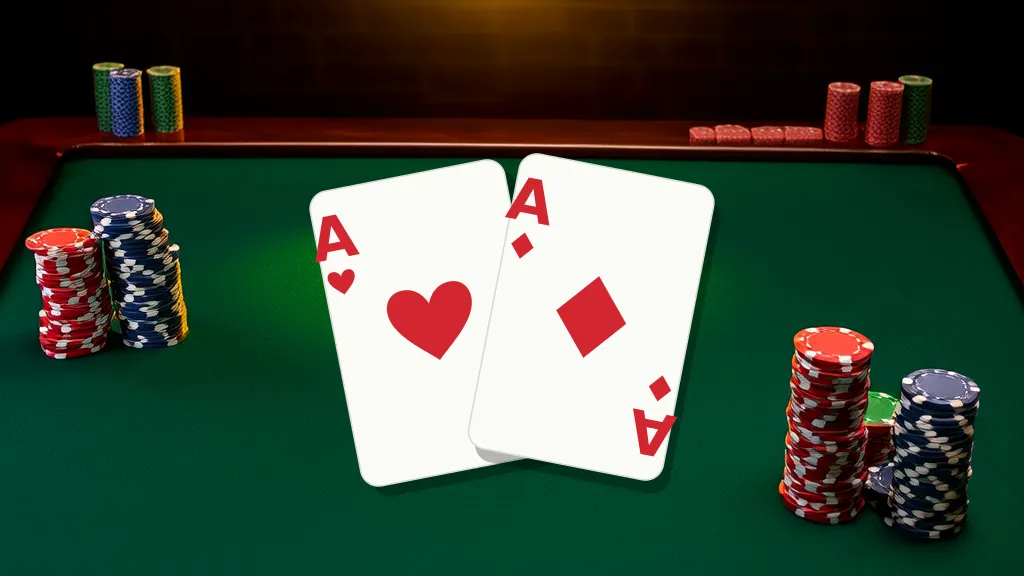
A7o is a speculative offsuit Ace with awful domination geometry versus A8+, almost no backup draws, and brutal equity realization without position. Use it sparingly as BTN/SB steals in soft games; fold EP/MP; escape 3-bets; keep postflop pots tiny unless you improve massively.
- how to play A7O
- A7O strategy
- GTO
- poker strategy
Ace-Seven offsuit is the kind of hand that looks playable until you actually audit your dominated-loss database. It has no flush backup, it is dominated by A8+, and its straight-making upside is thin compared with wheeled suited connectors. Speculative steal attempts belong primarily in BTN/SB territory in soft games; fold EP/MP as a baseline; avoid 3-bet pots entirely unless you enjoy guessing for stacks with weak kickers.
This guide is written for cash-game oriented readers (100 BB default) with tournament notes where relevant. The theme is simple: respect domination, keep pots small without backup equity, and do not pay multiple streets when your single pair is unlikely to be best against continuing ranges.
Introduction: Why A7o Deserves Its Own Chapter
Most poker education spends endless pages on AK and AQ because those hands drive huge pots. Weak offsuit Aces like A7o drive something else: expensive curiosity. You open because “it’s an Ace,” you call a 3-bet because “pot odds,” and you lose stacks because your top pair is dominated by A8–AK far more often than your intuition expects.
A7o differs from stronger offsuit Aces in three structural ways:
- No suited equity: You cannot semi-bluff credibly with a flush draw when you miss. Backdoors exist, but they’re thin and expensive to chase without initiative.
- Domination density: Versus ranges that continue versus your opens, A8+ remains common. That means when an Ace flops, you are not “coolering the world”—you are often paying off better Ax.
- Position dependence: Without nut potential or multiway reliability, A7o relies on fold equity preflop and realizing equity in position. Out of position, even “hits” can become traps.
If you learn one sentence for this hand: A7o is a positional stealing tool, not a showdown hand, and that distinction alone prevents enormous cumulative losses over thousands of hands.
Hand Strength Analysis
Where A7o Ranks
Ranking lists vary slightly by modeling assumptions, but A7o is universally outside the “premium tier.” In practical terms:
- It is not a default open from early positions in full-ring games for competent ranges.
- It is sometimes included as a thin steal from BTN/SB (and rarely CO as an exploit) in 6-max when antes are absent and rake structures are reasonable.
- It is rarely a profitable cold-call versus an open unless you have exceptional reads, exceptional depth, or a whale-type payout structure postflop.
Raw Equity Benchmarks (Conceptual)
Exact percentages depend on the simulator and the precise opposing range, but directional benchmarks matter more than decimal precision:
- A7o vs random hand (heads-up): Strong favorite, similar to many Ax hands—this is misleading for real decisions because opponents rarely continue with random holdings.
- A7o vs a tight EP open (strong range): Equity drops sharply; domination and stronger pairs dominate your realized outcomes.
- A7o vs A8+ when an Ace flops: Catastrophic realization issues—you frequently “hit” and still lose big pots.
Playability: The Hidden Stat That Crushes You
Raw preflop equity against a wide range is not the problem. Equity realization is:
- Out of position, Ax hands without suited texture struggle to realize equity across streets because you face larger bets with weaker distribution of outcomes.
- Multiway, weak top pair declines in value faster than raw equity charts imply because someone often has two pair+, a strong draw, or a better Ax.
Why “Ace High” Is Not a Plan
Some players keep A7o because Ace-high can win showdowns. That plan collapses quickly when:
- Opponents check-call with pairs and pick off bluffs.
- Your Ace-high faces pressure from better Ax that blocks your outs.
- Turn and river cards introduce straights and flushes that shrink your effective outs.
Domination and Equity Realization
The Structural Domination Problem
Domination in Hold’em usually refers to shared top card with a weaker kicker:
- Versus A8–AK, when an Ace flops, you share the Ace but lose on kicker wars.
- Versus A7s, you tie top pair when a seven pairs the board in specific ways, but you often lose when draws complete or when stronger ranges continue aggressively.
Combo Math Matters More Than Your Feelings
When villains defend with sensible Ax combinations and Broadway holdings, your top pair top kicker on an Ace board is not TPTK. It is “top pair, weak kicker,” which functions like a bluff-catcher against aggressive betting lines.
Reverse Implied Odds on Ace Boards
Reverse implied odds describe situations where you hit your hand and still lose more money:
- Flatting preflop with A7o and flopping A-x-x can create exactly this tragedy when villains have AQ–AK or better Ax that stacks you.
- Even versus AJ/AT, you are flipping between thin value and ugly calls depending on runout and sizing.
Equity Versus 3-Bet Ranges
Facing a typical value-heavy 3-bet range (TT+/AQ+ style shapes at micro stakes), A7o performs poorly:
- You lack the suited wheel equity of A5s–A2s.
- You lack the Broadway dominance properties of AJ+.
- You are stuck calling preflop only to realize equity poorly OOP.
This is why default folding to 3-bets with A7o is the recommended baseline for most players.
Stack-to-Pot Ratio (SPR) and Commitment Thresholds
SPR tells you how married you are to one-pair hands. With A7o, your marriage should be short and cautious.
SPR Guidelines Tailored to Weak Top Pair
| SPR | Typical Spot | How A7o Should Behave |
|---|---|---|
| 1–3 | 3-bet pot, shallow commitment | Avoid entering preflop unless you had a disciplined reason; if you somehow arrive here, treat one pair as fragile |
| 4–7 | Single-raised pot, standard depth | Top pair can bet for thin value/small protection IP; OOP, prefer pot control |
| 8–12 | Deeper single-raised pot | Strongly avoid building huge pots without improved equity (two pair+, strong draws) |
| 12+ | Deep stacks | One pair with weak kicker is not a stacking hand; prioritize maneuverability |
Practical Meaning for A7o
When stacks are deep and you are OOP, small SPR pots are ironically safer than gigantic pots—because you can fold earlier. The catastrophe pattern is: open preflop, get called, flop top pair, inflate the pot, then discover you were drawing nearly dead against a calling range heavy with better Ax.
Commitment Errors to Eliminate
If you “cannot fold top pair,” A7o becomes a liability hand. SPR discipline means deciding early whether this pot can become large; if yes, your hand usually should not be in the pot.
6-Max vs Full Ring (9-Max) Adjustments
6-Max Dynamics
Six-handed poker widens ranges and increases steal incentives:
- BTN/SB opens can include thin Ax steals because blinds defend wider; CO opens are exploit-only.
- However, still fold EP in robust games: UTG/MP ranges encounter stronger continuing ranges and more competent 3-bettors behind.
Full Ring (9-Max) Dynamics
Nine-handed poker tightens everything meaningful:
- Early position opens face three off-seat players plus blinds—more opportunities for premium hands behind you.
- Cold-calling chains become more common, producing multiway pots where A7o decays in value.
Concrete Adjustment Table
| Format | Default EP Strategy | Default Late Position Strategy |
|---|---|---|
| 6-max | Fold EP/MP in disciplined games | Prefer BTN/SB steals; CO is thin/exploit-only |
| 9-max | Fold early consistently | BTN/SB only; ignore CO unless game is extremely soft |
Online vs Live Poker Adjustments
Online Poker Realities
Online populations (especially low–mid stakes) feature:
- Higher 3-bet frequencies from competent blinds and BTN defense.
- More systematic squeeze behaviors behind loose opens.
- Rake and caps that punish marginal opens unless folds are frequent.
Translation for A7o: stealing works best when blinds over-fold; otherwise your opens become expensive rake donations.
Live Poker Realities
Live games often include:
- More limping and passive calling.
- Larger open sizes (changing SPR geometry).
- Weaker postflop disciplines from recreational players.
Translation for A7o: isolation raises can become profitable not because A7o is strong, but because you frequently realize pots heads-up against capped ranges—provided you do not stack off blindly on Ace-high textures.
Exploit Anchors Without Fantasy
Live exploits matter, but do not confuse “they call too much” with “A7o is nutted on Ace-high boards.” Overcalling opponents sometimes have random Ax—but they also show up with AQ–AK after limp-call lines in ways that punish narcissistic thin value.
Preflop Strategy by Position
UTG / Early Position (EP)
Baseline: Fold.
In disciplined full-ring and many 6-max games, A7o is not a mandatory open from EP. You lack suited playability, you lack dominant Broadway characteristics, and you invite dominated sequences.
Exceptions are rare and opponent-specific:
- Extremely passive tables where your EP open generates folds > ~65–70% through multiple streets preflop ( uncommon at competent stakes ).
- Special dynamics where antes/hyper-wide defenses incorrectly fold to min-raises ( situational ).
If you are learning: default fold.
Middle Position (MP / LJ)
Baseline: Fold in tougher games.
MP opens still face CO/BTN/Blinds behind you. A7o remains marginal:
- Versus competent players, prefer folding.
- Versus tables full of calling stations, opening may seem attractive—yet stations call with Ax and pocket pairs, producing multiway Ace-high nightmares.
Cutoff (CO)
Baseline: Fold in competent games; thin opens only as an exploit.
CO steal equity exists mathematically, but A7o realizes poorly once blinds defend with Ax-heavy flats and 3-bets:
- Default fold if either blind is sticky or squeezes behind often.
- Only consider opening tiny sizes when blinds fold preflop at extreme frequencies and play poorly postflop.
Sizing: If you do steal, use your standard CO open—not a larger “panic” size.
Button (BTN)
Baseline: Primary steal seat for A7o.
BTN remains the cleanest chair:
- Only SB/BB remain.
- You close action preflop.
- You guarantee IP postflop unless SB squeezes and BB caps weirdly.
Still fold versus opponents who defend insanely tight or 3-bet relentlessly from blinds.
Small Blind (SB)
Baseline: Fold default; occasional steals versus BB over-folders.
SB introduces mandatory OOP postflop play:
- Completing or limping A7o is typically poor.
- Small raises can work when BB folds enough and plays honestly versus aggression.
Most players should still fold A7o in SB unless they have reliable reads that BB under-defends.
Big Blind (BB)
Baseline: Defend selectively versus small opens if priced in—never enthusiastically.
Versus a min-raise with antes absent, math sometimes permits defense due to pot odds. However:
- Realization OOP is mediocre.
- Dominated pots remain common.
Prefer defending stronger suited Ax or suited connectors before expanding offsuit weak Ax defenses.
Facing Limpers
Never Open-Limp A7o
Limping wastes initiative and invites multiway pots—precisely where A7o suffers.
Raising Over Limpers
Live games especially:
- Isolate with a raise sizing that achieves heads-up pots when possible.
- Expect wider continuing ranges; tighten postflop continuation frequencies accordingly.
Multi-Limped Pots
When three or more players limp:
- Your steal sizing must rise, but so does multiway frequency.
- Strongly consider folding rather than building a bloated multiway pot with A7o unless villains dramatically over-fold postflop ( rare ).
Playing as the 3-Bet Caller (Out of Position)
Calling 3-bets with A7o is generally a leak baseline strategy.
If You Called Anyway (Recognizing Disaster Patterns)
If you cold-call or flat a 3-bet OOP due to a misclick or bad habit:
- Ace-high flops: proceed cautiously—your kicker is weak.
- Low boards: check-fold frequently without strong equity.
- High Broadway boards: you often have dominated top pair or ace-high chaos.
Why Solver-Literate Players Avoid This Spot
Weak offsuit Ax hands realize poorly without initiative and without flush draws. The combination of large pot + bad position + domination produces systematically negative EV.
Facing Different Preflop Actions
As the First Raiser
Your role with A7o is primarily theft:
- Choose seats where folds are likely.
- Keep ranges balanced overall—but accept that A7o is at the bottom of reasonable stealing clusters.
Facing a Single Raise
Default: Fold.
Cold-calling an open with A7o is rarely optimal unless:
- You are IP with an extraordinary skill edge AND villain over-folds postflop massively OR
- You are executing an exploitative isolation vs a known weak player (still often inferior to 3-betting stronger hands).
Facing a 3-Bet
Baseline recommendation: Fold.
This is not cowardice; it’s domination math + realization:
- You do not block strong Ax combos enough to make continuing attractive.
- You cannot comfortably continue across three streets OOP without guessing.
Facing a 4-Bet
If you somehow opened and face a 4-bet:
- Fold unless you have a precise read that range is absurdly wide.
Squeeze Contexts
A7o is typically not a great squeeze candidate compared to suited Ax or suited connectors because blockers help less and playability behind a call is worse.
Postflop Strategy with A7o
The Golden Rule
Postflop with A7o: one pair is not a monster; Ace-high is usually not worth dying for.
Ace-High Flops (A-x-x)
When you flop top pair:
- In position: consider small-to-medium bets for protection versus floats and gutshots on dry textures—but shrink sizing versus opponents who continue only with better Ax and sets.
- Out of position: check-call sometimes on dry boards versus small bets; versus large bets or raises, release faster than your ego prefers.
On Ace-high coordinated boards (e.g., A-T-9, A-J-T):
- Your hand strength is fragile even when “hit.”
- Prefer checking more frequently and avoid stacking off without improved equity.
King-High Flops
Ace-high overcards to the board mean you have ace-high:
- As aggressor IP: selective c-bets possible versus over-folder populations.
- Versus pressure: default fold absent strong backdoors and reads.
Seven-High Flops (Pairing Your Kicker)
Middle pair with Ace kicker can be playable IP in small pots:
- Keep pots controlled.
- Do not inflate versus raises without a strong read.
Low Connected Boards
Low connected textures favor defenders’ suited connectors and pairs:
- Give up more often without draws.
- Avoid fancy multi-street stories unless opponent frequencies justify them.
Turn Play
When turns bring:
- Higher Broadway cards: better Ax becomes more plausible.
- Flush completions: without a spade (example-dependent), fold pressure increases massively.
- Straight completing cards: proceed with extreme caution in multiway pots.
River Play
Facing large river bets:
- Weak top pair is usually a fold versus competent aggression.
- Passive opponents sometimes value-own themselves—still keep ranges realistic.
Cash Game vs Tournament Notes
Cash Games at 100 BB
At the default online depth of 100 effective big blinds, A7o’s profitability is rarely about “getting stacks in good.” It is about frequency hygiene:
- Opening too often from bad seats turns your range into an easy target for squeezes and disciplined 3-bets.
- Calling too often versus isolation raises puts you in dominated pots with mediocre connectivity.
- Failing to classify top pair correctly turns medium pots into large losses.
If you track results honestly, the worst outcomes with A7o cluster around patterns like: open → call flop → call turn → sigh-call river versus a range that basically never bluffs. Fixing those river leaks alone can move A7o from “feel bad hand” to “slightly positive steal segment.”
Cash Games at 200+ BB
Deep poker amplifies domination pain:
- Implied odds tempt you to “see flops cheaply,” but weak offsuit Ax makes second-best implied odds more common than jackpots.
- When stacks are deep, competent opponents have room to realize draws and apply pressure across multiple streets—precisely where Ace-seven struggles.
Practical rule: the deeper you are, the more you should treat A7o as a small-pot hand unless you improve to very strong holdings.
Zone Defense: When Opponents Are Extremely Passive
There exist live rooms and microstakes sites where players practically announce their hands with sizing and timing. In those pools:
- BTN/SB steals can become meaningfully profitable because realizing showdown value with ace-high occasionally happens when villains take passive lines with worse holdings.
Even then, do not rewrite poker logic: passive players sometimes wake up with AQ–AK. Your thin value bets should remain thin; your folds versus aggression should remain disciplined.
Tournaments: Early and Middle Stages
When antes are small relative to stacks and ICM pressure is mild, treat A7o like a cash-game steal structure:
- Prefer opens only where fold equity exists.
- Avoid fancy flats that mimic cash-game curiosity without the depth or skill edge to justify them.
Tournaments: Short Stacks (20 BB and Below)
Near push-fold regions, weak Ax hands compete for slots with suited connectors and suited Ax depending on payout structure and antes. A7o occasionally appears in jamming charts because blocking matters and Ace-high showdown value improves—but charts are narrow and payout-sensitive.
Do not generalize from “sometimes jams” to “always jams.” Use training tools that align with your payout structure.
Tournaments: Bubble and ICM Heavier Spots
When pay jumps matter, survival incentives reduce the appeal of thin marginal spots:
- A7o can become a pure fold in awkward reshove geometries even when chip EV suggests marginal continues.
- Avoid vanity hero calls that risk tournament life with weak kicker upside.
Heads-Up and Three-Handed Tables
Short-handed dynamics widen ranges dramatically:
- Steals occur more often; defenses widen.
- Yet domination remains when stacks go deep—do not confuse wider ranges with “Ace-seven is premium.”
Adjust by expanding steals primarily in position and tightening substantially when facing aggressive re-raises.
EV Calculations: Practical Math with A7o
Example 1: BTN Steal EV Sketch
You’re on BTN with A7o. Blinds are tight folders:
- SB folds 75%, BB folds 60% ( illustrative ).
- Steal success probability roughly: (0.75 \times 0.60 = 0.45) before accounting correlation—still directionally instructive.
When folds occur, you gain ~1.5 BB in blinds—small but compounding.
When called, your equity realization matters more than raw preflop equity.
Example 2: Why Calling a 3-Bet Fails (Pot Odds Trap)
Suppose after open-raising you face a 3-bet and consider calling:
- Pot odds may look tempting short-term.
- But multi-street dominated realization turns many calls negative EV unless villain ranges are wildly incorrect.
Example 3: Thin Value Bet Folding Frequency
If you bet 33% pot on flop as IP:
- Required folds depend on your equity when called—weak Ax often has thin equity versus continuing ranges.
Use EV framing:
[ EV \approx P(\text{fold}) \cdot \text{Pot won} + P(\text{call}) \cdot \text{Future EV | call} ]
Weak Ax frequently suffers negative conditional EV on later streets when called.
Example 4: Stack Loss Prevention
Compare two strategies over 100 trials:
- Strategy A: folds A7o to 3-bets always → loses small preflop opens occasionally but avoids dominated stacks.
- Strategy B: calls widely → wins some pots, loses catastrophically in dominated coolers.
For most player pools, Strategy A yields higher net EV at baseline skill levels.
Example 5: Multiway Pot Equity Compression (Illustrative)
Suppose you open BTN and both blinds defend:
- Heads-up on random flops you might retain workable equity realization patterns with initiative.
- Three-handed to the flop, the conditional probability that someone holds Ax, a pocket pair, or a suited connector with equity rises materially versus blind defenses.
Even when raw preflop equity looks acceptable, conditional flop equities collapse faster because continuation ranges tighten toward playable holdings while junk peels disappear.
Example 6: Thin Triple-Barrel Feasibility (Why It Usually Fails)
Imagine you steal IP and flop marginal equity:
If villain continues twice only with pairs+, strong draws, and stubborn Ace-highs that dominate yours:
[ EV(\text{triple barrel}) \approx P(\text{fold}) \cdot \text{Pot} - P(\text{call}) \cdot \text{Bet cost} + \ldots ]
With A7o, your natural value combos are sparse on many runouts—meaning bluffs lack credible balance and callers retain hands that crush weak pairs.
Example 7: Rake Sensitivity at Microstakes
Suppose effective rake plus jackpot drops consumes ~10 bb/100 extra pain at NL5:
Thin steals must clear not only defensive frequencies but also the invisible rake hurdle.
That does not mean “never steal”—it means defend your frequencies so bottom steals remain positive after rake.
Extended Postflop Atlas (Quick Patterns)
Pattern A: Dry Ace-Low Rainbow
Board like A-6-2 rainbow:
- Versus one opponent who floats wide, a small flop stab can deny equity to pure junk.
- Versus a caller pool that rarely floats without pair equity, checking back IP preserves showdown value and avoids building pots without clarity.
Pattern B: Ace-Middle Two-Tone
Board like A-7-5 two-tone where you don’t have the flush suit:
- Your top pair exists, but flush draws and turning pairs complicate matters.
- Prefer smaller sizing for protection; escalate caution versus raises.
Pattern C: Ace-High Connected
Board like A-T-8:
- Straight draws abound; your kicker plays poorly against better Ax and sets.
- Treat aggression as meaningful even from normally splashy players.
Pattern D: Paired Boards With Low Side Card
Board like A-A-7:
- Trips possibilities explode if villain arrived with Ax—but strong Ax density increases too.
- Proceed carefully; small-ball frequently beats bravery.
Pattern E: Monotone Flops Without Your Suit
Board Kh-Qh-Jh holding A7o with no heart:
- Your hand is essentially air with awkward backdoors.
- Stop firing expensive barrels unless reads justify insane fold equity.
Pattern F: Double Broadway Without Your Cards
Board K-Q-4 rainbow:
- You retain two overs but frequently realize poorly versus continuing ranges containing pairs and stronger Ace-high calls that dominate your showdown plan.
- Treat delayed aggression on turns as disproportionately value-heavy unless you have timing notes suggesting otherwise.
Common Mistakes to Avoid
Mistake 1: “It’s an Ace, So I Open Anywhere”
Ace-ness is not sufficient. Open decisions require position and fold equity.
Mistake 2: Calling 3-Bets “Because Pot Odds”
Pot odds preflop ignore dominated postflop catastrophe frequency.
Mistake 3: Paying Off AQ–AK Because “You Had Top Pair”
Top pair with weak kicker loses to common continuing ranges.
Mistake 4: Building Huge Pots OOP Without Backup Equity
Offsuit weak Ax hates bloated OOP pots.
Mistake 5: Overplaying Versus Multiway Fields
Multiway pots strengthen opposing ranges and weaken one pair.
Mistake 6: Ignoring Blockers and Removal Effects
You hold an Ace—sometimes that makes better Ax less likely, but competent opponents weight combos correctly and still crush weak kicker stacks.
Mistake 7: Live Game Romanticism
“He’s loose” doesn’t mean “my A7o is the nuts on Ace-high boards.”
Advanced Tips and Exploitative Adjustments
Population Reads That Matter
Over-folder blinds: increases steal EV for BTN/SB opens; treat CO steals as conditional.
Under-folder blinds: shrink A7o frequency dramatically.
Passive callers: isolation raises can work—then value thinner IP versus missed floats.
Bet Sizing Hygiene
Use consistent steal sizes; irregular huge opens telegraph fear or strength incorrectly and harm your overall range logic.
Delayed C-Bets (Use Sparingly)
On boards where your range should contain strong Ax but villain over-folds turns, delayed doubles can work—yet this is read-heavy, not default autopilot.
Don’t Level Yourself Into “Balancing” at Low Stakes
Balancing bottom-of-range steals matters more at high stakes. At low stakes, maximize exploits: steal when they fold; tighten when they don’t.
Solver Insights (Interpreted Practically)
Modern solvers emphasize:
- Weak offsuit Ax drops quickly from EP opens as opponents defend competently.
- Late-position steals expand, but not infinitely—rake and defend frequencies cap EV.
- Facing aggression, marginal offsuit Ax folds increase dramatically compared with suited counterparts.
- Postflop, multi-street commitment with weak top pair is avoided unless ranges constrain dramatically.
Solvers won’t rescue the habit of paying three streets versus nit value—they’ll punish it.
Frequently Asked Questions (FAQ)
Should I open A7o from UTG in 6-max?
Default no in competent games. Some ultra-wide aggressive builds include marginal Ax at equilibrium only under specific rake/model assumptions—most humans lose EV imitating that without reads.
Is A7o better than A6o?
Yes marginally—both are dominated heavily by A8+, but the seven kicker occasionally chops or beats worse Ax slightly more often than a six. Neither hand should appear frequently in your EP range.
Can I call a BTN 3-bet if I opened CO?
Baseline fold. Unless you have elite postflop discipline and a verified wildly wide 3-bet range, continuing burns money.
How do I play A7o on A-7-2 rainbow?
Versus small bets IP, treat calls as emergency exceptions; versus competence and pressure, folding faster than stronger weak-Ax kickers (like A9o) is normal.
Why fold A7o but play A7s?
Suitedness adds flush equity, semi-bluff credibility, and realization paths that frequently swing marginal spots from negative to breakeven/slightly positive.
Is A7o okay as a squeeze bluff?
Usually inferior to hands with better blockers/playability (Axs, suited connectors, strong Broadway). Not impossible at high-level reads, but not a default.
Live 1/2: can I limp behind?
No. Limping wastes initiative and invites multiway catastrophe.
Should I ever stack off with one pair?
Rarely—and almost never deep versus competent aggression. Prefer pots where stacks don’t go in without two pair+ or nut draws.
Does blocking an Ace help?
Sometimes against AA partially, but you still retain dominated Ax disaster classes versus continuing ranges.
What’s the simplest profitable schedule?
Fold EP/MP, prioritize BTN/SB steals over CO, fold to 3-bets, play smaller pots postflop.
Tournament push-fold: is A7o a jam?
Only at shallow depths where solver charts include wide Ax jams for fold equity—follow precise charts rather than feelings.
How do I stop losing with weak Ax?
Tighten opens, fold to aggression, and downgrade top pair strength classification on Ace textures.
Summary: Key Takeaways for Playing A7o
A7o is marginal because offsuit weak Ax is dominated by A8+ and lacks flush backup.
Default fold EP/MP; treat BTN/SB as primary steal seats and CO as exploit-only in soft games.
Fold to 3-bets baseline—continuations are dominated-realization traps for most players.
Ace-high boards create kicker wars—your top pair is often a bluff-catcher, not a value monster.
SPR discipline matters: avoid letting weak top pair inflate pots deep.
Multiway pots degrade weak Ax faster than intuition predicts.
Online respect aggressive blinds; live exploit over-folders but don’t hallucinate equity.
Solver wisdom aligns with human discipline: late-position thin steals, tight continuing versus pressure.
The longest-term leak is paying multiple streets versus ranges heavy with better Ax.
If you remember nothing else: steal small, fold early to heat, and never confuse “I hit an Ace” with “I have the best hand.”