
How to Play A2s (Ace-Two Suited) in Texas Hold'em - Complete Strategy Guide
May 3, 2026
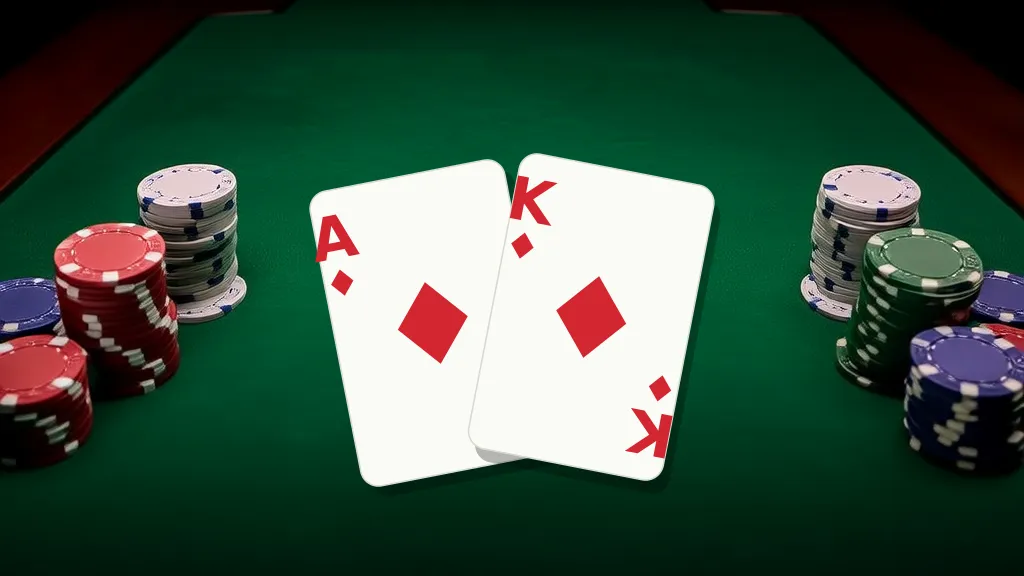
Master A2s strategy. The weakest suited ace but still playable - learn its wheel draw equity, 3-bet bluff role, flush draw dynamics, and the strict positional requirements for profitability.
- how to play A2S
- A2S strategy
- GTO
- poker strategy
Introduction
Ace-Two suited is poker’s minimal credible wheel ace: you retain nut-wheel chemistry (A-2-3-4-5), nut-flush anchoring, and Ace-blocking utility for polarized preflop sequences—but every marginal dollar won arrives through draws and folds, never through showdown supremacy with bottom pair.
This guide is written for disciplined players tired of lighting chips on fire “because suited.” You will learn why solvers still slip A2s into CO/BTN steal and SB battle matrices at tuned frequencies, why UTG opens are usually unjustified without antes or whales, and why bottom pair with a Deuce is never your friend unless paired with massive draws.
If you take one idea from the introduction: A2s lives on nut draws and wheel wraps, dies when you confuse Ace-high for showdown value.
Winners print straightforward HUD patterns—high aggression frequency when picking combo draws, rapid showdown avoidance otherwise.
Treat A2s as pure volatility packaged with blockers: steal equity plus flush equity—nothing more romantic.
Context matters: antes plus passive blinds widen profitability; tough regs crushing EP tighten it again.
Extended Primer: Volatility Management With the Weakest Standard Wheel Ace
Ace-Two suited exaggerates every leak endemic to suited wheel holdings—except worse. Where Ace-Five might salvage marginal flops thanks to middle-card straight interplay, Ace-Two collapses into binary outcomes faster: nut-draw dominance or immediate capitulation. Accept that psychological reality early; your strategic planning becomes cleaner once you stop treating Deuces like decorative ornaments.
Your study roadmap should emphasize SPR hygiene. Deep stacks amplify implied odds for flush hunts—excellent—yet simultaneously punish naked floats—dangerous. Therefore partition drills by SPR bucket separately for A2s until instincts crystallize. At SPR <3 you increasingly embrace gamble mechanics with draws because commitment thresholds shrink; at SPR >8 you refuse bloating without geometric justification even when villains behave seemingly passive—passivity can evaporate once nuts arrive.
Exploit hunting matters immensely: A2s shifts from “marginal GTO mixing curiosity” into robust profit center when blinds fold too much to 3-bets yet defend multiway too wide postflop—creating gigantic pots where nut-flush upside dwarfs preflop investment. Conversely, versus proficient squeezers who punish CO opens mercilessly, trim frequencies—the blocker narrative cannot compensate if three-bet sizes balloon and ranges tighten appropriately.
Document cooler trauma logically rather than mythologically: losing with nut flush versus full house or losing wheel versus bigger straight belongs to long-run taxonomy—not proof that “A2s is garbage.” Variance taxonomy preserves willingness to continue executing correct thin steals after brutal evenings.
Finally, pair behavioral triggers: if fatigue spikes and you notice elevated peel frequencies without redraw tagging, remove A2s entirely from session autopilot—marginal holdings demand freshest cognition.
Add one live heuristic: when coffee-deprived or emotionally rattled after bad beats, literally gray out A2s buttons in your mind until calm returns—tiny friction saves immense EV.
Repeat the profitability mantra slowly: folds and flushes fund this holding—not fantasies.
Variance acceptance plus positional humility equals sustainable edges across months, not just flattering heaters across hours.
Closing introduction checkpoint: before every session featuring loose temptation, write BTN/CO only on a sticky note if you chronically mis-open A2s—environmental nudges outperform silent willpower.
If your study group debates theory endlessly, challenge them to produce ten labeled A2s flops where naked floats without backdoors beat disciplined aggression—usually they cannot, which ends mythology compassionately.
Treat this sentence like a seatbelt: discipline first, romance second.
Hand Strength Analysis
Where A2s Ranks Relative to All Starting Hands
Preflop rankings depend on table format, rake, and ante structure, but useful anchors exist. Ace-Two suited typically occupies mix/fold territory from EP in rigorous solver baselines while surviving as late-position steals and selected blind warfare bluffs where fold equity compensates for brutal reverse implied odds.
What separates A2s within the wheel family:
- Wheel inclusion: Your Deuce completes
A-2-3-4-5, yet nearly every other straight permutation becomes tougher—you lack middle connectors entirely. - Nut flush supremacy: Your upside anchor remains nut flush draws; treat straight equity as bonus lottery tickets rather than primary income.
Raw Equity Snapshots (Conceptual, Not Mythology)
Exact equities swing with ranges, but patterns matter:
- A2s vs a random hand: Often lands in the low-to-mid 60% equity ballpark heads-up—meaningfully ahead of complete trash, but nowhere near the dominance of suited broadways.
- A2s vs a tight value-heavy range (QQ+, AK): You are a pronounced underdog; your saves are suitedness and occasional wheel/flushes, not “making top pair.”
- A2s vs a typical continuing range after you 3-bet bluff: Equity improves because that range includes folds preflop—your profit is partly fold equity—and because continuing ranges contain pairs that must dodge your draws.
Treat published percentages as training wheels. Your live decision quality comes from understanding which textures activate which components of A2s.
Mechanically, when you drill equity calculators, separate absolute equity from conditional equity: absolute equity answers heads-up hot/cold percentages at showdown; conditional equity answers how often you survive to realize draws across multiple streets facing realistic bet sequences. A2s frequently exhibits a gap between those two measures because out-of-position realization destroys cold-equity optimism—especially when villains refuse small-ball probes and instead wield oversized polarization.
Historical note for intuition (not limitation): before solver ubiquity, competent regulars already 3-bet light suited aces—but often the wrong ones at wrong frequencies. Modern outputs vindicate wheel-heavy suited aces disproportionately because straight equity complements flush equity inside polarized trees; hands that flop dominated one-pair upside yet lack wheel connectivity suffer lower continuation profitability. That narrative aligns with Monte Carlo convergence stories where draw-heavy semi-bluffs sustain higher EV slopes across repeated trials than ace-high steal hands lacking structured redraws.
Comparative Strength Versus Other Suited Aces (Qualitative Matrix)
| Holding archetype | Straight richness | Dominated top-pair risk | Nut flush anchor | Typical solver steal frequency |
|---|---|---|---|---|
| A2s | Medium (wheel-only emphasis) | Extreme | Yes | Medium |
| A9s | Lower | High (sticky mistakes) | Yes | Moderate |
| ATs | Broadway skew | Moderate | Yes | Moderate-high |
Use tables like this only as orientation—your cardroom matters more than aesthetics.
The Suited Ace Advantage on A2s Specifically
Suitedness upgrades A2 from a fragile offsuit wheel hopeful into a multiway credible semi-bluff:
- Nut flush anchor: When you complete a flush, your Ace is the nut flush card unless the board pairs in bizarre ways you still must monitor.
- Flush-draw synergy with straight draws: Combo draws generate folding equity plus robust showdown equity against one-pair hands.
- Backdoor landscapes: On Ace-high dry flops you frequently retain backdoor flush equity along with a pathetic Two kicker—those backdoors matter more than beginners credit.
Blockers: Why A2s Is a Primary 3-Bet Bluff Candidate
Blockers are not magic, but they shift frequencies correctly:
- Holding Ace-Two removes combinations of AA and 22 from your opponent’s value range (you block one ace and one two). That matters most versus continuing ranges heavy on big pairs.
- The Ace blocker makes it slightly harder for opponents to hold AK, AQ, and other ace-heavy value—again, not decisive alone, but cumulative across thousands of trials.
Solver libraries love A2s as a 3-bet bluff because it combines fold equity preflop with postflop maneuverability when called—exactly the criteria you want from a light 3-bet hand.
Domination and Equity Realization
The Ace-X Domination Problem (And Why Your Two Usually Does Not Save You)
Domination in Hold’em often means shared top card with a weaker kicker. When you flop top pair with A2s on A-K-8, you hold top pair bad kicker. Against Ax dominated situations you are frequently crushed by AQ, AJ, AT—and even many suited ace hands that accidentally outkick you.
Therefore, top pair with A2s is not a default stacking hand unless:
- The SPR is tiny (commitment territory),
- Your opponent’s range is wildly capped,
- You have a simultaneous flush draw or powerful straight draw,
- Or you have specific exploitative reads.
Equity Realization: Position, Initiative, and Skill
Equity realization answers: “How much of my raw equity converts into captured EV?” A2s realizes equity best when:
- You 3-bet or isolate and narrow the field,
- You play in position postflop,
- You avoid bloating pots out of position without premium draws,
- You give up efficiently when you have neither meaningful showdown value nor folding equity.
Out of position with no draw, A2s is prone to under-realization—you face tough probes and larger bets precisely when your Two is irrelevant.
Multiway Reality Checks
Multiway, dominated top pair becomes worse, but nut draws become better—conditionally:
- Nut flush draws appreciate multiway payout potential when villains arrive with worse draws and stubborn one-pair hands.
- Naked wheel gutshots without flush equity depreciate sharply—too easy for someone to have a better straight draw or a pair plus redraws.
Additional nuance emerges when antes enlarge pots preflop: multiway pots sprout more frequently, shifting incentives toward drawing integrity rather than steal mythology. If three players arrive with capped ranges heavy on medium pairs, your nut flush draw gains immense implied odds; conversely, if a squeeze-happy player remains uncapped behind you on future streets, temper optimism—future aggression taxes draws harshly.
Psychologically, multiway spots tempt hero calls because pot looks “too big to fold.” Fight that impulse with structured logic: write down outs, discount dirty outs (paired boards removing straight validity), then compare to price including future bets. A2s thrives when disciplined folds coexist with explosive aggression—never average those instincts into bland mediocrity.
SPR, Pot Geometry, and Commitment Thresholds
Stack-to-pot ratio (SPR) governs how willingly you stack off:
| Approximate SPR | Typical Formation | How A2s Typically Behaves |
|---|---|---|
| < 2 | 4-bet pots, short stacks | Willing to gamble with strong draws; top pair weak kicker can become unavoidable commit |
| 2–4 | 3-bet pots, standard cash | Strong combo draws play for stacks; one-pair cautiously |
| 5–8 | Single-raised pots | Primarily draw-first; avoid building giant pots OOP without draws |
| 9+ | Deep pots | Nut pursuit lines dominate; fold equity and implied odds matter |
Commitment heuristic: When your opponent’s SPR manipulation forces you to call off with draws, prefer nut flush draws and open-ended wheel-adjacent straight draws over naked ace-high floats.
6-Max vs 9-Max
6-Max Dynamics
Six-handed poker widens ranges and increases blind warfare frequency:
- A2s shows up more often as a BTN/CO 3-bet bluff and as an SB steal-defense tool.
- Cold 4-bets appear wider—respect stark population tendencies before stacking off lightly.
Full Ring (9-Max) Dynamics
Nine-handed poker tightens early-position incentives:
- Opening A2s from UTG is frequently solver-dependent and rake-sensitive; many environments prefer folding UTG or mixing at low frequency rather than auto-opening.
- As positions improve toward MP and LP, A2s gains feasibility due to fewer players left to wake up with premiums.
Online vs Live Poker Adjustments
Online Environment
- Higher 3-bet and squeeze frequencies merit disciplined bluff selection—A2s remains excellent precisely because it retains equity when called.
- Population overfolds to certain sizes in some pools; in others, they defend stubbornly—adjust squeeze sizing accordingly.
Live Environment
- Opening sizes run larger; implied odds can rise against sticky callers—nut draws gain value.
- Live opens can be stronger per dollar due to multiway limped pots—isolate sizing discipline matters.
Preflop Strategy by Position
UTG / Early Position (EP)
At full ring, treat UTG as environment-dependent:
- Conservative default: Fold or low-frequency mix—your positional disadvantage plus narrow continuing ranges hurts realization.
- Aggressive tables: If games are soft and you table-select well, some opens are profitable exploitation—not “GTO mandatory.”
Middle Position (MP)
MP unlocks more steals with fewer players behind:
- Open-raise A2s at non-trivial frequency in most modern low-to-mid stakes solver baselines at 100 BB when rake is not punitive.
Cutoff (CO) and Button (BTN)
Late position is A2s’s happy home:
- Wide opens are standard; A2s blocks nutted combos and plays excellently as isolators.
- Versus competent blinds, maintain balanced aggression—your worst outcomes come from mindlessly opening huge without plan when blinds 3-bet aggressively.
Small Blind (SB)
Versus opens, 3-bet bluffing with A2s is common in solver worlds:
- You deny equity realization and capitalize on Ace/Two blockers.
- Have a plan for calling ranges from BTN that refuse to fold—sometimes trim frequency.
Big Blind (BB)
Versus late opens, you frequently 3-bet bluff or call depending on solver mixes:
- Versus min-raises you defend widely; A2s performs well with depth.
Facing Limpers
Never limp behind with A2s in serious strategy—raise or fold almost always:
- Sizing: Baseline your standard open plus roughly one big blind per limper, adjusting upward live or in splashy games.
- Goal: Heads-up or three-way pots where initiative plus suited wheel geometry shines.
When multiple limpers station-call:
- Tighten pure bluff barrels,
- Value nut draws aggressively when villains arrive with dominated ace-high and mediocre pairs.
Playing as the 3-Bet Caller Out of Position
Cold-calling 3-bets with A2s should be rare—typically you entered as a 3-bettor yourself or defended blinds with a planned range. When you are OOP as the caller:
- Low boards without your suit: Check-fold frequently—your high-card stub is weak.
- Ace-high boards: Avoid building enormous pots with one pair bad kicker; prioritize draws.
- Flush-draw boards: Check-call and occasional check-raise with combo draws—protect equity and deny realization.
Facing Preflop Actions
Versus 3-Bets When You Opened
Solver tendencies generally shift by position:
- EP opens facing aggression: Often fold A2s versus tight 3-bettors; continue versus wide polarized blind attackers depending on price.
- LP opens: More calls and 4-bet bluffs appear—A2s sometimes acts as a 4-bet bluff blocker holder, though never autopilot.
Versus 4-Bets
After you 3-bet bluff A2s:
- Default: Fold to sizable 4-bets unless opponent demonstrably spews—your equity versus QQ+/AK style ranges is insufficient without extraordinary odds.
Squeeze Spots
A2s is serviceable as part of a polarized squeeze range due to blockers and playability—do not overuse it versus stations who never fold.
Postflop Strategy
Favorable Flop Textures
Two-tone flops with your flush draw plus wheel connectivity
Example textures: 5♠ 4♠ J♥ holding A♠5♠
- Your equity clusters around pair improvement, straight draws, and flush draws.
- In position: Semi-bluff frequently on flops giving credible barrels on turns that improve your story or actual equity.
- Out of position: Mix check-raises with strongest draws to deny free cards versus hands that crush your ace-high.
Ace-high flops where you have backdoors
Example: A♦ 9♣ 2♠ with A♠5♠
- You often have top pair terrible kicker—do not marry the hand.
- Treat these spots as thin-value/protection only against capped ranges; otherwise proceed cautiously.
- Your backdoor spades plus occasional runner-runner wheel textures justify floating selectively IP versus undersized bets—not versus massive sizing from nits.
Low connected boards where straights dominate
Example: 7♠ 6♦ 4♣
- Your wheel geometry participates depending on runouts—raises increase variance.
- Prefer aggression when you pick combo draws (pair + gutshot + BDFD), not naked gutshots without suits.
Unfavorable Flop Textures
King-high and queen-high boards without draws
You hold ace-high with weak secondary utility:
- Default: Check-fold OOP; probe minimally IP versus chronic floaters only.
Monotone flops not featuring your suit
Your flush potential evaporates:
- Fold equity: Occasionally steal versus capped ranges if you represent suits intelligently—population-dependent.
Paired boards hitting opponents’ limp/call holdings
Trips frequency rises multiway:
- Reduce bluff frequency, shrink value targets.
Turn and River Guidelines
- When draws complete: Shift from semi-bluff to value only when your holding actually improved—do not “feel obligated.”
- When scare cards hit: Use blockers logically—Ace turns can improve Ax holdings more than yours when your pair is weak.
Example Lines (Illustrative)
Line A: BTN open, BB calls. Flop 9♠ 5♠ 2♥. You hold A♠5♠. C-bet small with pair + flush draw; turn barrels depend on brick versus spade versus ace.
Line B: CO 3-bet bluff, BB calls. Flop K♣ J♦ 6♠. Mostly range-bet small or check—do not over-manufacture unless BB folds too much.
Extended Board Taxonomy Drills (Practice-Oriented)
To internalize A2s faster, memorize five flop families and default agendas:
Family 1 — Ace-high rainbow disconnected
Examples: A-9-3, A-T-4, A-8-2.
Your typical holding strength is weak top pair + sparse straight connectivity. Ask immediately whether your suit offers meaningful backdoors. With A♠5♠ on A♦9♣3♠, the three spades matter; on A♦9♣3♥ without spades, your equity realization collapses unless villain ranges are absurdly wide.
Family 2 — Ace-high two-tone with your suit
Examples: A♠7♠2♥, A♥K♥6♣ where you hold relevant suited ace.
These flops unlock nut flush draws, sometimes alongside gutshots or pairs. They justify both aggression and selective slowplays depending on villain tendencies—against chronic raisers, checking strong draws occasionally preserves traps; against stations, build the pot now.
Family 3 — Low monotone boards
Examples: 8♠7♠6♠.
If you lack two spades you are usually done unless specific reads suggest insane folds. If you hold A♠5♠, you frequently possess nut flush draw equity but beware straight-heavy textures—your flush outs remain attractive yet villain holdings include paired combos and straight draws that resist folding.
Family 4 — Broadway-heavy disconnected
Examples: K-J-5, Q-T-6.
These textures marginalize your Two. Treat these as probe or give-up territories unless you picked secondary draws on turns.
Family 5 — Paired low boards
Examples: 4-4-9, 3-3-J.
Trips and full houses lurk in limped pots. Reduce triple-barrel fantasies; prioritize hands that actually block credible calling ranges.
Turn Decision Matrices (Heads-Up Baselines)
After betting flop as aggressor:
- Brick turns improving neither draws: Continue polarizing lightly only if villain floats weak—otherwise retain showdown value checks with marginal pairs.
- Flush completing turns: Shift heavily toward value with nut flushes; bluff less unless blockers align.
- Straight completing turns: Audit whether you hold nut straights or inferior wraps—wheel chops matter less heads-up but remain annoying multiway.
River Heuristics Specific to Wheel Hands
When runouts complete low straights:
- Small river bets often entice crying calls from worse pairs—size deliberately versus sticky villains.
- Large river jams polarize—use when blocker removal matters and villain capped earlier streets.
Cash Game Versus Tournament Extensions
Deep cash (150–250 BB)
Calling becomes more attractive IP because implied odds climb—nut draws blossom.
Short-stack tournaments (15–25 BB)
A2s sometimes transforms into jam-fold equity lever—blocking matters—but never confuse pretty suited cards with premium pairs without ICM study.
Bubble caution
Near money bubbles, shrinking variance may trim marginal opens—A2s UTG becomes worse even if chip EV positive due to payout jumps.
EV Calculations: Worked Examples with A2s
Example 1: 3-Bet Bluff EV Sketch
Suppose your 3-bet succeeds 48% immediately and when called you net 0.2 BB average realized outcome (draw-heavy realize):
EV ≈ 0.48*(dead_money_gain) + 0.52*(postflop_EV_when_called)
Even coarse modeling prevents blindly adding “pretty suited ace” without frequencies.
Example 2: Calling a Flop C-Bet with Nut Flush Draw
Pot 10 BB, villain bets 6 BB (60%). You need roughly:
6 / (10 + 6 + 6) ≈ 27.3%
A pure flush draw often approaches ~35% equity from flop to river versus many one-pair hands—here calling can be correct before implied odds.
Example 3: River Bluff Fold Frequency
You shove 40 BB into an 80 BB pot—opponent must defend roughly:
40 / (80 + 40) ≈ 33.3%
If blockers remove enough nut combos and villain under-defends, bluffs profit.
Example 4: Implied Odds Sketch When Deep
Assume effective stacks 200 BB. You flop nut flush draw (~35% equity versus top pair) but villain only stacks off when you hit while folding frequently when you miss—your realized equity compounds beyond immediate pot odds because hidden stacks subsidize draws.
Example 5: Multiway Pot Odds Trap
Three-way, pot 15 BB, facing 10 BB bet—your price looks tempting but required equity jumps because multiple opponents can continue. Before calling with combo draws, approximate:
equity_needed ≈ price / (pot_after_call + additional_future_commitments)
Often humans underestimate future aggression—fold more marginal Ace-high floats.
Example 6: Comparing a Fold Versus a Jam at 20 BB
Jamming 20 BB generates fold equity FE plus showdown equity SE:
EV_jam ≈ FE*(pot) + (1-FE)*(equity_when_called*final_pot - cost)
Plug conservative FE estimates—if villain calls wide, A2s still retains blocker-heavy equity versus calling ranges heavy on broadways.
Common Mistakes
Mistake 1: Treating Top Pair Like AQs
Ace-high boards are not invitations to stack off without draws—your Two is not a “kicker.”
Mistake 2: Auto-3-Betting Without BB Response Plans
If BB flats everything and plays competently postflop, uncontrolled 3-bet bluff sprees burn money.
Mistake 3: Neglecting Multiway Straight Ownership
Wheel pursuits collide with better draws—straight equity isn’t automatic profit.
Mistake 4: Ignoring Rake at Microstakes
Thin opens pre-rake can flip negative—tighten UTG opens accordingly.
Mistake 5: Overfloating OOP
Ace-high floats without backdoors hemorrhage EV versus probing ranges.
Mistake 6: Mis-sizing Semi-Bluffs
Too large isolates you versus continuing nuts; too small invites realization.
Mistake 7: Underestimating Four-Bet Frequency Impact
Light 3-bets die quickly versus correct 4-bet strategies—respect positions.
Mistake 8: Worshipping Solver Outputs Without Rake Filters
Copy-pasting outputs from sims ignoring rake and jackpot drops trains habits that fail live—recalibrate frequencies quarterly.
Mistake 9: Ignoring Mental Tilt After Coolers
Wheel versus bigger straight coolers happen—bankroll and mindset hygiene prevents revenge opens next orbit.
Mistake 10: Overplaying Live Multiway Flops
Calling raises with naked gutshots because “pot was big” destroys win rates—demand structured draws.
Advanced Tips and Exploitative Adjustments
Population Exploits
- Versus under-bluff rivers, fold more marginal catches—even strong draws earlier.
- Versus stations, emphasize nut draws and avoid ace-high hero calls.
Practice Drills
Review ten thousand-hand samples sorting A2s spots by SPR bucket and board class—patterns emerge faster than theory memorization.
Bet Sizing Heuristics
- Small probes when ranges capped but your hand weak,
- Medium sizing with combo draws to pressure Tx/Jx pairs,
- Large sizing when polarization credible on scary runouts.
Advanced Range Removal Thought Experiment
Before triple-barreling rivers, list top ten value combos you represent plausibly given earlier actions; if fewer than five believable bluffs remain, your story collapses—trim frequency.
Timing and Physical Tells (Live Only)
Treat timing as weak prior—some players snap fast with monsters; others Hollywood. Use timing only when corroborated across hundreds of hours.
HUD Stat Thresholds (Online Reference Bands)
Sample-dependent, but illustrative anchors:
- Fold-to-3bet >55% encourages wider light 3-bets including A2s.
- Fold-to-cbet <38% discourages naked flop bluffs—value/nuts emphasis.
Meta-Game Adjustments Across Sessions
When table recognizes your CO 3-bets as wide, temporarily shift value-heavy—dynamic exploitation beats static memorization.
Solver Insights
- High frequency light 3-bet: A2s routinely appears as part of polarized CO/BTN versus blind structures at 100 BB.
- Positional sensitivity: UTG opening frequencies swing sharply with rake and ante—verify your solver configuration matches your cardroom.
- Mixed strategies: Expect probabilistic folds to tight EP pressure—humans hate folding suited aces; discipline prints.
- Postflop probe stability: Solvers often retain low-frequency aggression with gutshots/backdoors—not chaos.
- Four-bet response: Folding range portions increases versus linear strong 4-bettors.
Frequently Asked Questions (FAQ)
Is A2s playable from UTG?
Rarely at 100 BB chip EV without antes—default fold unless game texture screams softness.
Is A2s better than A5s?
Never assume equivalence—Ace-Five remains strictly smoother for solver-approved stealing matrices.
Can I flat-call a raise with A2s?
Occasionally IP versus aggressive squeezers behind when stacks deep—default toward isolation raises instead.
Why do pros 3-bet A2s instead of A9s?
Playability and blocker synergy—A9s frequently flops dominated ace-high without wheel geometry.
How do I play A2s on AKx?
Extremely cautiously—your Two rarely matters; prioritize backdoors or immediate folds facing pressure.
Is A2s good multiway?
Conditional—nut draws improve; naked ace-high declines.
Should I slow-play flopped wheel draws?
Rarely on wet textures—charge draws when feasible.
Do blockers justify thin river bluffs?
Sometimes—remove nut combos carefully from villain range narratives.
When is folding preflop correct?
Facing EP aggression from nits or brutal squeeze dynamics behind.
How does ICM change A2s?
Short-stack spots emphasize jam-fold mathematics—A2s shifts toward shove-blocker roles tournament-dependent.
Live tells matter?
Only as tiebreakers—geometry first.
Solver versus exploit?
Start solver-balanced, adjust when population folds or calls incorrectly.
Summary: Key Takeaways for Playing A2s
The following bullets consolidate hours of solver review and live exploits—treat them as a cockpit checklist rather than slogans.
Conceptual Anchors
Mental model: treat Ace-Two suited exactly like the fragile semi-bluff instrument solvers model—not like a pretty souvenir destined for showdown glory.
Repeatable discipline beats sporadic heroics whenever stacks run deep and villains refuse to fold.
A2s is the minimalist wheel ace—profits demand ruthless draw discipline and positional restraint.
Primary profit modes: light 3-bet folding equity, semi-bluff dominance, disciplined folds when dominated top pair appears without draws.
Ace-high flops: Respect kickers—the Two is usually trash except as part of broader draws.
SPR awareness separates pretty chaos from profitable aggression.
6-max rewards wider theft; 9-max punishes sloppy EP opens.
Online demands cleaner frequencies; live rewards isolation sizing.
Avoid marriage to weak top pair; marry combo draws and credible barrels instead.
Blockers help, but ranges and sizing matter more.
Study solver mixes, then deviate with evidence.
FAQ anchors: revisit when emotions argue for stations calls—geometry wins long run.
Closing Thought
Return to this guide whenever you feel tempted to “just call because suited”—replace impulse with labeled categories of equity: flush draws, wheel wraps, blockers, or surrender. A2s rewards clarity more than bravery.
Narrative Integration Across Streets
When reviewing session histories, tag each A2s confrontation with preflop role (open, iso, 3-bet bluff, defend), flop texture class, and exit street. Patterns emerge: frequent turn exits signal disciplined surrender mechanics; river showdowns without nutted holdings signal leakage. Longitudinal tagging beats isolated hand reviews—your brain stops defending ego spots when spreadsheets whisper truths.
Coaching students often ask whether memorizing solver buckets is sufficient—experience suggests pairing buckets with physical breathing cues at tables prevents autopilot calls: inhale before committing chips on Ace-high boards without redraws, exhale before firing multi-street semi-bluffs with combo draws. Behavioral scaffolding sounds trivial yet reduces impulse leakage measurably across thousand-hand weekends.
Finally, remember bankroll swings with semi-bluff-heavy profiles exhibit higher variance than nitty pairs-only approaches—prepare mentally and financially so tactical correctness survives ugly stretches where draws brick sequentially despite flawless logic.
If nothing else sticks, tattoo this internally: draws are assets, weak kickers are liabilities—never confuse them. Carry that distinction into every orbit and your red-line aggression plus blue-line showdown discipline will align instead of fighting each other.
Precision beats vanity: marginal suited wheels reward humility more than swagger—respect that trade-off every session.