
How to Play 33 (Pocket Threes) in Texas Hold'em - Complete Strategy Guide
May 3, 2026
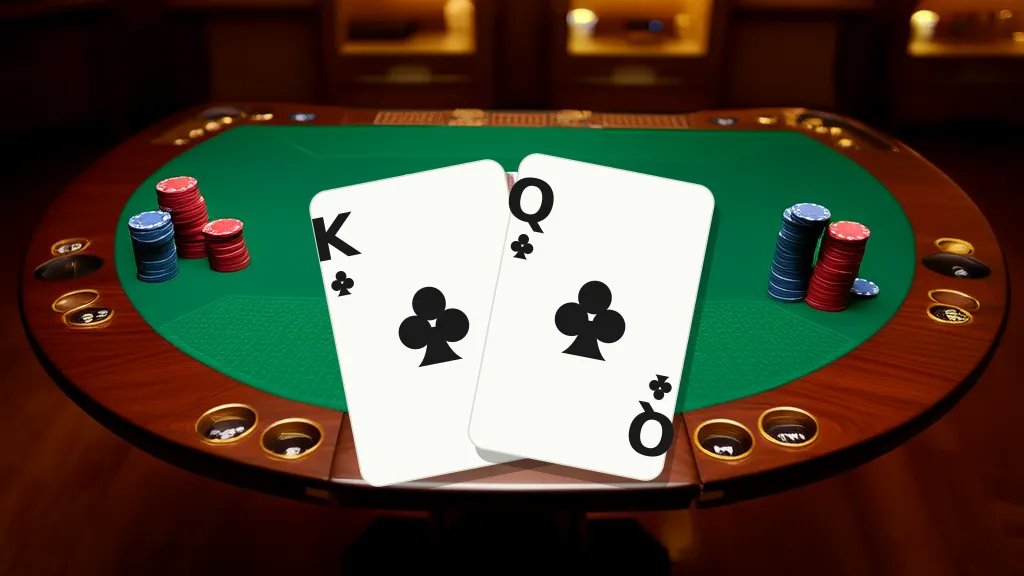
Master Pocket Threes strategy. Learn set mining fundamentals, implied odds requirements, when to fold preflop, positional adjustments, and how to handle the vast majority of flops where 33 is an underpair.
- how to play 33
- 33 strategy
- GTO
- poker strategy
Pocket Threes occupies an uncomfortable but instructive place in No-Limit Hold'em theory: it is still a pocket pair, which means it carries the sacred ~12% flop jackpot frequency shared by all pairs—but it sits near the bottom of what serious players consider “playable” in raised pots at standard depths. Unlike 77, 88, or 99, 33 almost never arrives on the flop as a legitimate overpair. On typical boards you are either flopping a set (or better in rare cases), or you are staring at one pair that loses to any reasonable top pair, most middle pairs that connect with the board, and the omnipresent ghost of overcards that flatten your showdown value.
If you play 33 well, you are not proving bravery; you are proving pricing discipline. The hand’s profitability is overwhelmingly set-mining shaped: you need depth, opponents who can pay, and positional or structural reasons not to light money on fire when you miss—which you will, on roughly seven out of eight flops, if you measure “hit” strictly as making trips or better on the flop. Postflop without improvement, 33 is a folding hand against serious pressure on almost all textures. Multiway pots improve implied odds in principle but turn realization binary: you are playing for set → stack stories far more often than for clever floats or thin showdowns.
This guide mirrors the depth of our Pocket Sevens article but shifts the defaults: tighter preflop, more emphasis on effective stacks versus 3-bets, explicit discussion of bottom-set geometry on low boards, and honesty about straight potential—the wheel (A-2-3-4-5) and 2-3-4-5-6 structures exist, but they are lottery tickets, not strategic engines. Read it once for the mental model; return when you audit leaks like auto-calling raises “because it’s a pair” or stacking off with bottom set without range-and-runout literacy.
Introduction: Why Pocket Threes Is an Edge Case, Not a Comfort Hand
Most training paths sort pocket pairs into premium, medium, and small. 33 belongs to the small pocket family, but it is closer to the fold line than 55, 66, or 77 in many configurations—especially early position in full ring, shallow effective stacks, tough online pools, and facing disciplined 3-bets. The difference between 66 and 33 is not mystical “luck”; it is frequency of playable non-set outcomes, set-over-set vulnerability when you do hit, and domination when stacks go in with one pair in messy pots.
Anchor your expectations with three frequencies:
- Flopping a set or better remains about 12% (~1 in 8.5 flops) for any pocket pair absent card removal quirks—this is your primary upside engine with 33.
- Flopping an “overpair” with 33 is extraordinarily rare on unpaired flops because any flop card 4 through Ace is higher than your pair. You essentially need paired boards where the pair on board is deuces—for example 2-2-x where x is 2, 3, or possibly lower ranks depending on exact definitions—and even then your “overpair” world is narrow and sometimes still vulnerable to opponents holding higher pocket pairs or better trips when the case three arrives in ugly ways. Operationally: do not plan your session around overpair value with threes.
- Straight-making paths exist—most notably wheel structures using A-2-3-4-5 and low ladder boards involving 2-3-4-5-6—but they require specific runouts and often do not justify preflop investment on their own. Treat them as microscopic equity bonuses, not reasons to cold-call large raises out of position.
The emotional hazard with 33 is wishful thinking: beginners treat “pair” as a security blanket. At showdown in raised pots, third pair loses constantly. The correction is pre-commitment: before you put chips in, finish the sentence If I miss, I am folding to standard pressure—and mean it.
Hand Strength Analysis: What 33 Actually Is (and Is Almost Never)
Preflop classification in modern games
In solver-informed constructions, speculative pairs compete on three axes:
- Implied odds when you hit strong made hands.
- Playability when you miss (fold equity, position, backup draws).
- Reverse implied odds when you make second-best strong hands.
33 scores high on (1) only when stacks are deep and villains cooperate. It scores low on (2) because missed flops produce weak underpairs to virtually every sensible continuation region. It scores dangerously medium on (3) because bottom set on low boards can stack off versus higher sets and because weak one-pair showdowns are common when stacks balloon incorrectly.
Card removal note: 33 removes two threes from the deck, slightly altering combo counts for 33 itself and 3x holdings. You do not materially block AA/KK/AK-class premiums in a way that makes 33 a credible 4-bet bluff default at typical stakes.
Useful equity anchors (approximate; suits and exact ranges matter):
- 33 vs random two cards: still a favorite—relevant in limp festivals and chaotic live fields—but remember random hands are not your main opponents in raised pots.
- 33 vs unpaired big cards (e.g., broadway two-cards): often in classic race / dominated equity regions—you flop sets sometimes, but you miss constantly and face overcards when you do not improve.
- 33 vs higher pocket pairs: crushed preflop unless you are explicitly playing set mining odds—and even then, set-over-set exists.
Flop-strength buckets you must internalize (33-specific)
After the flop, classify faster than you classify socially:
- Set or better (trips with a paired board, full houses, quads): primary payoff event—now shift into SPR, draw density, and set-over-set awareness on low boards.
- Overpair to the board: practically nonexistent on typical unpaired flops; treat alleged “strong pair” moments as rare paired-board artifacts and audit vulnerability every time.
- Underpair with live outs to a set: usually check-fold or fold to bets unless ridiculous pot odds + monumental reads—and even reads rarely salvage bad structural prices.
- Straight draws that involve holding a 3: fringe cases—usually weak gutshots or awkward ladder draws depending on board; not a default justification for preflop calls.
The “overpair rarity” truth for Pocket Threes (without optimism)
With 77, coaches emphasize overcard-heavy flops. With 33, the lesson is sharper: almost all unpaired flops contain multiple ranks above three. Even 4-5-2 rainbow leaves you underpair to every flop card. Your pair is third pair on K-7-4, underpair on 9-8-2, and only occasionally “looks okay” on paper until you account for ranges, multiway fields, and continuation aggression.
When players say 33 can be an overpair, they usually mean paired boards:
- 2♠2♥9♣: your 33 is an overpair to the pair on board (the deuces), but you remain vulnerable to better pockets, delayed pressure when turns bring higher pairs, and stubborn 9x that realizes poorly against your sizing patterns.
Treat those boards as special cases, not comfort zones.
Bottom-set risk on low boards
Hitting bottom set—for example 33 on 3-7-8—feels incredible emotionally and can be strong technically, but on low connected or low suited structures, opponents arrive with sets above you, two pair, combo draws, and hands willing to stack off incorrectly. Bottom set is still strong—often stack-off eligible depending on SPR—but equity drops versus condensed ranges more than beginners expect.
Conversely, top set with 33 requires a three on board or carefully structured paired-board scenarios; many of your “jackpot” textures are middle or bottom set geometries on low flops. That distinction matters for cooler psychology and for avoiding autopilot when turn cards complete straights and flushes.
Minimal straight potential: wheels and baby ladders
Straight equity exists, but it is thin:
- Wheel: A-2-3-4-5 requires board/help combinations where a three matters—you hold 33, so you block some trips combos involving a three while simultaneously owning a pair that does not advance unless board pairing interacts oddly.
- Baby ladder: 2-3-4-5-6 includes your rank but needs cooperation.
These shapes occasionally influence marginal decisions (usually fold anyway) rather than creating new profit centers.
Domination and Equity: Where Pocket Threes Dies Quietly
Domination in Hold'em is not only Ax vs Ay. With 33, domination often looks like:
Preflop domination shapes
- Versus TT+ and strong Ax, your set mining may be mathematically attempted, but your realized payoff depends on villain folding early enough when you miss—or paying deeply enough when you hit.
- Versus linear 3-bets, your continuing range equity can collapse unless depth restores implied odds.
Postflop domination shapes
When you have one pair—third pair on board is higher:
- You lose to any top pair that connects sensibly.
- You lose to most second pairs if they outkick your board relevance—but kickers matter oddly here: your pair is threes, so board textures dictate outcomes brutally.
- You tie or lose in complicated ways on paired boards where villains hold better pockets.
Equity realization versus aggression
Realization is the gap between raw equity and EV after betting. 33 misses so often that most of its EV is conditional on hitting. Against competent continuation betting, missed boards yield realization close to zero unless you choose absurd hero strategies—which solver landscapes and honest exploitation generally dislike.
Reverse implied odds with weak showdowns
Sometimes you flop marginal contact: 3 on board with chaos, weird underpairs facing small bets, multiway pots where someone free-cards into better hands. 33 encourages discipline because getting stubborn with weak pairs is how medium-strong opponents fund their holidays.
Set Mining Math: Why Pocket Threes Lives or Dies by Implied Odds
The flopped set probability (the ~12% anchor)
With any pocket pair, the chance you flop at least one of your rank—giving you trips on a paired board or (more commonly in teaching language) a set when exactly one of your cards hits on an unpaired flop—is about 11.76%, conventionally rounded to ~12% (~1 in 8.5 flops).
Human-language translation for 33 specifically:
- Across 100 comparable defend-call spots, you “jackpot” roughly 12 flops.
- The other ~88 flops are overwhelmingly miss worlds where 33 is usually too weak to proceed versus sane aggression unless some unrelated exploit screams loudly.
Because 33 contributes almost nothing beyond set mining on typical textures, this frequency bites harder than it does for 77. With 77, you occasionally inherit plausible overpair narratives that salvage EV between jackpots. With 33, missed flops usually funnel straight into check-fold math.
The 15:1 guideline—compressed complexity into recall
Popular coaching compresses implied odds into a heuristic near 15:1 (authors vary slightly). Treat this like a smoke alarm, not a court verdict:
The heuristic warns that effective payoff, not fantasy payoff, must cover:
- coolers when you flop a set (set-over-set, boats behind boats on paired boards, completed flush disasters),
- failure modes where villains shut down exactly when you need payoff most,
- additional bets you donate because hope persists.
With 33, cooler downside overlaps heavily with bottom-set geometries, meaning even strong flops remain environment-sensitive.
Practical implied-odds checklist for 33
Before calling expecting mining EV:
- Effective stacks: Will your villain actually lose multiple streets when you hit nuts-heavy-ish holdings—or snap-fold whenever scare cards arrive?
- Position: Will you survive misses cheaply, or will you peel once… twice… three times… until curiosity destroys rake-adjusted outcomes?
- SPR after calling: Are you accidentally drifting into “guess pair showdown” stack depths—often lethal with weak pairs?
- Multiway likelihood: Does adding callers enlarge payoff—or enlarge somebody else’s strong-range conditional probability?
If stacks are short, mining collapses fastest here among playable pairs—because non-set upside barely exists.
Combinatorics refresher: how hopeless most flops look with threes
You rarely need formulas at the table, but precise intuition pays rent.
Hold 3♣3♦. 50 unknown cards remain. On unpaired flops, an intuitive misery metric is how often every flop card outranks three:
- Ranks 4 through Ace contain 10 ranks × 4 suits = 40 cards (assuming none exposed).
- Ranks 2 and 3 among unknowns comprise 3 twos + 2 remaining threes = 5 cards.
If all three flop cards come from those 5 low cards, you see a flop containing only ranks {2,3}. That subset is tiny relative to all flops—operationally, you should assume underpair-to-board misery on almost every unpaired flop.
Teaching takeaway (more important than memorizing numbers): miss planning is default planning.
Miss-tax arithmetic (why small leaks erase jackpots)
Suppose you enter eight analogous cold-call spots.
- Roughly one time you flop the jackpot (~12%).
- If on each of the seven misses you leak an extra half-pot call you should not make, you can easily erase—fully or partially—the dollar upside of the rare monster pot—especially after rake, tip, and promotional drops in live rooms.
This is why postflop honesty is part of preflop EV. With 88, some misses remain borderline playable. With 33, leaks are almost always pure unforced errors.
Does solver-style poker “always call because math”?
No. Math says “sometimes.” Population says “often fold.” Your job is to reconcile:
- In soft live games, villains sometimes pay triple barrels with stubborn one-pair hands—this inflates implied odds beyond textbook assumptions.
- In tough online pools, tight continuation regions and clean stack-off thresholds deflate realized payoff—sometimes folding 33 preflop becomes obviously superior even when human intuition whines.
SPR and Commitment: Thin Geometry With Pocket Threes
Stack-to-pot ratio (SPR) converts chip piles into decision shapes. With 33, SPR highlights two truths:
- When you hit a set, you frequently want to play for stacks against ranges containing overpairs, top pairs, draws, depending on texture—but board-dependent coolers matter more on low coordinated flops.
- When you miss, low SPR pots rarely give you room to “find” equity—you are folding or making bad peels.
Low SPR (roughly under ~3)
Low SPR turns poker into fast declarations:
- Set: often happy to commit, but audit monotone and highly connected low boards for nut-heavy opponent classes.
- Miss: check-fold, fold to c-bets, avoid hope floats unless villain is demonstrably broken.
Medium SPR (~4–8)
This band matters because stack-off thresholds blur:
- With bottom set, you may still stack off—but turn cards that complete obvious draws shift value into protection decisions earlier.
- With missed flops, do not “buy turns” by default; 33 does not turn enough strong outcomes to justify wide floats without reads.
High SPR (deep stacks)
Deep stacks enlarge implied odds—great for set mining—but also enlarge disasters:
- Set-over-set hurts more in dollars.
- Opponents can fold top pair correctly when scare cards arrive—hurting your payoff frequency.
Commitment warning: deep stacks tempt players into calling too wide preflop because “we’re deep.” Depth helps only when paired with payoff willingness and positional containment on misses.
6-Max Versus 9-Max: Table Format Adjustments for Pocket Threes
6-max baseline
Six-handed poker widens ranges and increases steal dynamics. 33 can appear as:
- an open from later positions in many default constructions,
- a fold from UTG in tougher lineups—yes, even in 6-max, solver outputs sometimes prefer folding 33 UTG depending on rake, antes, open sizes, and behind-player aggression.
Do not treat “it’s 6-max” as automatic permission to limp through every spot with baby pairs.
9-max full ring
Full ring punishes early-position speculation:
- Multiway pots become more common behind EP opens.
- Squeezes lurk.
- Cold-callers tighten effective odds dynamics.
In tough 9-max games, 33 from EP is often a fold—not because you never flop sets, but because price + reverse implied odds + postflop difficulty converges negatively.
Exploitative adjustment:
- Open or limp-reraise worlds aside, default tighter EP with 33 when villains 3-bet honestly and do not stack off with worse enough.
Online Versus Live: Pace, Pools, and Payoff Reality
Online characteristics
Online environments emphasize:
- cleaner 3-bet ranges among regs,
- smaller opens sometimes (site-dependent),
- multi-tabling that encourages robotic mistakes—especially auto flatting versus isolation raises without depth.
For 33:
- Facing small opens IP with deep stacks can be viable if you maintain miss discipline.
- Facing tight 3-bets, default folds unless 120bb+ effective (often more) and credible wide value/bluff mixes.
Live characteristics
Live poker introduces:
- limping,
- variable stacks,
- social pressure to “see flops.”
For 33:
- Multiway limped pots can improve payoff—but realization remains binary: set or exit.
- Avoid glamorizing limped pots; bad depths and rake/promo drops erode thin edges.
Preflop Play by Position: A Practical Map for Pocket Threes
Baseline orientation: NLHE cash, typical depths (100bb), adjust for rake and opponents.
Under the gun (UTG) and early position (EP)
This is the sharpest range boundary for 33.
- 9-max EP: lean fold in tough games; open only in softer fields where postflop mistakes fund you—or where stacks are deep enough that set mining genuinely scales.
- 6-max UTG: many populations still open, but solver-aware players acknowledge mixed or folding strategies depending on configuration—do not mindlessly autopilot 33 UTG if three-bets swarm behind you.
Sizing: standard opens—avoid telegraphing pocket pairs.
Middle position (MP)
33 is often a frequency open in soft games; tighten substantially when:
- players behind squeeze,
- cold 4-bets exist,
- stacks behind are short.
Hijack (HJ)
Closer to steals; open more comfortably than EP when antes/straddle dynamics do not crush implied odds.
Cutoff (CO) and button (BTN)
33 is commonly inside steal/open ranges—position helps misses hurt less because you can realize checks and fold more cleanly than OOP.
Small blind (SB)
Versus raises, calling is usually set mine–biased and painful OOP. Prefer:
- 3-betting only as part of explicit balanced/exploit plans,
- folding when depth fails,
- careful squeeze considerations when dynamics justify widening.
Big blind (BB) defense
Versus opens:
- defend more versus min-ish sizing with depth,
- fold more versus large EP opens without multiway payoff upside.
Facing Limpers: Passive Fields and Pot Geometry
Limped pots look cheap; they often become squeeze-heavy or multiway cauldrons.
Isolate versus overcall
Facing one limper:
- Iso-raising builds pots when villains call wide—good for set upside, risky when BB defends aggressively behind.
Facing multiple limpers:
- limp behind can be acceptable only when depth is genuine and you will not catch SPR leaks postflop.
The limp-raise alarm
Live players limp traps. If you isolate and encounter limp-jam or limp-raise, 33 is typically fold territory unless extreme reads support continuing.
Multiway limped pots: binary realization
Implied odds rise if everyone pays; realization stays binary:
- hit: pursue value/protection thoughtfully,
- miss: avoid curiosity.
Three-Bet Caller, Out of Position: Why This Spot Prints Leaks
Some situations deserve explicit labeling because they ruin bankrolls quietly:
The structural problem
Imagine CO opens, you flat SB with 33, BB cold calls—or worse, squeeze dynamics threaten. Now you are OOP with a hand that:
- misses often,
- does not fold out equity credibly when it misses,
- cannot withstand pressure across multiple streets without improvement.
Default guidance
Unless stack depth is excellent and villains pay off sets without ninja folds:
- avoid weak cold-call chains OOP with 33,
- prefer folding SB to raises when realizing equity is grim,
- if you do enter as caller, pre-commit to high fold frequency on misses.
When continuing can make sense
Continuing as caller OOP improves when:
- effective stacks are deep (120bb+ territory often cited as where marginal pairs breathe),
- multiway pots increase jackpot frequency and payoff,
- villains under-bluff turns but overpay rivers—still read-heavy.
Facing Preflop Action: Raises, 3-Bets, Squeezes, and Cold Calls
Versus a single raise (you are not the raiser)
Calling hinges on implied odds:
- IP calls survive more easily than OOP flats.
- Large raises shrink implied odds—sometimes pushing 33 into pure folds.
Ask:
Who pays my set off, and how many streets?
If unclear, release.
Versus a 3-bet (as preflop caller or original raiser)
Baseline: fold versus strong, linear 3-bets at 100bb.
Exception territory begins roughly around 120bb+ effective—sometimes higher depending on opponent width, position, and postflop skill:
- some opponents 3-bet wide enough that 33 can call IP,
- OOP calls remain dangerous unless exceptional depth and payoff certainty.
Do not treat “pair pretty” as a continuing condition.
Versus squeezes
Squeezes inflate awkwardness. 33 often folds unless:
- exceptionally deep,
- original raiser behaves weakly and cold-call entanglements create insane pots—still risky.
Cold calling raises
Cold calling is where hope lives:
- tight games: frequently wrong,
- soft live: occasionally fine with depth—still demands miss discipline.
Postflop Strategy: Missed Flops, Hidden Monsters, and Rare Middling Cases
When you flop a set
Default orientation: value—but calibrate:
- Dry boards: sometimes slowplay versus certain opponents—not multiway on scary textures.
- Wet boards: lean protection sooner,
- Monotone: still strong—watch flush densities—especially multiway.
Bottom set on low boards
You have strong equity overall—often stack-off adjacent—but internalize risk:
- higher sets exist when opponents defend low connectors, low pockets, suited gappers,
- draws complete—your job is SPR honesty, not panic.
When you almost certainly do not continue
Non-set single pairs facing meaningful bets:
- Ace-high boards: check-fold OOP typically; fold IP to substantial aggression absent reads,
- King-high boards: similar—maybe occasional floats exist only with absurd dynamics.
Multiway pots
Two opposing truths:
- Better chance someone pays when you hit.
- Better chance someone has something strong when you overplay one pair—less relevant when you miss, highly relevant when you hit smaller sets.
Binary heuristic:
- set: extract carefully,
- miss: exit.
Heads-up raised pots
IP: fold misses cleanly; avoid proving bravery.
OOP: check-fold defaults versus competent sizing.
Straight mirages
Do not chase runner-runner dreams that sound plausible because 33 touches wheel narratives. If your plan relies on magic ladders, your plan is NG.
Postflop Playbooks: Concrete Textures With Pocket Threes
Use these as routing guides, not soul-read gospel.
Playbook A: Paired board low card—rare “relative strength” moments
Example: 2♠2♥T♣. Your 33 is overpair to the deuces but still vulnerable to Tx, better pockets, and evolving turns.
Default: cautious approach—thin value possible versus stations; avoid stacking off without reads.
Playbook B: Low rainbow flops where you flop a set
Example: 3♠7♦2♣ with 33—you have bottom set on a low dry flop.
Default: bet for value; choose sizing that charges draws while keeping worse hands—some 5x combos, stubborn 7x, occasional chaos—involved.
Turn 6 or 4 can introduce straight tension—pay attention.
Playbook C: Ace-high flops—missed set
Example: A♦9♣4♥. You hold 33.
Default: give up versus normal aggression—your pair is underpair and irrelevant often.
Playbook D: King-high two-tone
Example: K♥9♥5♣.
Default: fold to substantial bets—your hand wants a miracle, not a lecture.
Playbook E: Monotone boards—flopped set
Example: 8♠7♠3♠ with 33 (spade in hand scenario omitted—focus conceptually).
You have strong equity but flush-over-set exists. Multiway: prioritize not gifting free cards when villains hold flush draws.
Playbook F: Paired board with higher pair—underpair misery
Example: 9♣9♦4♠. Your 33 is an underpair to the board pair.
Default: fold early versus aggression—tricky slowplays exist only versus profiles who massively over-bluff weak ranges.
Playbook G: Dynamic middle-card two-tone
Example: T♥8♥3♣. Even though you hold a three, you usually did not flop a set unless one of your hole cards paired uniquely—most often you remain with weak pair equity facing broadway draws and strong ranges.
Default: no stunt doubles—release without reads.
River hygiene with Pocket Threes
Most rivers with missed 33 are easy folds.
When you hit big:
- ask what worse pays,
- ask whether nuts-heavy opponents still insert money—sometimes pot control matters even with sets.
Board taxonomy quick reference (two-second classifier)
Train yourself to label flops relative to your cards—not generic labels:
- Unpaired low involving a three with no set: sometimes some showdown exists only at micro stakes versus chronic under-bluffers—still usually fold in raised pots when bets arrive.
- Unpaired low without a three: underpair city—your pair strength is mostly irrelevant beyond absurd blocking trivia.
- Ace-high: primary check-fold OOP terrain; fold IP versus substantial sizing absent explosive reads.
- King-high two-tone: tough realization—give up default.
- Monotone: set still wants protection often; miss wants Exit, pursued by a bear.
- Paired board (high card paired): usually underpair or awkward weak pair—do not romanticize.
EV Calculations: How Profit Shows Up (and Disappears) With 33
Most 33 profit is not flashy:
- correct folds preflop when implied odds fail,
- disciplined postflop surrender,
- occasional stacks when sets hit and villains cooperate,
Results will feel high-variance relative to hours played—normal, unless your leak is systematic calling.
Expected value intuition
Translate math into behavior:
- With ~12% flop jackpot frequency, paying too much preflop is like buying expensive lottery tickets where the jackpot sometimes still loses (coolers).
Worked example: evaluating a call (online NL100 conceptual)
Assume 100bb effective—often marginal for cold calling strong opens OOP with 33.
Open raise 2.5bb, you contemplate SB flat:
- immediate price looks tempting,
- future streets are costly—many regs c-bet efficiently.
Often better: fold or only proceed with known weak villains + deep stacks.
Now assume 150bb+ and BTN flat IP:
- implied odds improve—if you execute misses correctly.
Numeric honesty about misses
If you cold-call eight similar spots and hit one set, but donate extra bets on misses, you can erase upside—this mirrors 77 logic but hits harder because non-set playability is worse.
Worked example: live cash sanity check ($2/$5 style)
Assume $2/$5 live, effective $600 (120bb if you treat $5 as one big blind unit—live stacks vary). MP opens $20. You hold 33 on the button. Blinds are passive callers unlikely to squeeze.
You risk $20 with position and genuine depth—your implied odds story has structure: suited connectors exist behind sometimes, stations exist, and top pair occasionally pays multiple streets badly.
Now shrink stacks to effective $200. Same price $20, far less future money.
Suddenly your call is less “mining” and more buying expensive disappointment—especially because OOP callers behind might shrink your realization without improving price proportionally.
Translating theory into hourly rate (without spreadsheet obsession)
Hourly edge with 33 is mostly:
- minus one bad cold-call per session,
- minus one stubborn peel on Ace-high boards,
- plus one disciplined fold versus honest 3-bets,
These decisions rarely feel heroic—they compound.
Database auditing prompts
If you track hands, compare populations—not feelings:
- frequency you call raises with 33 OOP at <120bb effective,
- average loss on missed flops across sessions,
- realized won-at-showdown buckets when you reached rivers without sets—often humbling.
Common Mistakes (and Cleaner Alternatives)
Mistake 1: “It’s a pocket pair, I call.”
Pairs are not immune to prices.
Cleaner alternative: separate speculative call from punt.
Mistake 2: Treating 33 like 77 or 88
Those hands occasionally yield overpair textures; 33 rarely does.
Cleaner alternative: downgrade default aggression and upgrade folding.
Mistake 3: Calling 3-bets at 100bb without width reads
Cleaner alternative: default fold; widen only with depth (often 120bb+) and documented wide ranges.
Mistake 4: Floating flops “to see what happens”
Cleaner alternative: planlessness tax is real—fold.
Mistake 5: Ignoring bottom-set geometry
Stacking off blindly without considering higher sets and completed draws.
Cleaner alternative: range read, SPR, runout sensitivity.
Mistake 6: Overplaying multiway limped pots postflop without a set
Cleaner alternative: remember binary realization.
Mistake 7: Misreading straight fantasies as strategic plans
Cleaner alternative: straight equity is footnote, not chapter.
Advanced Tips: Exploitation Without Cosplaying a Solver
Advanced poker with 33 is mostly selection:
- target players who stack off with one pair too often,
- avoid paying reverse taxes versus honest nits,
- note sizing tells that correlate with strong condensed ranges.
Thin mixes (only when justified)
Some players incorporate occasional 3-bets as part of polar plans—do not improvise without understanding 4-bet responses and postflop awkwardness.
Defense discipline as edge
The strongest exploit might be folding earlier than table averages—especially EP in full ring.
Solver Insights: What Modern Tools Imply for Pocket Threes
You do not need software to benefit from solver culture—but solvers clarify uncomfortable truths:
UTG and tough configurations
In some 6-max setups—depending on rake, antes, open size, and behind-player aggression—solver outputs discount or fold 33 UTG. Translation for humans:
- if your game is tough and 3-bets are rampant, treat UTG opens as optional, not mandatory.
Cold-call thresholds tighten versus linear aggression
Solvers cold-call speculative pairs less than humans wish, especially OOP, unless depth repairs implied odds.
Postflop without equity
Solver continuation regions with underpairs shrink aggressively versus competent bets—matching the heuristic give up almost always.
Multiway effects
Solvers appreciate jackpot potential, but also internalize stronger conditional ranges—avoid interpreting multiway as license to call everywhere.
Practical takeaway
Even if you never run a node, avoid lines solvers label pure punishment:
- cold calling OOP at shallow depths,
- calling tight 3-bets because pairs feel mandatory.
Frequency hygiene and mixed strategies
Solvers sometimes mix—humans should not cosplay randomization without purpose:
- If mixing confuses you, simplify: fold marginal EP opens when tables are tough,
- If mixing confuses nobody because games are soft, optional opens can remain—but do not confuse softness with structural justice.
Node intuition without running software
When trainers say “solver folds 33 UTG”, they mean marginal EV under constraints, not you must ritualistically fold for karma.
Translate into English:
- tight behind-you aggression shrinks EV,
- rake nibbles thin opens,
- ISO-heavy environments increase awkward spots,
Therefore tightening becomes sensible—even if your ego associates UTG opens with courage.
Cash Games Versus Tournament Adjustments
Cash games
At stable 100bb, 33 is frequently EP-fold/tough-spot material depending on pool—but remains playable from later positions in many default constructions.
Deep cash (150bb+) expands mining viability dramatically—but only alongside miss discipline.
Straddles and drops:
- live promotional drops punish thin speculation—pairs near the fold line suffer first,
- straddles alter effective depth—recompute implied odds every session.
Tournaments (ICM-aware sketch)
Payout pressure warps chip values:
- near bubbles and jumps, avoid high-variance speculation without compelling chip EV or exploit,
- early deep levels can mimic cash mining—if opponents stack off poorly.
Short-stack simplification:
- near 20bb, 33 often enters jam/fold adjacent worlds depending on antes and positions—not the deep mining fantasy anymore.
Bubble dynamics (practical)
On soft bubbles, survival motive can convert technically marginal gambles into costly punts—pairs become awkward versus tight shovers because you have real equity but heavy ICM downside.
Study bubbles separately—33 is exactly the kind of hand people misprice emotionally because “pair strength” anchors incorrectly.
A Simple Study Plan: Pocket Threes for One Week
Structured homework beats vague intent:
- Day 1: Memorize 12% flop jackpot frequency until boredom sets in—boredom equals internalization.
- Day 2: Tag every 33 preflop decision from your last session: Was depth real? Was payer profile real?
- Day 3: Drill SPR estimation on paper for hypothetical bottom-set flops versus miss flops—feel how often answers diverge.
- Day 4: Write three bullets per villain archetype at your site: Who pays sets? Who shutters? Who 3-bets honestly?
- Day 5: Review one cooler without rewriting physics—ask whether preflop pricing was honest (sometimes yes, sometimes no).
- Day 6: Flash-drill board taxonomy for sixty seconds daily—Ace-high, King-high two-tone, monotone, paired high.
- Day 7: Play one session focusing exclusively on folding bad flats OOP—make discipline the entertainment.
FAQ: Pocket Threes in Real Questions Players Ask
1. Is Pocket Threes playable from UTG in 9-max?
Often no in tough games; it can be opened or played in softer fields with deep stacks—default tighter than your 6-max habits.
2. Should I ever open 33 from UTG in 6-max?
Sometimes yes in soft pools—but solver-informed approaches sometimes fold or mix depending on configuration; do not autopilot.
3. How often do I flop a set with 33?
About 12% of flops (~1 in 8.5), similar to other pairs—the difference is what happens when you miss.
4. Can 33 be an overpair?
Only in rare paired-board geometries like 2-2-x—do not build strategy around it.
5. When can I call a 3-bet with 33?
Generally only deep effective stacks—often 120bb+—and particularly when villains 3-bet wide enough that implied odds and realization justify continuing.
6. What’s the default postflop plan when I miss with 33?
Fold to normal pressure on nearly all boards—stop searching for miracles.
7. Is bottom set on a low flop always a stack-off?
Often strong, but not immune to coolers—use SPR, opponent tendencies, and draw completion to decide.
8. Are multiway pots better for 33?
Implied odds can improve, but realization remains binary—set or fold dominates.
9. Does the wheel straight potential matter preflop?
No as a default justification—treat as tiny bonus equity.
10. Biggest live leak with 33?
Cold calling raises without depth against honest opponents who do not pay off.
11. Biggest online leak with 33?
Calling 3-bets at standard depths versus linear regs.
12. Should I ever bluff with 33?
Rare and read-heavy—default players should prioritize discipline over Hollywood.
Summary: Play Pocket Threes Like a Ticket, Not a Shield
33 is near the bottom of playable pocket pairs for good reasons: implied odds dependence, almost nonexistent overpair upside, painful OOP realization, and sharp vulnerability when players misdefine commitment. Play it best by choosing deep, payable spots, folding early when prices lie, giving up postflop without improvement almost always, and respecting bottom-set geometry on low boards.
If you remember only three sentences: (1) ~12% flop jackpots do not excuse bad calls, (2) depth and payer profiles decide speculative viability, (3) most winnings come from discipline, not from finding excuses to see flops.